SpaceX has caught a Starship spacecraft in the arms of its launch tower for the first time, completing one of the most daring manoeuvres in the history of spaceflight and taking a giant step towards a fully reusable rocket system.
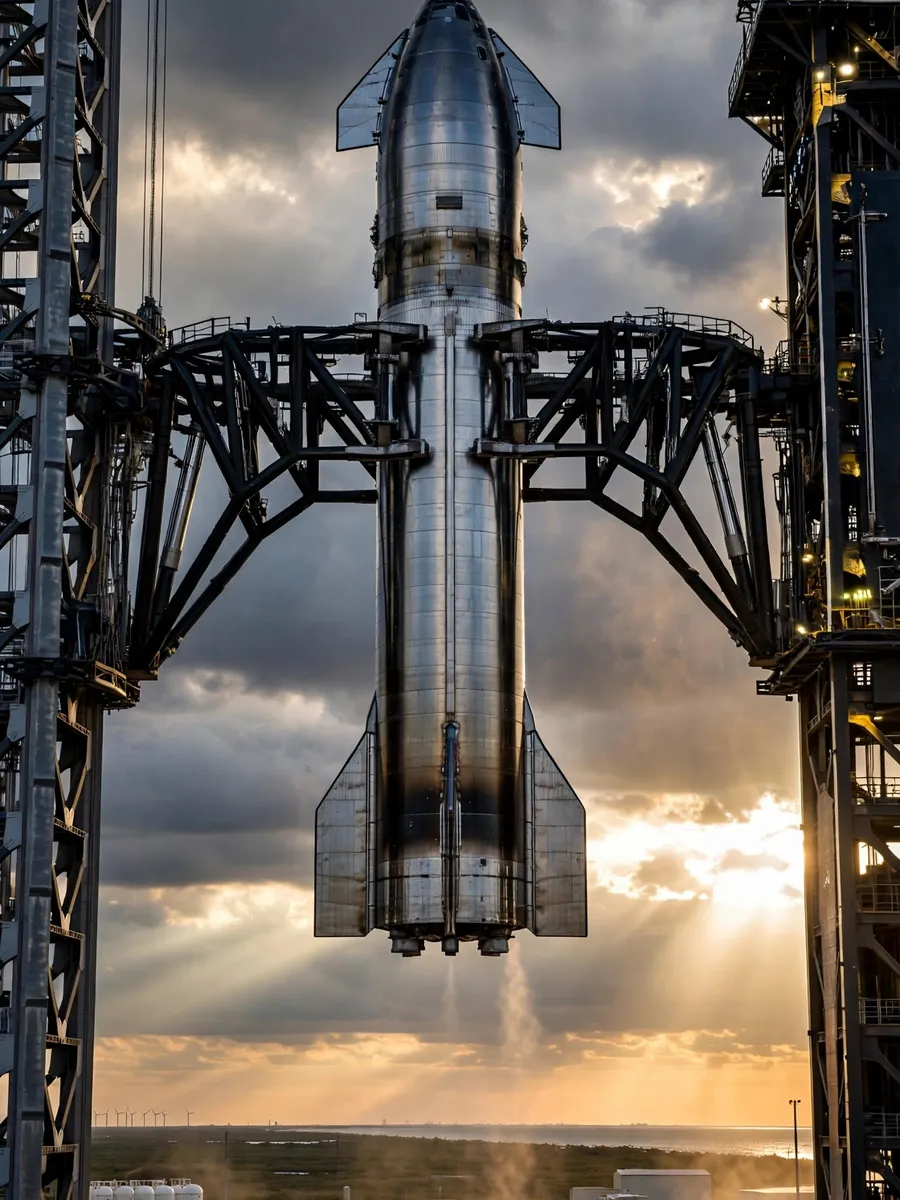
The catch came at the end of Flight 15, a mission that lasted 22 and a half hours and saw the spacecraft circle the Earth 14 times before returning to the same Texas launch pad it had left the day before.
A Launch Under a Cloudless Sky
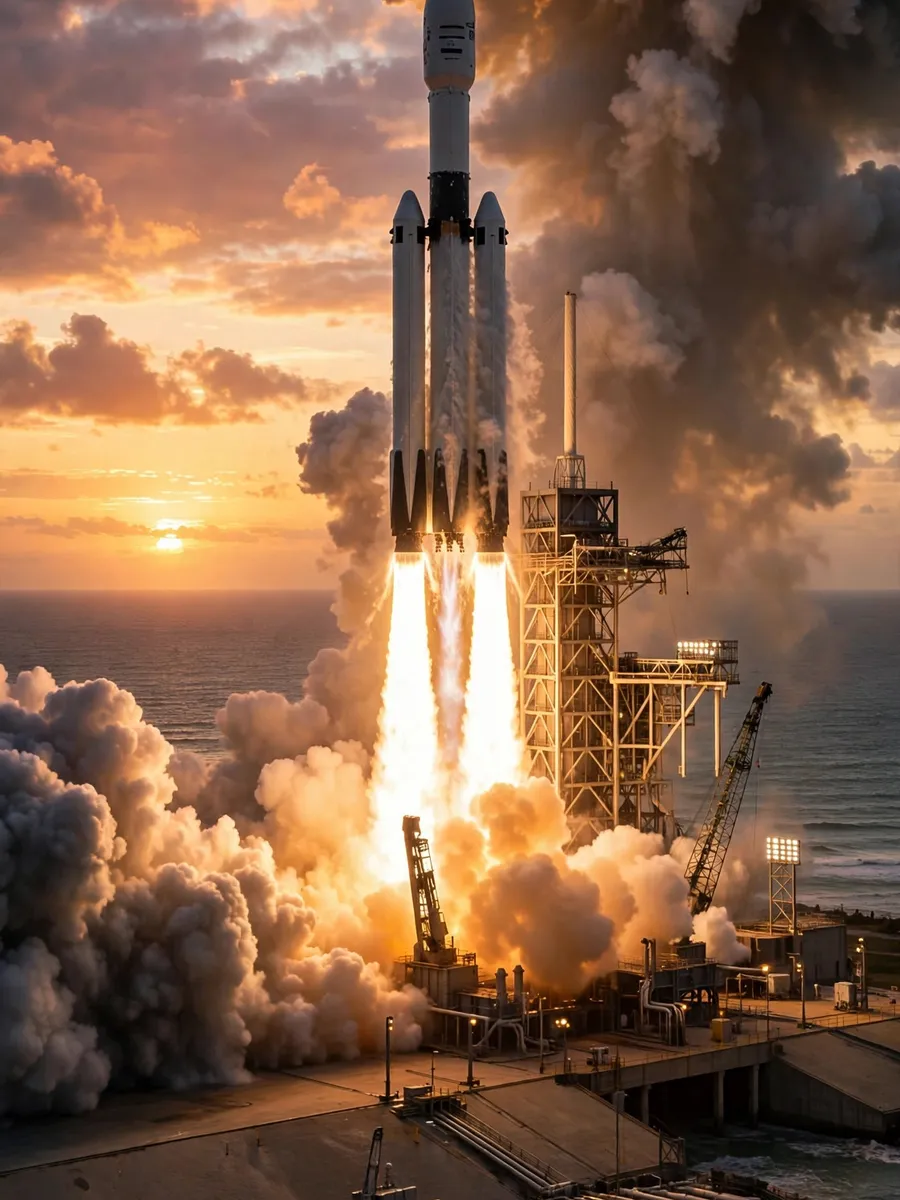
Flight 15 lifted off from Pad 2 at Starbase in South Texas at 4:47 p.m. local time on Friday 13 November 2026, under a near cloudless blue sky. The Super Heavy booster climbed on the power of its 33 Raptor engines, and about two minutes into the flight the upper stage — the part SpaceX calls Starship, or simply “the ship” — lit its own six engines while still attached, a technique known as hot staging, and pushed on towards orbit.
The plan was ambitious: catch both stages of the vehicle. Half of it worked. The booster was meant to fly back to the launch site and be caught by the tower’s giant mechanical arms, but its return burn ended early. SpaceX said initial indications pointed to a low fuel mass alarm, and the cause is still under investigation.
The Booster That Did Not Come Home
The booster’s flight computer detected that it was not in the right position for a catch and automatically aborted the attempt, steering the vehicle out over the Gulf of Mexico instead. It descended towards the sea and was destroyed before splashdown, in line with its safety protocols.
SpaceX spokesperson Dan Huot was quick to stress that this was not a failure of the guidance system. The guidance, navigation and control system had worked exactly as designed, he said: it recognised that a catch was not possible and protected the launch pad by diverting the booster away. The tower has caught Super Heavy boosters three times before, and this was to have been the first catch of a new version 3 booster. It will have to wait for another flight.
Fourteen Orbits and 26 Satellites
While the booster was lost, the ship itself flew a near-perfect mission. It reached orbit and deployed 26 of SpaceX’s new V3 Starlink satellites, the upgraded generation of the company’s internet constellation, before settling into a long coast around the Earth.
For more than 20 hours the spacecraft circled the planet, and on Saturday afternoon it began its journey home. At about 2:20 p.m. local time it relit one of its six Raptor engines for a 10-second burn to drop out of orbit. Its windward side, protected by around 18,000 hexagonal ceramic heat-shield tiles, faced the searing heat of re-entry as it crossed the Pacific, swept across Mexico faster than sound, and lined up on the tower over the Gulf.
The Catch
At about 3:20 p.m. local time on Saturday 14 November, the spacecraft emerged from cloud cover over Starbase. In the final moments it fired its engines, flipped from its horizontal “belly-flop” descent into an upright position, and slowed to a hover beside the 146-metre launch tower. Then the two steel arms — known as the chopsticks, and the tower itself nicknamed Mechazilla — closed around it.
“Mechazilla catches Starship! Congratulations to the entire SpaceX team on this incredible achievement!” the company posted. Commentator Dan Huot called it the missing link, the holy grail of spaceflight, and added: “We caught a Starship and now everything changes.”
Why the Catch Matters
The catch is far more than a spectacular stunt. Unlike most rockets, which are thrown away after a single flight, Starship is designed to be caught, inspected, refuelled and flown again, again and again. The tower catch removes the need for landing legs, which are heavy, and every kilogram saved on legs is a kilogram that can be spent on cargo. It also means the vehicle lands right beside the launch mount, ready for its next flight.
SpaceX has reflown Falcon 9 boosters for years, and it had already caught Super Heavy boosters three times since October 2024. But the ship is a different challenge: it comes back from orbit, from 27,000 kilometres per hour, through the atmosphere, and must be caught with the same precision. Until now, no one had ever done it.
What Comes Next
The obvious question now is what condition Ship 42 is in after its fiery return, and how much work it will need before it can fly again. SpaceX has still not recovered both stages on a single mission, and that remains the full test of whether Starship can become the routinely reusable transport system the company promises — the vehicle meant to carry cargo and eventually people to the Moon and Mars.
But the balance sheet of Flight 15 is clear. A booster was lost, and a cause must be found. A ship was caught, and a capability that had never existed before now does. In spaceflight, that is what progress looks like.
Website Disclaimer
The information provided on this website is for general informational and educational purposes only. While we strive to ensure that all content is accurate and up to date, we make no guarantees regarding the completeness, reliability, or accuracy of any information published.
The views and opinions expressed in articles belong to their respective authors and do not necessarily reflect the views of this website. Any action you take based on the information found on this website is strictly at your own risk. We will not be liable for any losses, damages, or inconveniences arising from the use of our content.
Some articles may contain opinions, third-party information, or external links. We do not endorse or guarantee the accuracy of content on external websites and are not responsible for their practices or policies.
All content on this website is provided in good faith and is intended for informational purposes only. Readers are encouraged to verify information independently and seek professional advice where appropriate.