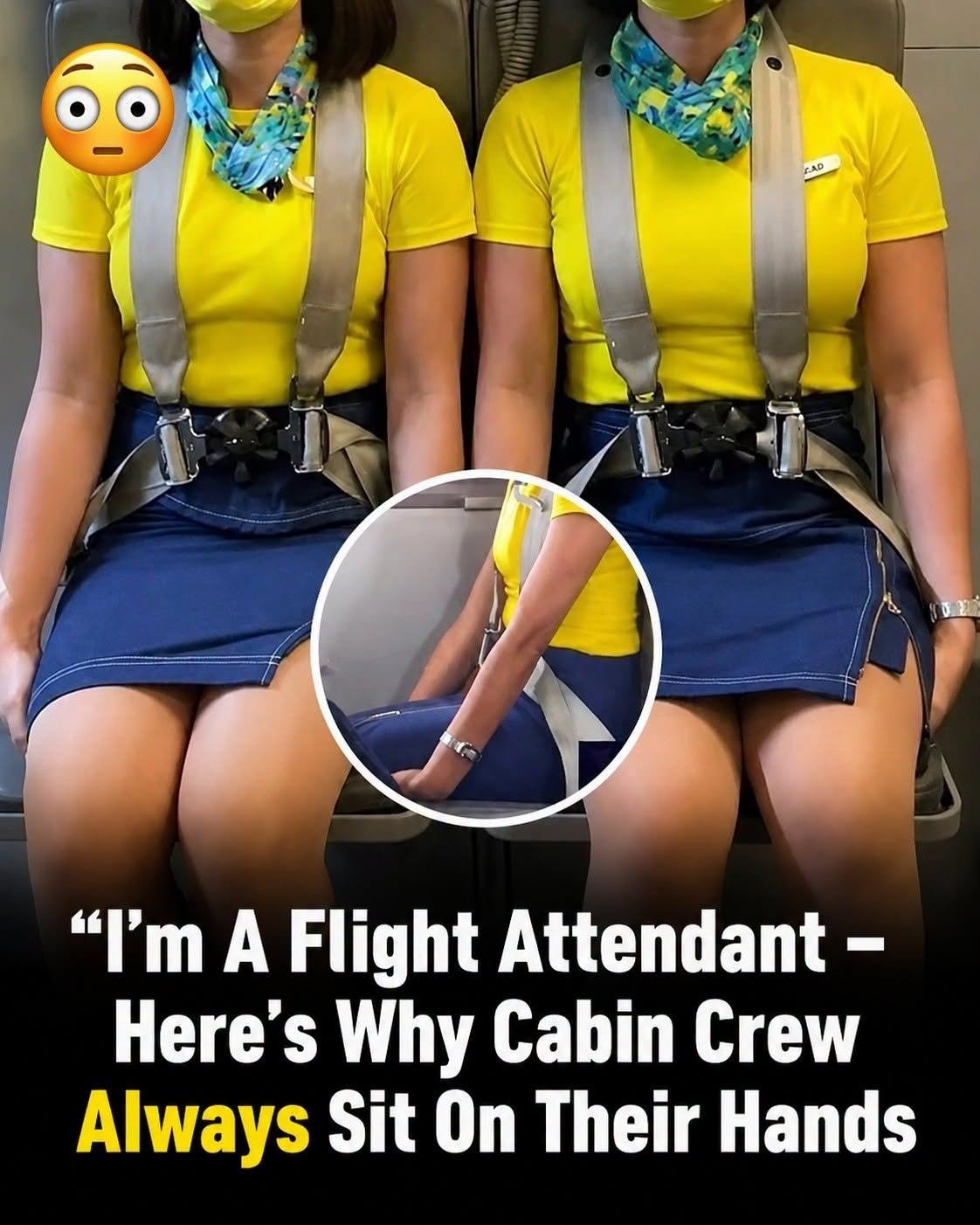
Flying can feel routine, but behind every takeoff and landing, there are carefully practiced safety procedures. One detail many passengers notice is flight attendants sitting upright with their hands tucked under their thighs. It may look unusual, but it serves an important purpose.
This position is called the “brace position.” It’s used during the most critical phases of a flight—takeoff and landing—when the risk of an incident is statistically higher. Every movement during this time is intentional.
By sitting on their hands, flight attendants reduce the risk of flailing arms in the event of a sudden impact. This helps prevent injuries like broken wrists or fingers, which could limit their ability to assist passengers immediately after.
Keeping the body in a firm, controlled posture also stabilizes the spine and minimizes unnecessary movement. The goal is to protect key parts of the body so they can remain capable and alert if an emergency occurs.
At the same time, flight attendants are not just sitting still—they are actively observing. They silently review emergency procedures, check cabin conditions, and stay prepared to respond within seconds if needed.
Their role in those moments is critical. In an emergency, passengers rely on crew members for clear instructions, guidance, and calm leadership. Being physically ready is just as important as being mentally prepared.
This simple posture is part of extensive safety training that flight attendants undergo. Every action is designed to increase the chances of survival and improve response time in high-risk situations.
So next time you see a flight attendant sitting on their hands, know that it’s not random. It’s a small but powerful safety measure—one that helps ensure they’re ready to protect everyone on board.
Website Disclaimer
The information provided on this website is for general informational and educational purposes only. While we strive to ensure that all content is accurate and up to date, we make no guarantees regarding the completeness, reliability, or accuracy of any information published.
The views and opinions expressed in articles belong to their respective authors and do not necessarily reflect the views of this website. Any action you take based on the information found on this website is strictly at your own risk. We will not be liable for any losses, damages, or inconveniences arising from the use of our content.
Some articles may contain opinions, third-party information, or external links. We do not endorse or guarantee the accuracy of content on external websites and are not responsible for their practices or policies.
All content on this website is provided in good faith and is intended for informational purposes only. Readers are encouraged to verify information independently and seek professional advice where appropriate.