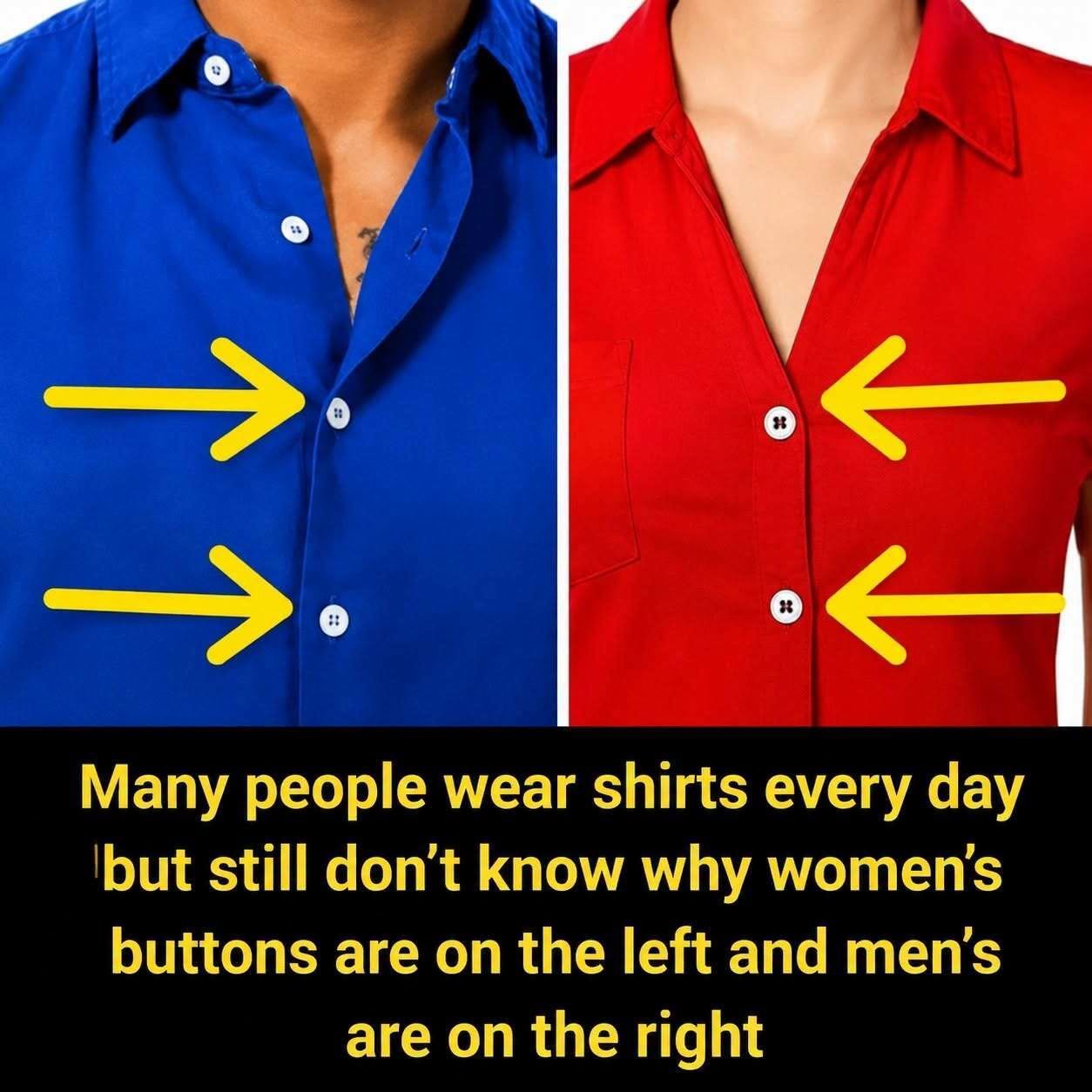
It’s a detail most people never notice until someone points it out: men’s and women’s shirts usually have buttons on opposite sides. Men’s shirts typically button on the right, while women’s garments usually button on the left. But why did this unusual tradition begin?
Buttons became popular in Europe during the Middle Ages, when they were expensive luxury items made from materials such as gold, silver, pearls, ivory, and gemstones. Wealthy people used elaborate buttons to display status, while ordinary people relied more heavily on ties, laces, and simpler fasteners.
One widely cited explanation for women’s buttons involves wealthy women and their servants. In earlier centuries, affluent women often had attendants help them dress. Because most people were right-handed, placing buttons on the woman’s left side made them easier for a servant standing opposite her to fasten.
Even after women increasingly began dressing themselves, the convention remained. Fashion frequently preserves old customs long after their original purpose disappears. Eventually, left-side buttons became associated with women’s clothing, even though the practical reason behind them had largely vanished.
Men’s button placement is often connected to practicality and military traditions. Most men were right-handed, and soldiers commonly carried weapons. Having buttons on the right could make garments easier to open or adjust with the dominant hand while using or reaching for a weapon.
Military uniforms also influenced civilian fashion throughout history. Designs created for soldiers—including coats, jackets, and other tailored garments—often became popular outside the military. The right-side button arrangement survived as part of that broader influence.
Today, there is no real practical reason for men’s and women’s shirts to button on different sides. Modern clothing is designed for people to dress themselves, yet manufacturers continue the convention because consumers recognize and expect it. Some modern brands have challenged the tradition, but it remains widespread.
So, the next time you button a shirt, remember that this tiny detail may reflect centuries of social customs, class distinctions, military traditions, and practical design. What began as a functional or cultural choice became a fashion convention—and somehow survived into the modern world.
Website Disclaimer
The information provided on this website is for general informational and educational purposes only. While we strive to ensure that all content is accurate and up to date, we make no guarantees regarding the completeness, reliability, or accuracy of any information published.
The views and opinions expressed in articles belong to their respective authors and do not necessarily reflect the views of this website. Any action you take based on the information found on this website is strictly at your own risk. We will not be liable for any losses, damages, or inconveniences arising from the use of our content.
Some articles may contain opinions, third-party information, or external links. We do not endorse or guarantee the accuracy of content on external websites and are not responsible for their practices or policies.
All content on this website is provided in good faith and is intended for informational purposes only. Readers are encouraged to verify information independently and seek professional advice where appropriate.