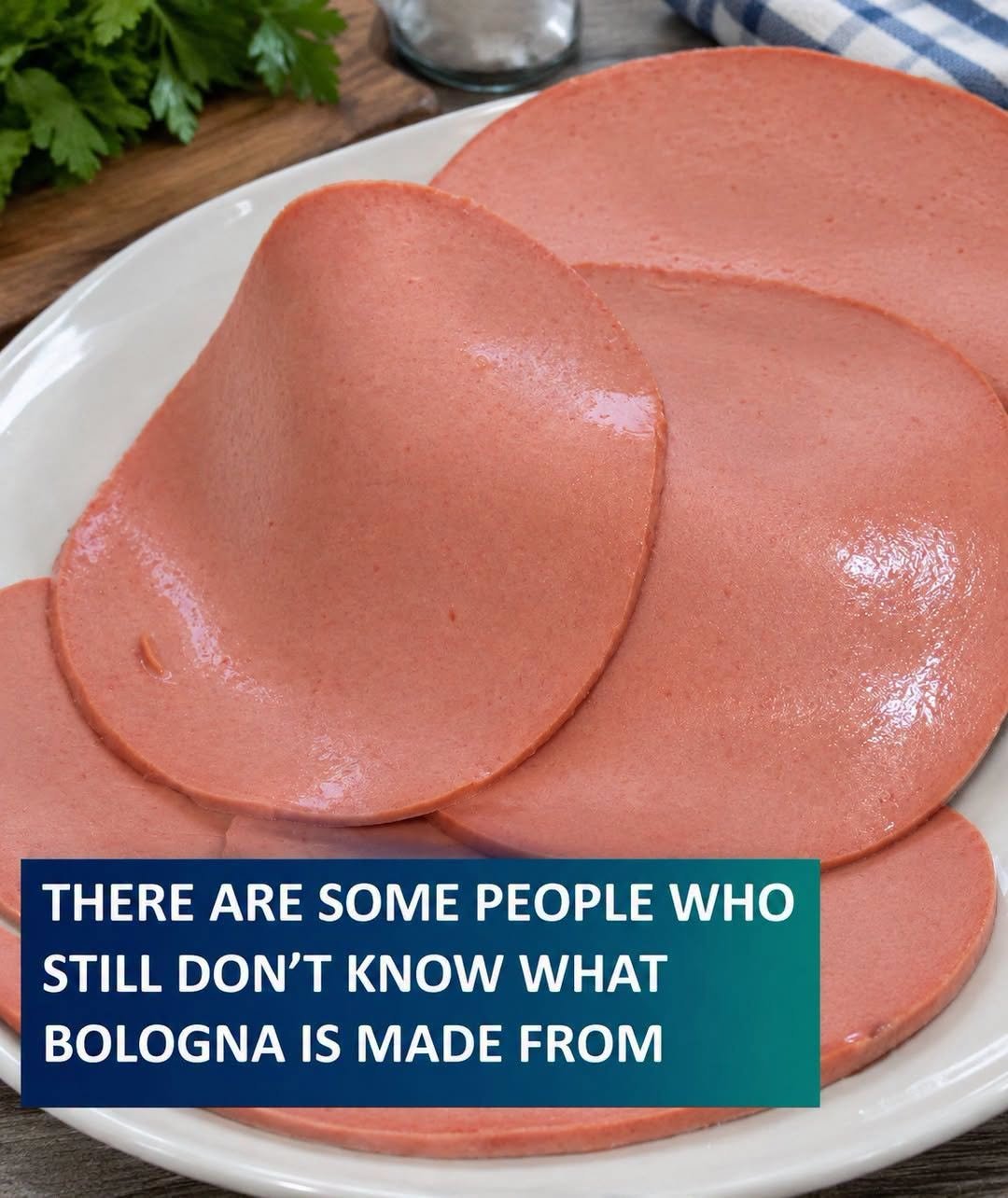
The real story of bologna is less shocking—and more interesting—than the rumors.

Its transformation was driven by the same forces that reshaped much of the American food industry: efficiency, affordability, consistency, and shelf life. Instead of being a specialty sausage made according to regional tradition, bologna became an everyday product designed to be produced on a massive scale. Its smooth texture wasn’t an accident. It was the result of grinding, mixing, emulsifying, seasoning, and cooking meat until every bite was nearly identical.

And that’s where the familiar jokes about “mystery meat” fall apart. Regulations require processed meat products to meet specific standards, and ingredients are listed on the package. What varies is the recipe. Some bologna contains pork, some beef, some poultry, and some combinations of meats. Different brands also use different amounts of fat, salt, spices, smoke flavoring, preservatives, and other permitted ingredients.

Still, there is a reason nutritionists often suggest treating bologna as an occasional food rather than a daily staple. Like many processed meats, it can be relatively high in sodium and saturated fat, depending on the product. Some varieties also contain preservatives such as sodium nitrite, which help prevent spoilage and maintain the characteristic color and flavor.

So perhaps the strangest thing about bologna isn’t what’s hiding inside it.

It’s how ordinary it became.

A food that began with an Italian culinary tradition eventually became a symbol of inexpensive American lunches. It found its way between two slices of bread, onto children’s plates, into refrigerators, and into generations of memories.

The next time you unwrap that perfectly round pink slice, you don’t need to imagine hooves, beaks, or some secret ingredient hidden from consumers.

Read the label instead.

Because the truth about bologna isn’t a horror story. It’s a story about how traditional food became industrial food—and how something once associated with craftsmanship became one of the most familiar processed meats in the grocery store.

Sometimes the truth is less frightening than the myth—but far more revealing.

Website Disclaimer

The information provided on this website is for general informational and educational purposes only. While we strive to ensure that all content is accurate and up to date, we make no guarantees regarding the completeness, reliability, or accuracy of any information published.

The views and opinions expressed in articles belong to their respective authors and do not necessarily reflect the views of this website. Any action you take based on the information found on this website is strictly at your own risk. We will not be liable for any losses, damages, or inconveniences arising from the use of our content.

Some articles may contain opinions, third-party information, or external links. We do not endorse or guarantee the accuracy of content on external websites and are not responsible for their practices or policies.

All content on this website is provided in good faith and is intended for informational purposes only. Readers are encouraged to verify information independently and seek professional advice where appropriate.


Related Posts

Leave a Reply

Your email address will not be published. Required fields are marked *