The Reliable Guide to Selecting the Perfect Sweet and Juicy Watermelon Every Time

How to Pick a Sweet, Juicy Watermelon Every Time

That first slice can be a heartbreak. You crack open the watermelon, expecting sweetness, and instead meet pale, watery disappointment. But this isn’t always bad luck. There are several clues on the rind that can help you choose a melon that is more likely to be ripe, juicy, and flavorful.

Most of the gamble disappears once you know what to look for. Start with the field spot, the area where the watermelon rested on the ground while growing. A creamy yellow or golden spot is generally a better sign of maturity than a very pale or white one.

Next, examine the rind. Look for a watermelon that feels firm and intact, without soft areas, deep bruises, cuts, or cracks. The familiar brown, web-like markings sometimes called “sugar spots” are not necessarily a problem. They can result from natural growth and pollination, although they aren’t a guarantee that the fruit will be sweeter.

Size matters less than weight. If you have several watermelons that appear similar in size, pick them up and compare them. The one that feels unusually heavy for its size may contain more water and can have a pleasantly juicy texture.

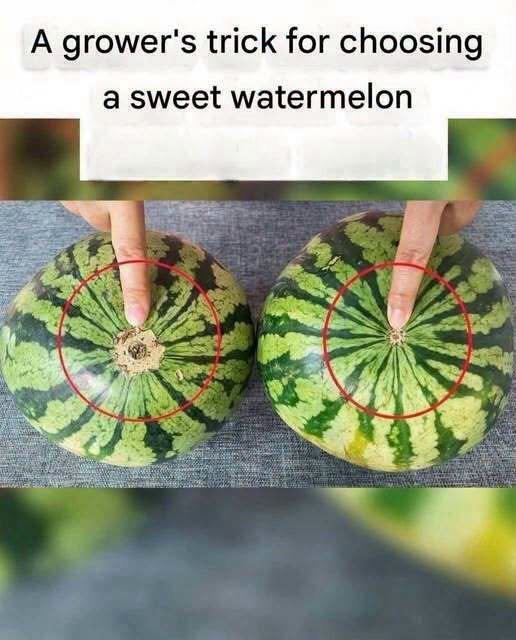
If the watermelon still has part of its stem attached, a dry, brown stem can be consistent with a mature fruit, while a very green stem may indicate that it was harvested earlier. However, stem appearance isn’t a perfect test, especially because watermelons don’t continue to ripen significantly after they’re picked.

There are also a few popular tricks that shouldn’t be treated as guarantees. Tapping a watermelon and listening for a particular hollow sound can be fun, but it isn’t a reliable way to measure sweetness. Likewise, perfectly symmetrical shape isn’t required for a delicious melon.

Once you’ve made your choice, handle it carefully. Wash the outside under running water and dry it before cutting, since bacteria on the rind can be transferred to the flesh by a knife. After cutting, refrigerate the pieces promptly and enjoy them while they’re fresh.

And that’s the real secret: don’t judge a watermelon by a single clue. Combine the field spot, firmness, weight, overall condition, and—when available—the stem. No method can guarantee sweetness before you cut it open, but knowing these signs can greatly improve your chances.

The next time you stand in front of a pile of watermelons at the store or farmers’ market, take an extra few seconds. Look at the underside, lift a few, inspect the rind, and choose the one that shows the strongest combination of signs. That small habit could mean the difference between a disappointing slice and a cold, crisp, incredibly juicy bite of summer.

Website Disclaimer

The information provided on this website is for general informational and educational purposes only. While we strive to ensure that all content is accurate and up to date, we make no guarantees regarding the completeness, reliability, or accuracy of any information published.

The views and opinions expressed in articles belong to their respective authors and do not necessarily reflect the views of this website. Any action you take based on the information found on this website is strictly at your own risk. We will not be liable for any losses, damages, or inconveniences arising from the use of our content.

Some articles may contain opinions, third-party information, or external links. We do not endorse or guarantee the accuracy of content on external websites and are not responsible for their practices or policies.

All content on this website is provided in good faith and is intended for informational purposes only. Readers are encouraged to verify information independently and seek professional advice where appropriate.


Related Posts

Leave a Reply

Your email address will not be published. Required fields are marked *