The “Upside-Down” Outlet Mystery: What It Really Means
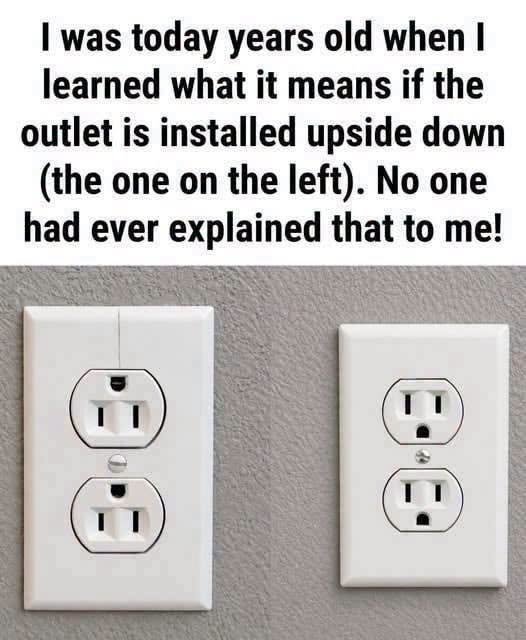
That “wrong-way” outlet on your wall might not be a mistake. It might be a secret signal. In many homes, an upside-down outlet quietly tells a story about hidden switches, old wiring habits, and a design choice that could change how you use your lights. But here’s the twist: it doesn’t always mean what you think.
When you see an outlet with the ground hole on top, it’s often a deliberate choice, not sloppy work. In many older homes, before overhead lights were standard, builders used switched outlets to control lamps. Flipping the outlet upside down became an easy visual cue: this one might be tied to a wall switch. Often, only one receptacle is switched while the other stays constantly powered, letting you control a lamp with the switch while still running clocks, chargers, or routers without interruption.
However, there’s no national electrical code that demands this orientation, and practices vary widely between regions, electricians, and eras. Sometimes it’s a habit, a local custom, or just a homeowner’s preference. In other cases, commercial or safety considerations influence the decision. Because there’s no universal rule, you can’t trust appearance alone. If you’re unsure, plug in a small lamp and flip nearby switches. A quick test reveals far more than an upside-down outlet ever can.
There’s another reason you might encounter one. Some electricians intentionally install receptacles with the grounding opening facing upward because, in certain situations, they believe this orientation can offer an additional safety advantage. If a metal object were to fall onto a partially inserted plug, the grounding contact may be positioned differently depending on the plug and installation. That said, electrical professionals and codes do not universally agree that one orientation is inherently safer in every residential situation.
The important point is that orientation by itself is not a reliable diagnostic tool. An upside-down receptacle does not automatically mean it is connected to a wall switch, nor does a normally oriented receptacle mean it is always powered.
If you want to know what your particular outlet does, there are safer ways to find out. A lamp or outlet tester can help determine whether power changes when a nearby switch is operated. If you notice loose outlets, damaged covers, exposed wiring, buzzing, burning smells, unusual heat, sparks, or breakers that repeatedly trip, don’t experiment with the wiring yourself. Turn off the appropriate circuit if you can do so safely and have a qualified electrician inspect it.
And that’s what makes the little detail so interesting: the direction of an outlet can sometimes provide a clue, but it isn’t a secret code with one universal meaning.
So the next time you notice an outlet that looks like it was installed “upside down,” don’t immediately assume the electrician made a mistake. It could be an old wiring convention, a switched receptacle, a safety preference, or simply the way someone chose to install it.
Sometimes, the strangest-looking details in an old house aren’t mistakes at all—they’re little clues to how the home was designed and used decades ago.