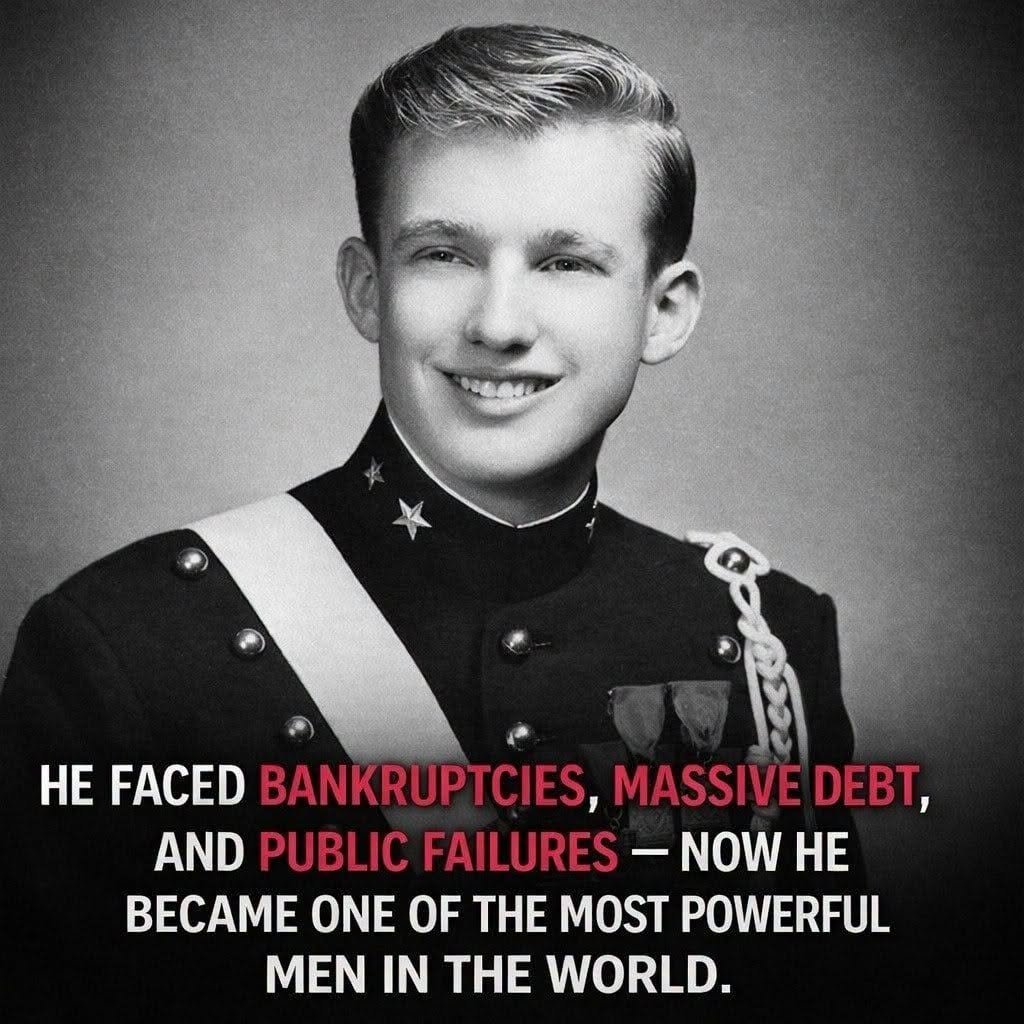
Few public figures have moved through such extreme cycles of wealth, debt, celebrity, defeat, and political power as Donald Trump. To admirers, his survival is proof of unusual resilience. To critics, it shows the power of branding and attention. Either way, his path was not a smooth rise. It included financial crises that could have ended the ambitions of a less recognizable businessman.
Trump entered public life as a real-estate developer associated with his family’s business and quickly placed his own name at the center of the product. Buildings, casinos, hotels, and licensing deals did more than generate revenue. They created a public character built around luxury, confidence, and winning.
That image was tested when several casino and business ventures struggled under heavy debt. Corporate bankruptcies, lender negotiations, and highly public failures damaged the idea that every Trump project was successful. He faced periods in which creditors had enormous influence over his assets and the scale of the obligations threatened the empire he had promoted.
Corporate bankruptcy is not the same as personal bankruptcy, but the distinction did little to soften the headlines. The setbacks became part of his reputation. He did not disappear from public view, however. He continued giving interviews, placing his name on projects, and presenting each negotiation as another deal rather than a final defeat.
That ability to control the story became one of his most important assets. Even when a business did not perform as promised, the Trump name remained widely recognized. Licensing allowed the brand to appear on properties and products without requiring him to own every underlying operation. Publicity that might have ended another career often kept him at the center of the conversation.
Television transformed that recognition. “The Apprentice” introduced him to a national audience as a decisive executive in a boardroom, delivering judgments and dismissing contestants with a memorable phrase. The program was entertainment, not a complete account of his businesses, but its image of authority became deeply embedded in popular culture.
When Trump entered presidential politics, he used many of the same methods. He spoke in direct, provocative language, dominated news cycles, and treated criticism as another opportunity to hold attention. Opponents often underestimated how effectively controversy could strengthen his bond with supporters who believed traditional institutions had ignored them.
His victory in the 2016 presidential election turned a celebrity businessman into the most powerful elected leader in the United States. The result stunned much of the political establishment. Supporters saw a fighter who had overcome financial and political elites. Critics saw a polarizing figure whose approach placed institutions and social divisions under severe pressure.
The years that followed brought investigations, impeachment proceedings, electoral defeat, legal battles, and a continuing hold over the Republican base. Each new crisis revived predictions that his influence was finished. Yet he repeatedly remained the central subject of American political debate.
Trump’s story cannot be reduced to a simple lesson that persistence guarantees success. Wealth, family connections, media access, loyal supporters, and a gift for self-promotion all shaped his opportunities. Nor can the record be understood only through admiration or dislike. Financial distress was real, the public reinvention was real, and the political consequences were real.
What distinguishes his rise is the conversion of attention into power. He turned a name damaged by debt into a television identity, then turned that identity into a political movement. People may love him or hate him, but the route from threatened financial ruin to the presidency explains why he remains impossible to ignore.
That route also explains why conventional measures of failure often failed to predict his next move. A balance sheet, television rating, court case, or election result captured one part of the story, while the brand continued operating in public imagination. Trump repeatedly treated survival itself as a victory. Whether that technique represents brilliant resilience or a troubling triumph of image over accountability remains the central disagreement surrounding him.
Website Disclaimer
The information provided on this website is for general informational and educational purposes only. While we strive to ensure that all content is accurate and up to date, we make no guarantees regarding the completeness, reliability, or accuracy of any information published.
The views and opinions expressed in articles belong to their respective authors and do not necessarily reflect the views of this website. Any action you take based on the information found on this website is strictly at your own risk. We will not be liable for any losses, damages, or inconveniences arising from the use of our content.
Some articles may contain opinions, third-party information, or external links. We do not endorse or guarantee the accuracy of content on external websites and are not responsible for their practices or policies.
All content on this website is provided in good faith and is intended for informational purposes only. Readers are encouraged to verify information independently and seek professional advice where appropriate.