Israeli judges have recommended that prosecutors drop one of three long-running corruption cases against Prime Minister Benjamin Netanyahu, saying there is little chance of a conviction in the bribery case known as Case 4000.
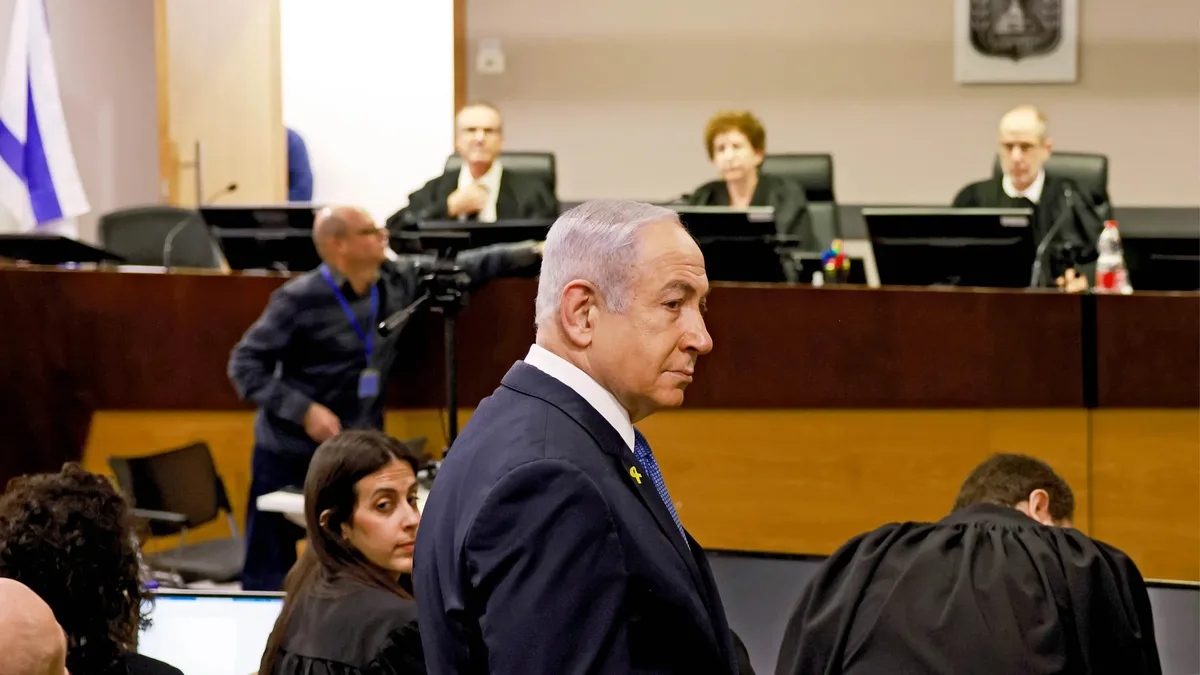
The recommendation, made at a hearing in the Jerusalem District Court on Wednesday, is a major legal boost for Israel’s longest-serving leader, whose corruption trial has dragged on for years. The judges also suggested prosecutors reconsider a second case and seek a deal in the third.
What the Judges Said
Judge Rivka Friedman-Feldman, who presides over the trial, told Attorney General Gali Baharav-Miara, who had attended the hearing at the judges’ direction, that the bribery charge in Case 4000 presented considerable difficulties.
“It seems to us that the bribery charge presents considerable difficulties,” the court said, according to a spokesperson. “There is serious doubt as to whether the evidentiary foundation supports this allegation.” The judges said they believed the chance of conviction was low, and that the case should be dropped.
The three judges, Friedman-Feldman, Moshe Bar-Am and Oded Shaham, made the same suggestion before: in June 2023, and again in June 2026, they recommended that the prosecution drop the bribery count. This week’s hearing restated that position, with the judges saying their view remains as it was in June 2023.
The Case Against Netanyahu
In Case 4000, prosecutors allege that Netanyahu granted regulatory favours worth around 1.8 billion shekels, about 500 million dollars, to Bezeq Telecom Israel. In return, they say, he received favourable coverage on the Walla news website, which was owned by Bezeq.
The alleged favours were granted to Shaul Elovitch, then the owner of Bezeq and Walla, and a friend of the prime minister. Netanyahu faced a charge of bribery as well as fraud and breach of trust in the case. Prosecutors put the value of the regulatory benefits at more than one billion shekels in some accounts of the case.
The judges pointed to problems with almost every element on which the State Attorney’s Office had built the bribery charge, according to reports from the hearing. That is a striking assessment in a case that prosecutors have long treated as the most serious of the three against Netanyahu.
The Other Two Cases
The judges did not stop at Case 4000. They also recommended that prosecutors reconsider Case 2000, in which Netanyahu is accused of seeking favourable coverage in one of Israel’s top newspapers in exchange for limiting the circulation of one of that paper’s main rivals. The judges said they had doubts that Netanyahu’s actions in that case even constituted a criminal offence.
In the final case, known as Case 1000, the judges urged Netanyahu’s lawyers to come to an agreement with prosecutors. Case 1000 concerns gifts the prime minister is alleged to have received from wealthy businessmen, including cigars and champagne.
Taken together, the judges’ suggestions amount to a sweeping rethink of the entire prosecution: drop the biggest case, reconsider the second, and settle the third by agreement.
A Recommendation, Not a Ruling
The court was careful to stress that its recommendations were not final decisions or a judgment in the corruption trial. The Attorney General said she would review the court’s statements with the prosecution team. Prosecutors are not obliged to follow the judges’ advice, and they could yet press on with all three cases.
Even so, the statements alone are an enormous win for Netanyahu. When the judges hearing a case tell prosecutors, in open court, that a conviction looks unlikely, it becomes very hard for the prosecution to carry on with confidence. The hearing was unusual in itself: the Attorney General does not normally attend routine trial sessions, and her presence underlined how seriously the prosecution took the judges’ intervention.
Political Reactions
Coalition ministers reacted swiftly, calling for an end to the prime minister’s corruption trial altogether. Some described the judges’ recommendation as proof that the case had been a political persecution from the start, one that had damaged public trust and deepened divisions in the country.
Netanyahu has always denied all wrongdoing, and his supporters have long argued that the cases against him were driven by political motives rather than evidence. His critics, by contrast, will note that a recommendation is not an acquittal, and that the final decision still rests with the prosecution.
For now, the trial continues, but the ground has shifted. A case that began as the centrepiece of the prosecution against Israel’s prime minister now carries the judges’ own doubts about whether it can ever end in a conviction.
Website Disclaimer
The information provided on this website is for general informational and educational purposes only. While we strive to ensure that all content is accurate and up to date, we make no guarantees regarding the completeness, reliability, or accuracy of any information published.
The views and opinions expressed in articles belong to their respective authors and do not necessarily reflect the views of this website. Any action you take based on the information found on this website is strictly at your own risk. We will not be liable for any losses, damages, or inconveniences arising from the use of our content.
Some articles may contain opinions, third-party information, or external links. We do not endorse or guarantee the accuracy of content on external websites and are not responsible for their practices or policies.
All content on this website is provided in good faith and is intended for informational purposes only. Readers are encouraged to verify information independently and seek professional advice where appropriate.