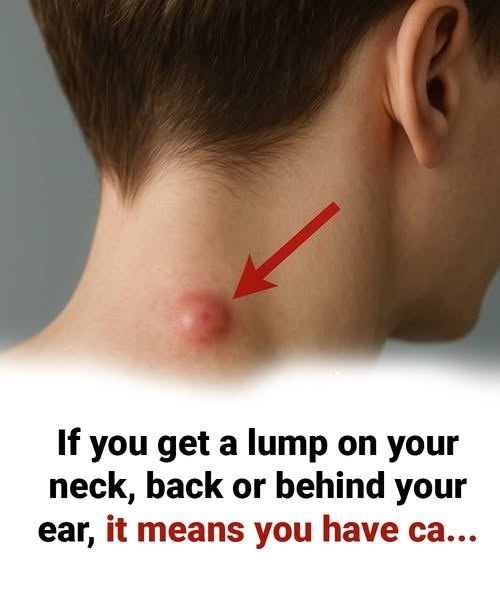
Finding a lump on your neck, back, or behind your ear can be alarming, often triggering worst-case fears. However, most lumps are harmless and caused by common, non-serious conditions.
Lumps can vary in size and cause. Understanding why one appears can help determine whether it’s something minor or something that needs medical attention.
A common cause is an epidermoid cyst. These form when skin cells build up beneath the surface instead of shedding normally, creating a slow-growing bump filled with keratin.
These cysts are usually smooth, round, and painless. They often remain unchanged for long periods and are commonly found on the neck, back, or behind the ears.
Problems can occur if a cyst becomes irritated or infected. It may turn red, swollen, tender, or release a thick discharge, which is a sign to seek medical advice.
Cysts can also develop from blocked hair follicles or minor skin injuries. They are more common in adults and in people with acne or recurring skin issues.
While home remedies like warm compresses may ease discomfort, they don’t remove the cyst. Squeezing or draining it yourself can cause infection or scarring and should be avoided.
Most cysts are harmless, but any changes in size, pain, or additional symptoms should be checked by a healthcare professional to rule out more serious conditions.
Website Disclaimer
The information provided on this website is for general informational and educational purposes only. While we strive to ensure that all content is accurate and up to date, we make no guarantees regarding the completeness, reliability, or accuracy of any information published.
The views and opinions expressed in articles belong to their respective authors and do not necessarily reflect the views of this website. Any action you take based on the information found on this website is strictly at your own risk. We will not be liable for any losses, damages, or inconveniences arising from the use of our content.
Some articles may contain opinions, third-party information, or external links. We do not endorse or guarantee the accuracy of content on external websites and are not responsible for their practices or policies.
All content on this website is provided in good faith and is intended for informational purposes only. Readers are encouraged to verify information independently and seek professional advice where appropriate.