China has launched the Shenzhou-24 spacecraft carrying three astronauts to its Tiangong space station, including the first Pakistani ever to travel into orbit — and the first foreign astronaut ever to visit the Chinese station.
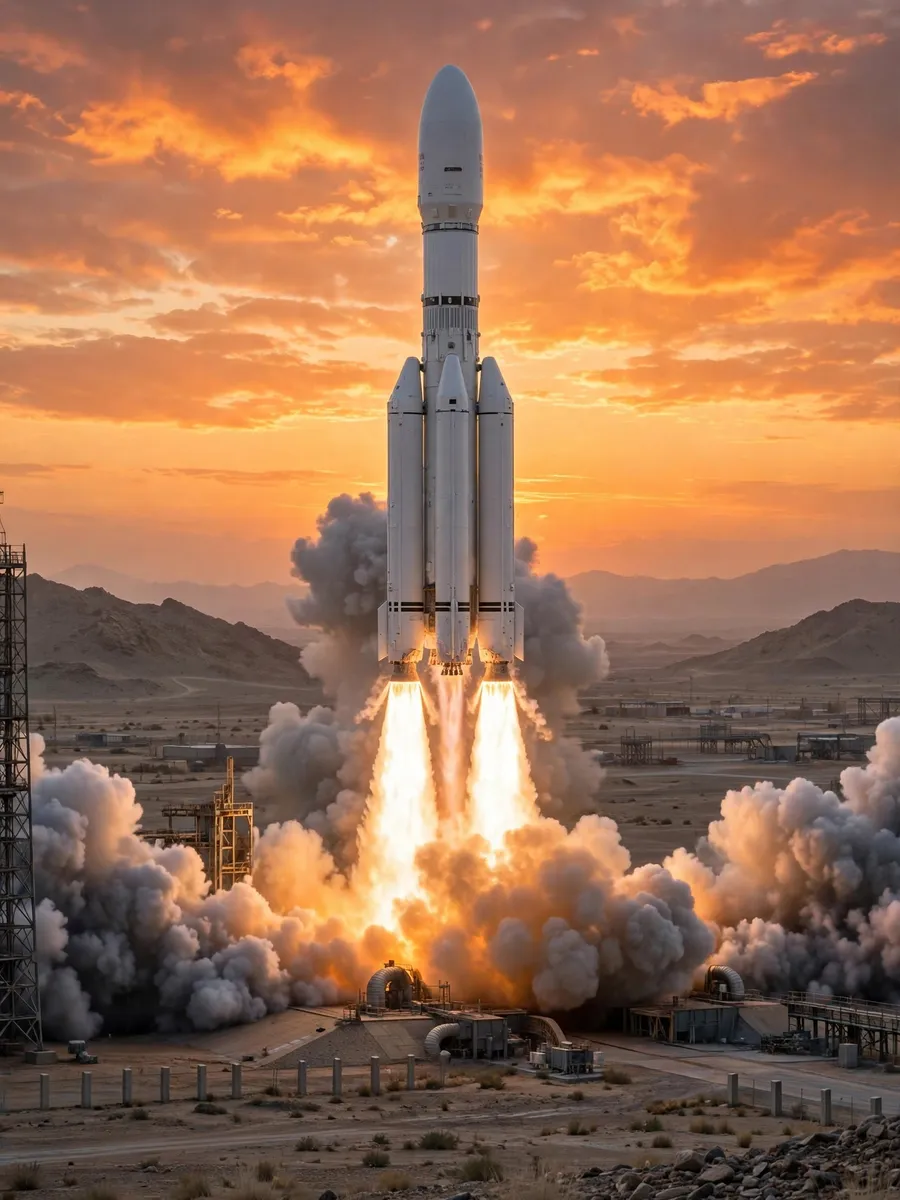
The spacecraft blasted off aboard a Long March 2F rocket from the Jiuquan Satellite Launch Center in north-west China at 8:18 a.m. local time on Wednesday 25 November 2026, beginning a mission that marks a new chapter for both China’s space programme and Pakistan.
A Crew of Three, a First for Two Nations
The crew is commanded by Tang Hongbo, 51, a veteran who previously flew on Shenzhou-12 in 2021 and Shenzhou-17 in 2023. He is now set to become the first person to visit the Tiangong space station three times. He is joined by flight engineer Wu Yi, 39, who is on his first mission.
The third seat belongs to Muhammad Zeeshan Ali, a 40-year-old pilot and Pakistan’s first astronaut. Ali was chosen as a payload specialist by Pakistan’s space agency, the Space and Upper Atmosphere Research Commission (SUPARCO), and trained in China for the flight. He will work as a payload specialist during his stay, conducting experiments for Pakistani researchers — including an experiment on photosynthetic cyanobacteria in orbit — before returning to Earth.
His flight makes Pakistan the 55th country to send one of its citizens into space. The mission patch itself carries a quiet tribute: three white jasmine flowers — the Chameli, Pakistan’s national flower — are woven into its design.
A Short Visit with a Long Significance
Ali is scheduled to spend five to ten days aboard the station, around a week, before returning to Earth aboard the Shenzhou-23 spacecraft, together with two of its crew, Zhang Zhiyuan and Li Jiaying, who have been on Tiangong since May.
The return journey carries its own piece of history. Zhu Yangzhu, a member of the Shenzhou-23 crew, will transfer onto the Shenzhou-24 mission for its six-month stay, becoming the first taikonaut to spend a planned year in orbit — an extended stay designed to deepen research into how the human body responds to long periods in microgravity.
Tang and Wu, meanwhile, have begun a planned six-month stay aboard the station. Shenzhou-24 is China’s 18th crewed spaceflight, the 24th flight of the Shenzhou programme overall, and the 12th crewed mission to Tiangong.
A Partnership Agreed in 2025
The joint flight is the result of an agreement signed by China and Pakistan in February 2025. Under the deal, SUPARCO shortlisted two pilots, Muhammad Zeeshan Ali and Khurram Daud, in April. One would fly and the other would serve as backup. Ali was the one chosen.
For Pakistan, the flight is a moment of national pride and a significant step for a space programme that has long worked in China’s shadow. For China, it is a deliberate statement. As the NASA-led International Space Station faces possible retirement by 2030, Beijing is promoting its Tiangong station — whose name means “Celestial Palace” — as a hub for international cooperation, open to partners that the Western-led programme has not always welcomed.
This is the first joint flight involving Chinese and foreign astronauts in the history of China’s manned space programme, and officials in Beijing have made clear they hope it will not be the last. Other countries are already in discussions about sending their own astronauts to Tiangong.
Ten Minutes to Orbit
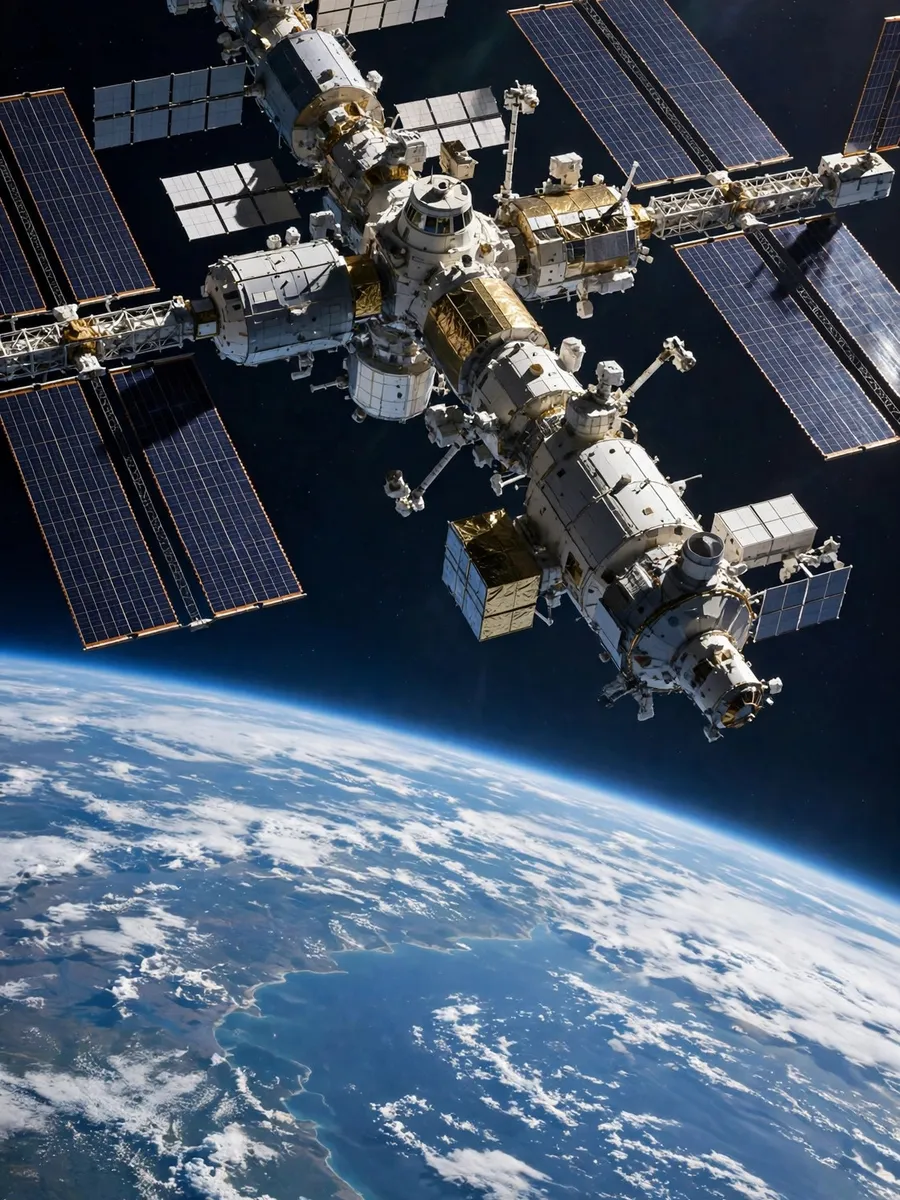
The launch itself went smoothly. About ten minutes after liftoff, the Shenzhou spacecraft separated from its rocket and unfurled its solar panels, beginning a chase to catch up with the station. Docking with the forward port of the Tianhe core module was planned about three and a half hours after launch, after which the hatches would open and the new arrivals would be greeted by the three taikonauts already aboard.
Tiangong has been fully operational since late 2022, and it now hosts a rotating crew of three, with regular cargo deliveries keeping it supplied. Shenzhou-24’s arrival, and the brief presence of a Pakistani flag patch on its crew’s shoulders, is a reminder of how quickly China’s ambitions in orbit have grown — and of how spaceflight, for all the rivalry that surrounds it, still has the power to carry new nations with it.
Website Disclaimer
The information provided on this website is for general informational and educational purposes only. While we strive to ensure that all content is accurate and up to date, we make no guarantees regarding the completeness, reliability, or accuracy of any information published.
The views and opinions expressed in articles belong to their respective authors and do not necessarily reflect the views of this website. Any action you take based on the information found on this website is strictly at your own risk. We will not be liable for any losses, damages, or inconveniences arising from the use of our content.
Some articles may contain opinions, third-party information, or external links. We do not endorse or guarantee the accuracy of content on external websites and are not responsible for their practices or policies.
All content on this website is provided in good faith and is intended for informational purposes only. Readers are encouraged to verify information independently and seek professional advice where appropriate.