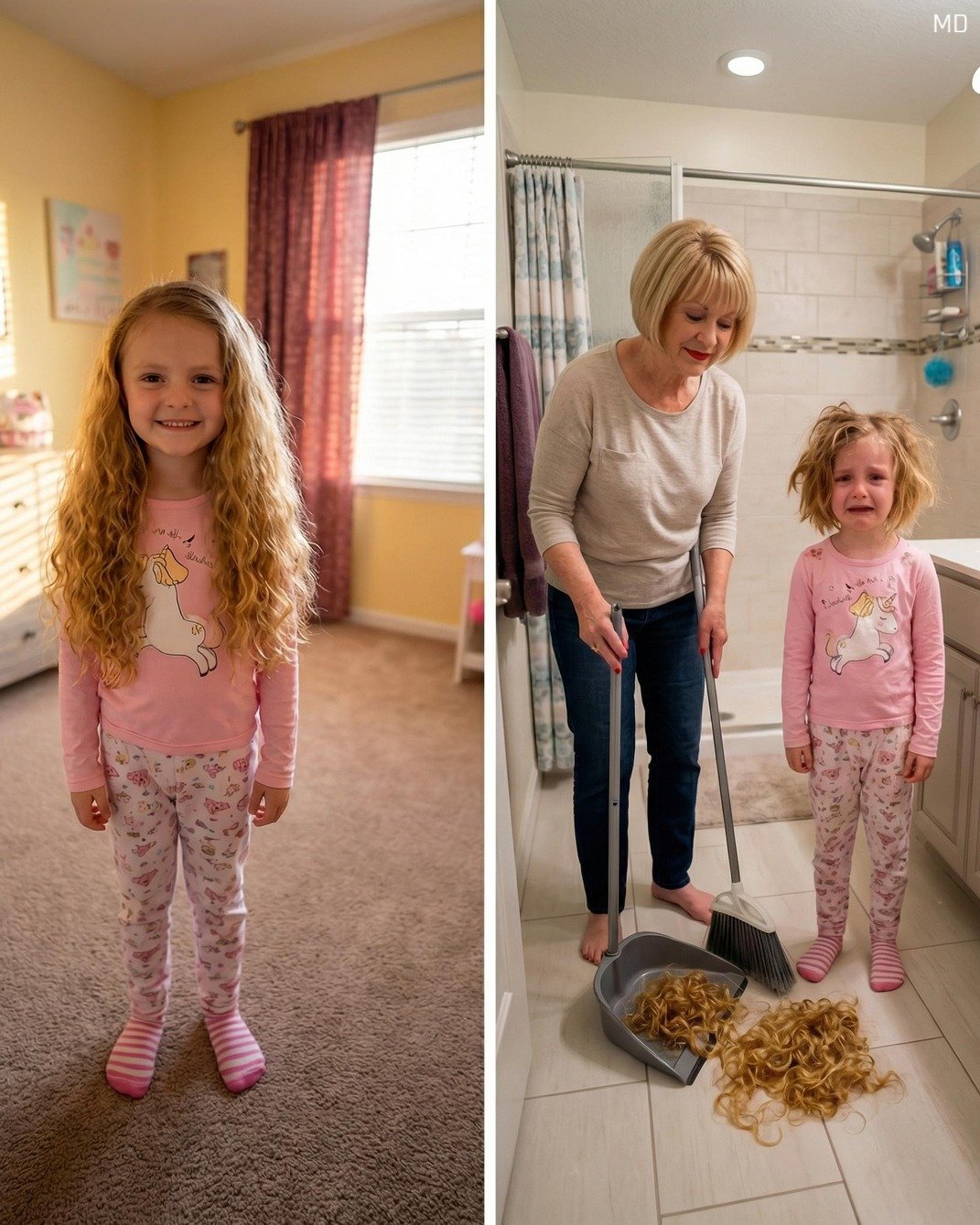
When my mother-in-law suddenly offered to babysit our eight-year-old daughter, I should have trusted my instincts. For years, she had declined to help, always citing one excuse or another. But that morning, with my daughter recovering from a mild fever and my job demanding my presence, I agreed. I left clear instructions: rest, fluids, and quiet activities. My daughter adored her long golden curls, and I made sure to emphasize comfort and care. Everything seemed manageable — until my phone rang at noon and I heard my child crying in a way no parent ever forgets.
Through tears, she told me her grandmother had promised to braid her hair but instead cut it short. Worse, she had been told that I had approved the haircut. By the time I rushed home, the damage was done. Strands of her beautiful curls lay scattered on the kitchen floor. My mother-in-law insisted she had only been trying to make her “look neat” for an upcoming family wedding. To her, it was just hair. To my daughter, it was trust broken in the most personal way. I didn’t yell. I didn’t argue. I comforted my child, reminded her that her body and her choices mattered, and quietly documented what had happened.
That evening, I had a long conversation with my husband. We discussed boundaries, respect, and the importance of presenting a united front when it comes to parenting decisions. The following day, I met with my own mother at her salon to help my daughter feel confident again. We chose a gentle, temporary gloss treatment that added shine and dimension to her shorter style — nothing drastic, just something playful to help her see beauty in the change. When my mother-in-law later tried a similar product without fully understanding the instructions, she ended up with a far more dramatic result than expected. It was an uncomfortable moment, but it opened the door for an honest discussion about actions and consequences.
In the days that followed, family members learned what had happened, and it became clear that boundaries needed to be firmly established. We agreed that future visits would be supervised and that decisions about our daughter’s appearance would always remain ours. Most importantly, my daughter stood in front of the mirror one evening and said softly, “I think I can like it like this — if you help me.” And I promised her we would figure it out together. Because hair grows back, but trust must be carefully rebuilt — and protecting your child’s sense of self is always worth standing firm.
Website Disclaimer
The information provided on this website is for general informational and educational purposes only. While we strive to ensure that all content is accurate and up to date, we make no guarantees regarding the completeness, reliability, or accuracy of any information published.
The views and opinions expressed in articles belong to their respective authors and do not necessarily reflect the views of this website. Any action you take based on the information found on this website is strictly at your own risk. We will not be liable for any losses, damages, or inconveniences arising from the use of our content.
Some articles may contain opinions, third-party information, or external links. We do not endorse or guarantee the accuracy of content on external websites and are not responsible for their practices or policies.
All content on this website is provided in good faith and is intended for informational purposes only. Readers are encouraged to verify information independently and seek professional advice where appropriate.