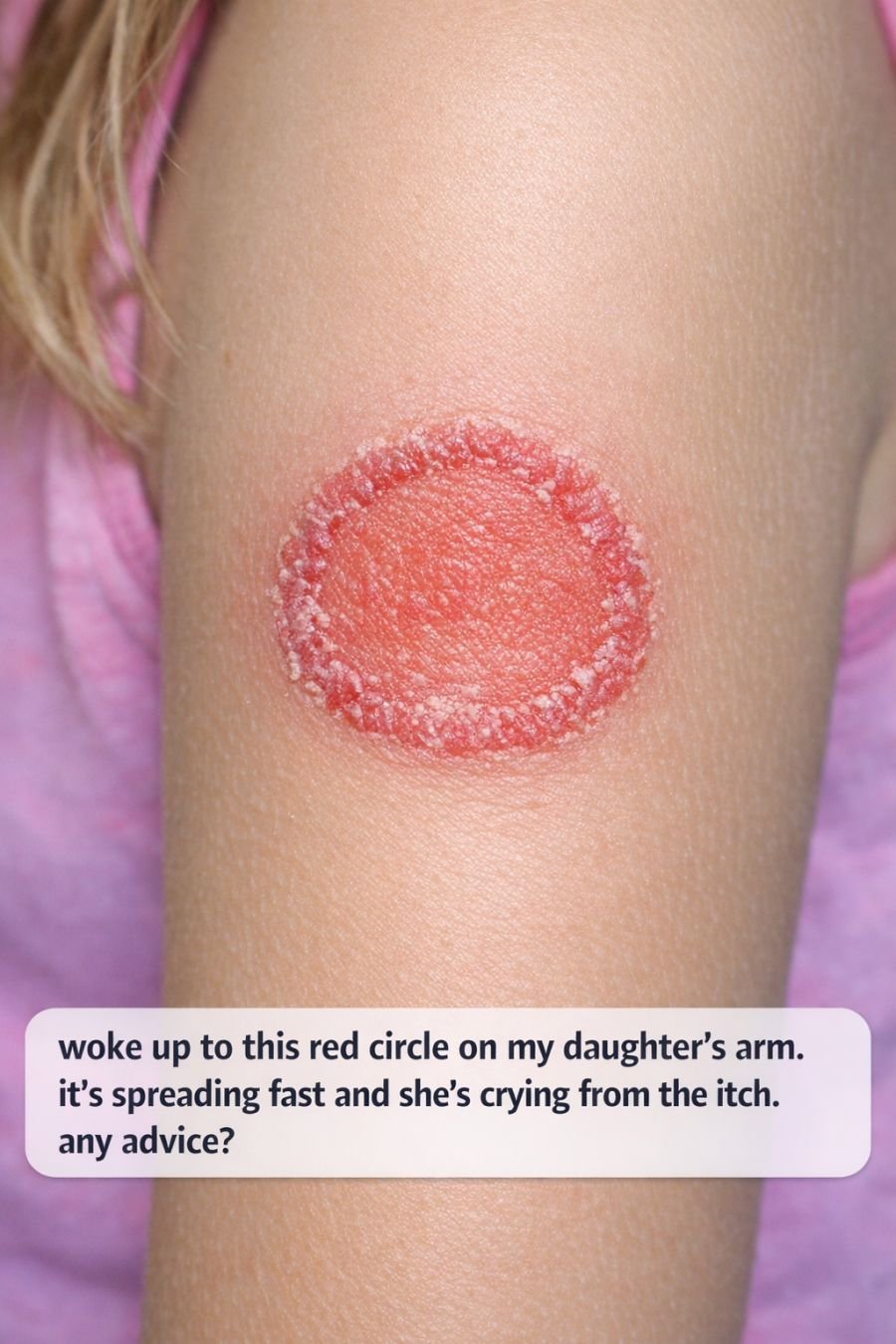
Discovering a strange rash on your child’s skin first thing in the morning can instantly set off alarm bells—especially if it’s red, expanding, and making them miserable with constant itching. A circular rash that seems to grow outward can point to several different conditions, so identifying the cause is essential to choosing the right treatment.
Seeing your daughter in tears and scratching nonstop would make any parent uneasy. While staying calm is important, acting quickly and thoughtfully matters. Below, we’ll walk through common causes, what to do right away, and when it’s time to involve a medical professional.
1. Why a Red Circular Rash May Be Ringworm (Not a Worm at All)
Despite the name, ringworm has nothing to do with worms. It’s actually a fungal infection called tinea. It usually appears as a red, round patch with clearer or slightly scaly skin in the center. The edges often look raised and well-defined, forming a ring shape.
Children are especially prone to ringworm because they’re in close contact with classmates and frequently share items. The fungus thrives in warm, damp environments and spreads easily through people, animals, or contaminated objects.
2. What to Do Immediately
As soon as you notice the rash, gently wash the area with mild soap and lukewarm water. Pat it dry carefully—don’t rub, as that can worsen irritation.
Trim your child’s nails to limit scratching, which can break the skin and invite infection. A cool compress may soothe itching. Whenever possible, let the area stay uncovered so air can circulate.
3. Telling Ringworm Apart from Lyme Disease, Hives, or Eczema
Ringworm usually forms clearly outlined circles. Lyme disease often begins with a “bullseye” pattern that expands over days and may come with flu-like symptoms.
Hives tend to appear as raised, itchy welts that move around the body, often triggered by allergies. Eczema typically causes dry, inflamed patches that aren’t necessarily circular.
4. When to Call the Doctor Right Away
If the rash spreads quickly, causes intense itching, or is accompanied by fever, seek medical advice promptly.
Also consult a healthcare provider if over-the-counter treatments don’t help or if your child has a weakened immune system.
5. Safe Over-the-Counter Treatments and Home Care
Antifungal creams like clotrimazole or miconazole are commonly effective. Apply a thin layer twice daily for the full recommended duration—usually two to four weeks.
Keep the area clean and dry, use gentle, fragrance-free products, and dress your child in loose clothing to reduce irritation.
6. Mistakes That Can Make It Worse
Avoid covering the rash tightly, as moisture helps fungi grow. Don’t stop treatment early—even if it looks better.
Steroid creams without medical guidance can worsen fungal infections by suppressing the skin’s natural defenses.
7. How Contagious Is It?
Ringworm spreads easily through skin contact or shared items like towels and bedding. Pets can carry it too, so check them if needed.
Encourage your child not to share personal belongings, and notify school or daycare so precautions can be taken.
8. Cleaning and Disinfecting at Home
Wash clothing, towels, and sheets in hot water and dry on high heat. Regularly disinfect commonly touched surfaces and vacuum to remove contaminated skin flakes or hair.
9. What Happens at the Pediatrician’s Office
A doctor will examine the rash and may take a small skin sample to confirm the diagnosis. If needed, they can prescribe stronger antifungal creams or oral medication.
For scalp infections, prescription antifungals such as griseofulvin or terbinafine may be required.
10. How Long It Takes to Heal
With consistent treatment, ringworm usually clears within two to four weeks. Children can often return to school 24–48 hours after starting treatment, once improvement begins. Cover the rash until it fully heals to reduce spread.
11. When a Rash May Be Something More Serious
Most rashes are mild, but worsening symptoms, fever, swelling, or pain deserve prompt medical attention. Conditions like cellulitis—an infection of deeper skin layers—require immediate treatment.
When in doubt, it’s always safest to consult a healthcare provider. Acting early can prevent complications and help your child feel comfortable again sooner.
Website Disclaimer
The information provided on this website is for general informational and educational purposes only. While we strive to ensure that all content is accurate and up to date, we make no guarantees regarding the completeness, reliability, or accuracy of any information published.
The views and opinions expressed in articles belong to their respective authors and do not necessarily reflect the views of this website. Any action you take based on the information found on this website is strictly at your own risk. We will not be liable for any losses, damages, or inconveniences arising from the use of our content.
Some articles may contain opinions, third-party information, or external links. We do not endorse or guarantee the accuracy of content on external websites and are not responsible for their practices or policies.
All content on this website is provided in good faith and is intended for informational purposes only. Readers are encouraged to verify information independently and seek professional advice where appropriate.