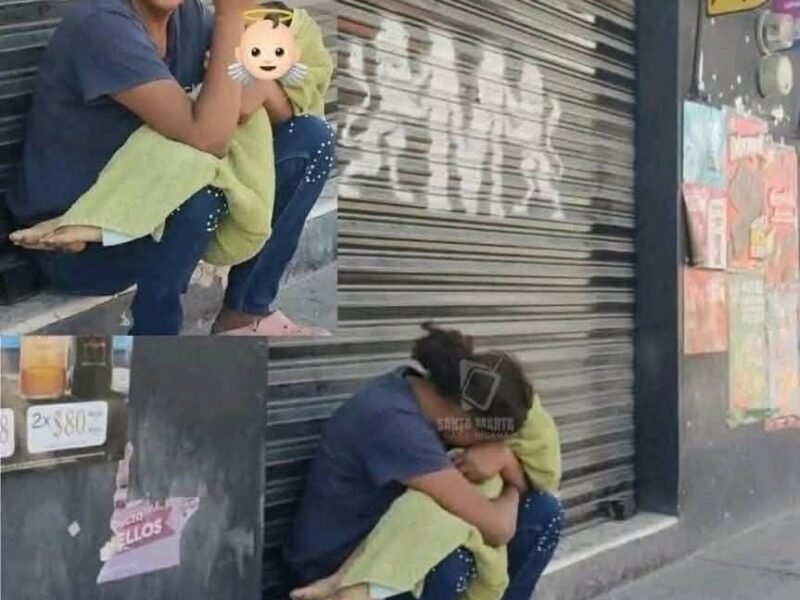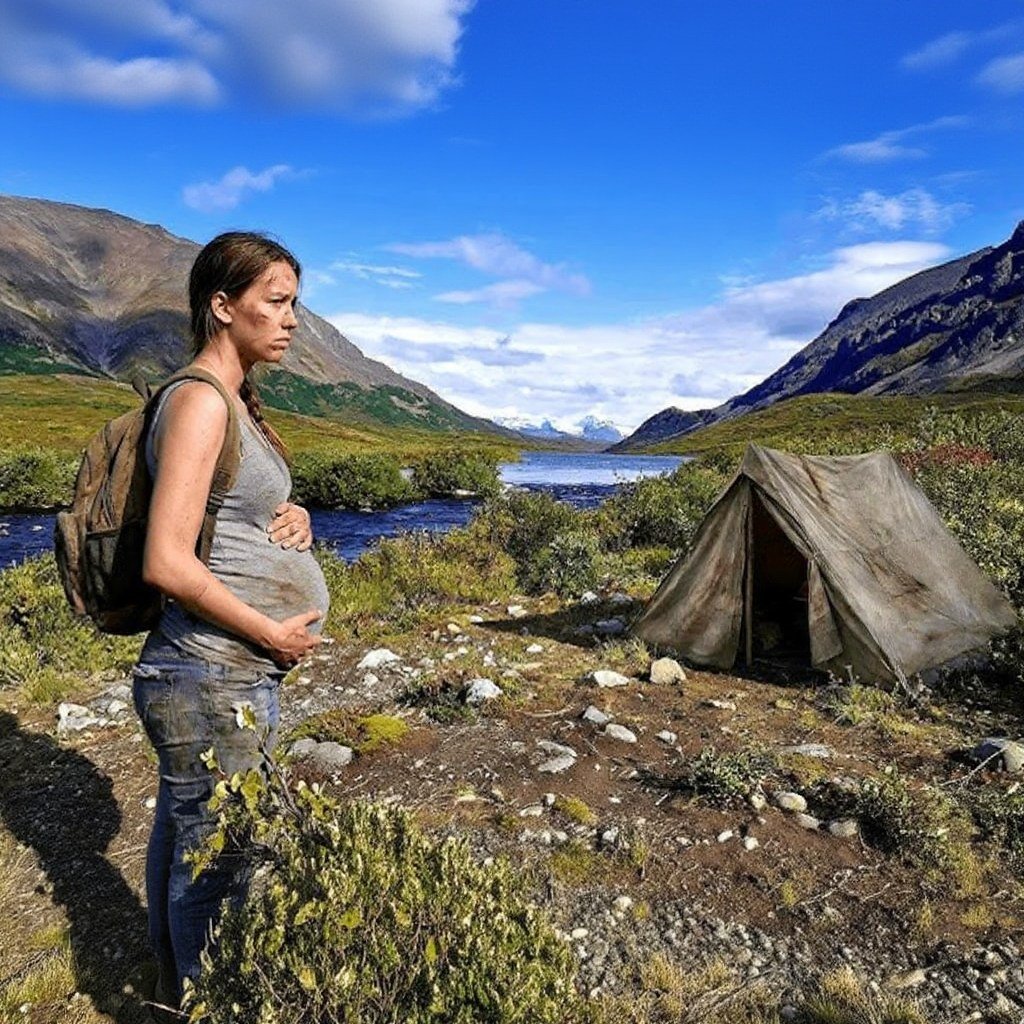
Pregnant Teen Abandoned in the Mountains, Fights to Survive with No Food or Water
When seventeen-year-old Emily Carter realized the car wasn’t coming back, the sun was already slipping behind the peaks.
The mountains of western Colorado stretched endlessly around her—jagged ridges of stone and pine, painted gold by the dying light. The road that had brought her there was nothing more than a thin strip of dirt carving through wilderness. No houses. No cell service. No sound but wind moving through trees.
And she was alone.
Completely alone.
Emily pressed a trembling hand against her stomach.
“I’ve got you,” she whispered. “I promise.”
Six months pregnant, exhausted, and wearing nothing but sneakers and a thin hoodie, she watched the dust cloud from the pickup truck disappear around a bend. Her boyfriend—Tyler—had promised they were going somewhere quiet to “figure things out.” He had been nervous all morning. Distant.
When he pulled over and told her to step out for air, she hadn’t suspected anything.
Then he drove away.
At first she thought it was a joke.
Then she saw her phone—still sitting on the truck’s dashboard as it disappeared.
The cold realization hit her harder than the mountain wind.
He wasn’t coming back.
Emily grew up in a small town outside Grand Junction. Her father left when she was ten. Her mother worked double shifts at a diner to keep the lights on. Emily had always been the quiet one—good grades, no trouble, dreams of studying nursing someday.
Tyler had been charming. Older. Confident. He made her feel chosen.
Until the pregnancy test turned positive.
At first he said he’d stand by her. Then his texts became shorter. His visits less frequent. His frustration louder.
“You’ve ruined everything,” he’d muttered last week.
Now she understood what he meant.
She wrapped her arms around herself and scanned the landscape. The temperature was already dropping. Mountain nights in early spring didn’t care that she was pregnant.
She needed shelter.
She needed water.
She needed to think.
The first rule her biology teacher once mentioned during a wilderness lesson echoed in her mind: Stay calm. Panic wastes energy.
Emily inhaled slowly, counting to four. Then exhaled.
Okay.
The road likely led somewhere—but she had no idea how far she was from the nearest town. Walking blindly while pregnant could be dangerous. But staying put in open air was worse.
She noticed a cluster of dense pine trees about fifty yards away, forming a natural windbreak. Beneath them, the ground looked relatively dry.
She shuffled toward them carefully, her back aching with each step.
Inside the small grove, she found fallen branches and pine needles. She remembered reading once that layering pine boughs could insulate against the cold ground.
“Okay,” she murmured. “We can do this.”
Using shaking hands, she gathered branches and arranged them into a crude nest against the base of a tree. It wasn’t much—but it was something.
By the time darkness fell fully, her fingers were numb.
She curled onto her side, cradling her belly.
The baby shifted gently inside her.
“I’m sorry,” she whispered into the darkness. “I’m so sorry.”
Tears slid silently into the pine needles.
But she didn’t let herself sob.
She couldn’t afford to lose heat.
Morning came with pale blue light and a splitting headache.
Her mouth felt like sandpaper.
Thirst hit before hunger.
She stood slowly, dizziness washing over her. Her lips were cracked already.
Water.
She needed water first.
In the distance, she thought she heard something faint—like trickling. She held her breath.
Yes.
A stream.
It sounded faint, but it was there.
Carefully, Emily followed the sound downhill. Her sneakers slipped on loose gravel. Twice she nearly fell.
After what felt like an hour—but was probably fifteen minutes—she found it.
A narrow stream cutting through rock.
Relief flooded her so hard her knees buckled.
She dropped beside it and hesitated. She’d heard about bacteria in wild water. But dehydration would be worse.
She scooped water into her hands and drank.
It was icy. Metallic. Glorious.
She drank slowly, forcing herself not to gulp too fast.
Then she splashed her face and whispered, “Thank you.”
The baby kicked.
“I know,” she smiled weakly. “We needed that.”
The second day tested her.
Hunger gnawed at her stomach. She had eaten only half a granola bar that morning before Tyler drove her away. Now her body demanded fuel—for her and the baby.
She searched near the stream for anything edible.
Berries? None in season.
Roots? She wasn’t confident identifying safe ones.
Fishing required tools she didn’t have.
She remembered another lesson: conserve energy.
So she built a better shelter instead.
Using larger branches and leaning them against a fallen log, she constructed a crude A-frame. She layered pine needles thickly on top to block wind.
Her movements were slower now. Each bend sent sharp pressure through her lower back. Her ankles were swelling.
“You have to stay strong,” she told herself. “For her.”
She didn’t know why, but she was certain the baby was a girl.
Late that afternoon, clouds rolled in.
Rain began as a whisper.
Then it poured.
Emily scrambled into her shelter as cold water soaked the forest floor.
She pressed herself against the driest corner she could find, shivering violently.
Lightning cracked across the sky.
Thunder followed instantly.
She’d never felt so small.
Her thoughts spiraled.
What if no one looks for me?
What if Tyler tells them I ran away?
What if we don’t make it?
The baby shifted again.
Emily placed both hands over her belly.
“No,” she said firmly. “You don’t get to think like that.”
She closed her eyes and pictured her mother’s face.
Her mom would notice she hadn’t come home. She would call. She would search.
Someone would come.
They had to.
On the third day, weakness set in.
Standing made her vision blur.
Her steps felt like walking through water.
She rationed trips to the stream, moving carefully to avoid falling.
She knew she needed help—but she couldn’t simply wait.
If Tyler had driven far enough into the mountains, the road might not see traffic for days.
She made a decision.
She would climb.
Higher ground might give her a better view—maybe even a signal if her phone had been there. But it wasn’t.
Still, higher ground meant visibility.
If helicopters searched, they’d see movement more easily from above.
It was risky.
But staying meant fading.
So she began.
Each step uphill burned her lungs.
Her belly felt heavier than ever.
Halfway up a rocky incline, her foot slipped.
She fell hard, scraping her palms and knees.
Pain exploded through her hip.
For a terrifying moment, she felt a cramp low in her abdomen.
“No, no, no,” she gasped.
She lay still, breathing shallowly.
The cramp eased.
Tears streamed down her temples into her hair.
“I can’t lose you,” she whispered. “Please.”
Minutes passed before she found strength to sit up.
She examined the scrape on her knee—bleeding but not deep.
Carefully, she continued.
At the top of the ridge, she collapsed onto a flat rock.
The view stretched for miles.
Mountains. Endless mountains.
But then—
A thin line of asphalt far in the distance.
A highway.
Not the dirt road Tyler used. A real highway.
She let out a shaky laugh.
“Okay,” she breathed. “That’s something.”
It looked impossibly far.
But it was a direction.
The descent on the opposite side was brutal.
Loose shale slid underfoot.
Twice she nearly twisted her ankle.
By sunset, she had made only a fraction of the distance.
Her body screamed for rest.
She built another makeshift shelter.
That night, the temperature dropped sharply.
She shook uncontrollably, teeth chattering.
Her thoughts drifted dangerously.
She imagined warm hospital lights. Clean sheets. Her mother holding her hand.
Then darkness.
Deep, heavy darkness.
She forced herself awake.
“No,” she muttered. “Not like this.”
She began talking out loud—to the baby, to herself, to the trees.
She recited multiplication tables. Sang lullabies her mom used to sing. Anything to stay conscious.
Somewhere in the night, coyotes howled.
Fear sliced through her fog.
She gripped a thick branch beside her.
“I’m not prey,” she whispered fiercely. “I’m not giving up.”
Morning of the fourth day brought snow.
Not heavy—but steady.
Each flake felt like insult.
Her energy was nearly gone.
Her lips were blue.
She stumbled more than she walked.
But the highway was closer now.
She could see the occasional glint of a vehicle in the distance.
The problem was the final stretch—a steep ravine between her and the road.
She stared at it.
Then at her stomach.
“We’re almost there,” she said hoarsely.
Step by step, she descended carefully, clutching tree trunks for balance.
Halfway down, her foot gave out.
She slid several feet before slamming into a bush.
Pain shot up her side.
She lay there, gasping.
And then—
A sharp, terrifying sensation low in her abdomen.
A contraction.
Too early.
“No,” she cried weakly. “Please, not now.”
Another wave hit minutes later.
Panic surged.
She was not equipped to give birth here. Not alone. Not starving.
She dragged herself upright.
The highway roared faintly above.
She had one chance.
Summoning everything left inside her, Emily began to scream.
“HELP!”
Her voice cracked.
She screamed again.
And again.
Cars passed.
No one slowed.
Her throat burned.
She picked up a rock and staggered toward the edge of the ravine, waving it.
“HELP!”
A pickup truck approached.
She screamed until her vision sparkled.
The truck passed.
Then—
Brake lights.
Red.
The truck slowed.
Reversed.
Emily’s knees buckled.
A man jumped out, staring down the ravine.
“Oh my God,” he shouted. “Hang on!”
Relief flooded her so violently she nearly blacked out.
Minutes later, strong arms were lifting her carefully.
“It’s okay,” the man kept saying. “You’re safe now.”
She clung weakly to his jacket.
“My baby,” she whispered.
“We’ve got you,” he assured.
Sirens wailed in the distance.
Emily woke in a hospital room two days later.
Clean sheets.
Beeping monitors.
Warmth.
Her mother sat beside her, eyes swollen from crying.
“Oh, Em,” she whispered, gripping her hand.
Emily’s first instinct was to reach for her stomach.
It was still round.
A nurse smiled gently.
“Your daughter is stable,” she said. “You went into premature labor, but we stopped it. She’s strong.”
Daughter.
Emily cried harder than she had in the mountains.
Police later confirmed Tyler had lied, claiming she ran away. But GPS data from his truck—and tire tracks near the ravine—told another story.
He was arrested.
But Emily barely listened to the details.
She focused on healing.
On nutrition.
On the steady rhythm of her baby’s heartbeat during ultrasounds.
Weeks later, she held her daughter for the first time.
Tiny. Fierce. Alive.
“I’m naming you Hope,” she whispered.
Because that’s what had carried her through freezing nights, hunger, fear, and betrayal.
Not strength alone.
Not luck.
Hope.
The kind that keeps a pregnant teenager climbing a mountain when her body says stop.
The kind that screams until someone hears.
The kind that refuses to die—even in the wilderness.
Emily had been abandoned in the mountains with no food or water.
But she wasn’t abandoned by life.
And as she cradled her daughter against her chest, she understood something powerful:
Sometimes survival isn’t about being the strongest.
Sometimes it’s about loving someone enough… to keep going.
Website Disclaimer
The information provided on this website is for general informational and educational purposes only. While we strive to ensure that all content is accurate and up to date, we make no guarantees regarding the completeness, reliability, or accuracy of any information published.
The views and opinions expressed in articles belong to their respective authors and do not necessarily reflect the views of this website. Any action you take based on the information found on this website is strictly at your own risk. We will not be liable for any losses, damages, or inconveniences arising from the use of our content.
Some articles may contain opinions, third-party information, or external links. We do not endorse or guarantee the accuracy of content on external websites and are not responsible for their practices or policies.
All content on this website is provided in good faith and is intended for informational purposes only. Readers are encouraged to verify information independently and seek professional advice where appropriate.