Ukraine says it has struck a major Russian military airbase deep inside Russia, damaging five warplanes used to launch missiles and bombs at Ukrainian cities, in the latest long-range attack aimed at crippling Moscow’s war effort.
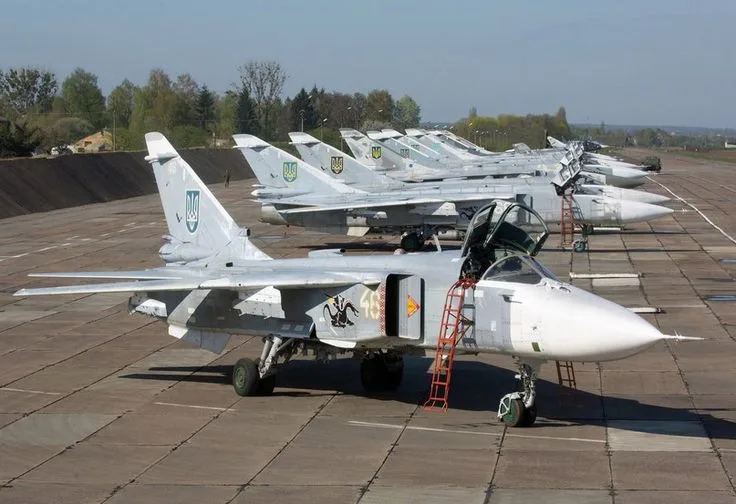
According to Ukraine’s General Staff, the strikes on Savasleyka airbase in the Nizhny Novgorod region, east of Moscow, took place on 24 November and overnight into Wednesday 25 November 2026. Three MiG-31 jets and two Su-34 fighter-bombers were hit and knocked out of operation “for some time,” the General Staff said. Russia did not immediately comment on the report.
Why Savasleyka Matters
Savasleyka is no ordinary airfield. It is the base from which Russian MiG-31 jets take off carrying Kinzhal hypersonic missiles, the air-launched ballistic weapons Russia fires at Ukrainian cities. Every time a MiG-31K takes off from Savasleyka, air raid alerts sound across the whole of Ukraine, because the Kinzhal can strike almost anywhere in the country within minutes.
The Su-34s based there play a different but equally destructive role. The two-seat fighter-bomber is the aircraft Russia uses to drop guided glide bombs on Ukrainian front-line positions and towns, weapons that have devastated settlements along the eastern front. Knocking out five aircraft of these two types in a single operation, if confirmed, would be a significant blow to the fleet Russia uses to terrorise Ukrainian civilians and pound its defences.
The General Staff also reported strikes on a radar station and several fuel and supply depots in Russian-occupied parts of eastern Ukraine during the same operation. Near Karavan-Solodkyi in the Luhansk region, Ukrainian forces said they hit a Russian P-18 radar station used to detect aerial targets and support the operation of air defence systems.
A Long-Running Campaign
Ukraine’s Defence Ministry said this was the fifth strike on Savasleyka since August 2024, and the base had previously been attacked in June 2025. The pattern is deliberate: Kyiv has spent months hunting the aircraft, launchers and infrastructure behind Russia’s missile campaign, striking at the sources of the attacks rather than waiting to intercept them over Ukrainian cities.
That hunt has extended to ballistic-missile launchers themselves. Defence Minister Yevhenii Khmara said this week that Ukrainian forces have struck 16 such launchers over the past several months, as Kyiv tries to dent Moscow’s ability to keep up its bombardment.
The losses at Savasleyka were first claimed on Wednesday morning by a Ukrainian Telegram channel that tracks long-range strikes, hours before the General Staff released its own figures. By Wednesday afternoon, no satellite images showing the damage at the base had surfaced publicly, and the exact extent of the damage was still being verified. That caution matters: claims made in wartime are often hard to verify independently, and both sides have an interest in shaping the story.
Kyiv Under Fire
The strike on Savasleyka came as Kyiv itself was enduring a renewed wave of attacks. Ukraine’s capital has been hit repeatedly by ballistic missiles in recent days, part of a wider Russian campaign targeting the country’s energy system as winter sets in. The strategy is grimly familiar: by striking power plants and heating infrastructure, Moscow aims to leave Ukrainian cities cold and dark, piling pressure on a population that has already endured nearly five years of war.
Kyiv is struggling under that campaign even as it strikes back at Russian bases. The city has faced mounting strikes on its energy network, and the winter months, when temperatures plunge and demand for heating soars, are the hardest time of year to defend it. Each successful Ukrainian strike on a base like Savasleyka is, in Kyiv’s calculation, one small step towards reducing the number of missiles that can be fired at its own people.
A War of Deep Strikes
The exchange captures the shape the war has taken in late 2026: a contest of deep strikes, with Ukraine reaching hundreds of kilometres into Russia to hit airfields and depots, while Russia answers with ballistic missiles aimed at Ukrainian cities and the power grid that keeps them running.
Neither side is close to a breakthrough on the battlefield, and neither shows any sign of backing down. Ukraine’s message, in striking Savasleyka, is that no Russian base is safe, however far from the front line. Russia’s message, in the missiles falling on Kyiv, is that it can still inflict pain on the Ukrainian capital at will. For the civilians caught between those two messages, in Kyiv and in the towns of the east, the war’s grinding logic offers little comfort and no obvious end in sight.
Website Disclaimer
The information provided on this website is for general informational and educational purposes only. While we strive to ensure that all content is accurate and up to date, we make no guarantees regarding the completeness, reliability, or accuracy of any information published.
The views and opinions expressed in articles belong to their respective authors and do not necessarily reflect the views of this website. Any action you take based on the information found on this website is strictly at your own risk. We will not be liable for any losses, damages, or inconveniences arising from the use of our content.
Some articles may contain opinions, third-party information, or external links. We do not endorse or guarantee the accuracy of content on external websites and are not responsible for their practices or policies.
All content on this website is provided in good faith and is intended for informational purposes only. Readers are encouraged to verify information independently and seek professional advice where appropriate.