Colombian security forces stormed a supermarket in the Caribbean city of Cartagena before dawn on Wednesday, bringing a 17-hour hostage siege to an end and rescuing all 76 people who had been held inside, officials have said.
President Abelardo de la Espriella announced the outcome himself, describing it as an extraordinary joint operation between the National Police and the Armed Forces. One of the hostage-takers was killed during the assault, and several others were arrested. Every hostage, he said, walked out alive.
A Robbery That Went Wrong
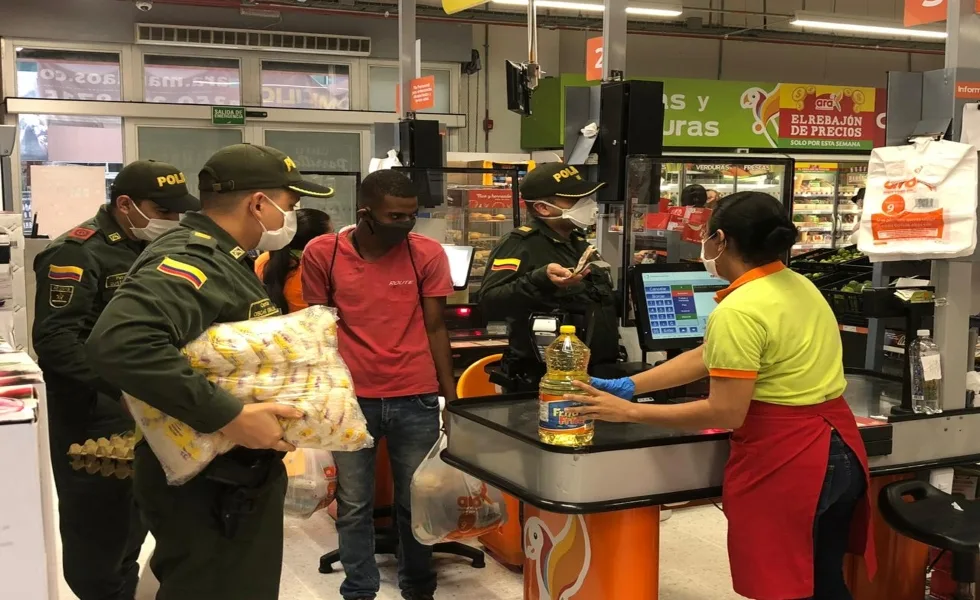
The crisis began on Tuesday morning with what appears to have been a botched attempt to rob an armoured vehicle carrying cash at a shopping centre in Cartagena. When that plan collapsed, the gunmen retreated into an Éxito supermarket, taking shoppers and staff hostage.
Witnesses described a terrifying scene inside the store. The attackers, some of them disguised as police officers and armed with guns and knives, forced people to the ground and tied them up. Some hostages were locked inside a cold storage room, while others were threatened with explosives that the gunmen claimed they had rigged at the exits.
One rescued employee, a baker, told local radio that the attackers grabbed staff and shoppers as they entered, threw them to the floor and bound them. Another worker, Dayro Rafael Velázquez Castrillo, told Caracol radio that the gunmen wore masks and repeatedly warned their captives that the building had been wired to explode.
Hours of Negotiation
As the siege dragged on, negotiators worked through the afternoon and into the night. The gunmen demanded nearly two million dollars, two armoured vehicles and safe passage to Barranquilla, a city about 130 kilometres northeast of Cartagena, according to local media reports.
Over the course of the standoff, the attackers released ten of the hostages, including several elderly women. One of them was a 76-year-old woman whose daughter Sandra had spent hours waiting anxiously outside the police perimeter, telling reporters she had no idea whether her mother was safe. The elderly hostages were reunited with their families after about six hours.
But around twenty people were still being held when the decision was taken to move in. A police helicopter hovered low over the shopping centre shortly after midnight as special forces teams massed outside the building, while crowds of relatives waited behind the cordon, some of them trying to push through as the tension rose.
The Dawn Assault
Several explosions were heard before security forces entered the building, and stun grenades were used as officers stormed inside. Moments later, soldiers could be seen moving through the supermarket as the building was secured.
The final count of those held was far higher than first reported. The president initially spoke of around thirty hostages, and the army later said more than fifty. Police subsequently told the AFP news agency that the true total was 76, all of them freed unharmed. The discrepancy reflected the chaos inside the store, where some hostages had been hidden in the cold storage room and others had been moved around the building.
Four of the attackers were arrested, although their identities had not yet been released. The gunman who was killed was described by the president as the alleged leader of the group, who had refused to surrender and attacked an officer. Local media, however, raised questions about his identity, reporting that he was a 51-year-old man whose wife had been searching for him among the hostages. His death is under investigation pending an autopsy.
A City on Edge
The siege gripped Cartagena, a Caribbean port famed for its colonial walled old town, its beaches and its cruise-ship tourism. The city’s mayor said all the hostages were safe and sound and would be reunited with their families after medical checks. Footage from local media showed bystanders cheering as some of those freed were escorted to waiting ambulances.
Officials were quick to stress that the attackers were ordinary criminals rather than members of a terrorist organisation or rebel group. President de la Espriella, who travelled to Cartagena while the crisis was still unfolding and appeared at the scene wearing fatigues and carrying a walkie-talkie, said the men had no political affiliations and had taken hostages only after their plan to rob the cash-laden armoured car had been foiled.
The incident came on the tenth anniversary of Colombia’s landmark peace accord with the FARC guerrillas, and against a backdrop of what officials describe as the country’s worst wave of violence in a decade. For the families who waited through the night outside the supermarket, however, the politics mattered far less than the outcome: every one of the 76 people held inside came home.
Website Disclaimer
The information provided on this website is for general informational and educational purposes only. While we strive to ensure that all content is accurate and up to date, we make no guarantees regarding the completeness, reliability, or accuracy of any information published.
The views and opinions expressed in articles belong to their respective authors and do not necessarily reflect the views of this website. Any action you take based on the information found on this website is strictly at your own risk. We will not be liable for any losses, damages, or inconveniences arising from the use of our content.
Some articles may contain opinions, third-party information, or external links. We do not endorse or guarantee the accuracy of content on external websites and are not responsible for their practices or policies.
All content on this website is provided in good faith and is intended for informational purposes only. Readers are encouraged to verify information independently and seek professional advice where appropriate.