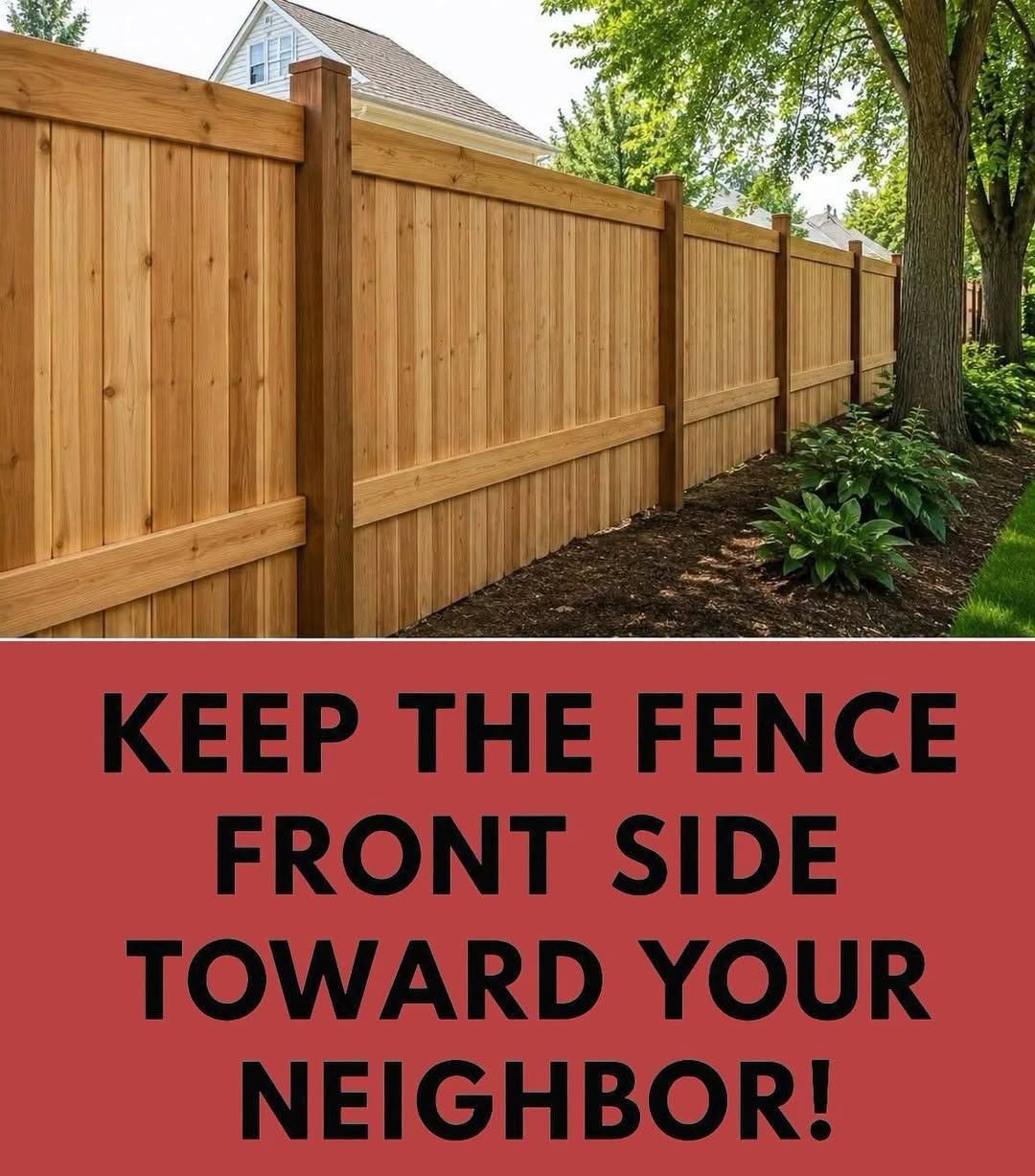
When installing a fence around your property, the finished or “good” side is generally expected to face outward toward neighbors and the street. This common practice is more than just about appearance—it can also help maintain good relationships and avoid unnecessary disagreements between homeowners.
In many neighborhoods, the outward-facing side of a fence is considered a matter of basic etiquette. A clean, finished surface creates a more attractive view for everyone, while showing the less attractive structural side toward your own property can make the fence look more consistent from the street.
Local regulations can also play an important role. Some cities and homeowners’ associations have specific rules about fence placement, height, materials, and which side should face outward. Before installing a fence, it is wise to check local building codes or neighborhood requirements to avoid having to make costly changes later.
The direction of the fence can also affect how neighbors feel about the installation. A fence is shared visually by the surrounding properties, so facing the finished side outward can be seen as a simple sign of consideration and respect. It may also prevent small disagreements from becoming larger neighborhood disputes.
Ultimately, following the usual convention of putting the “good” side outward is a practical way to improve curb appeal, respect neighboring properties, and stay on the safe side of local requirements. When in doubt, checking the rules before construction can save time, money, and potential conflict.
Website Disclaimer
The information provided on this website is for general informational and educational purposes only. While we strive to ensure that all content is accurate and up to date, we make no guarantees regarding the completeness, reliability, or accuracy of any information published.
The views and opinions expressed in articles belong to their respective authors and do not necessarily reflect the views of this website. Any action you take based on the information found on this website is strictly at your own risk. We will not be liable for any losses, damages, or inconveniences arising from the use of our content.
Some articles may contain opinions, third-party information, or external links. We do not endorse or guarantee the accuracy of content on external websites and are not responsible for their practices or policies.
All content on this website is provided in good faith and is intended for informational purposes only. Readers are encouraged to verify information independently and seek professional advice where appropriate.