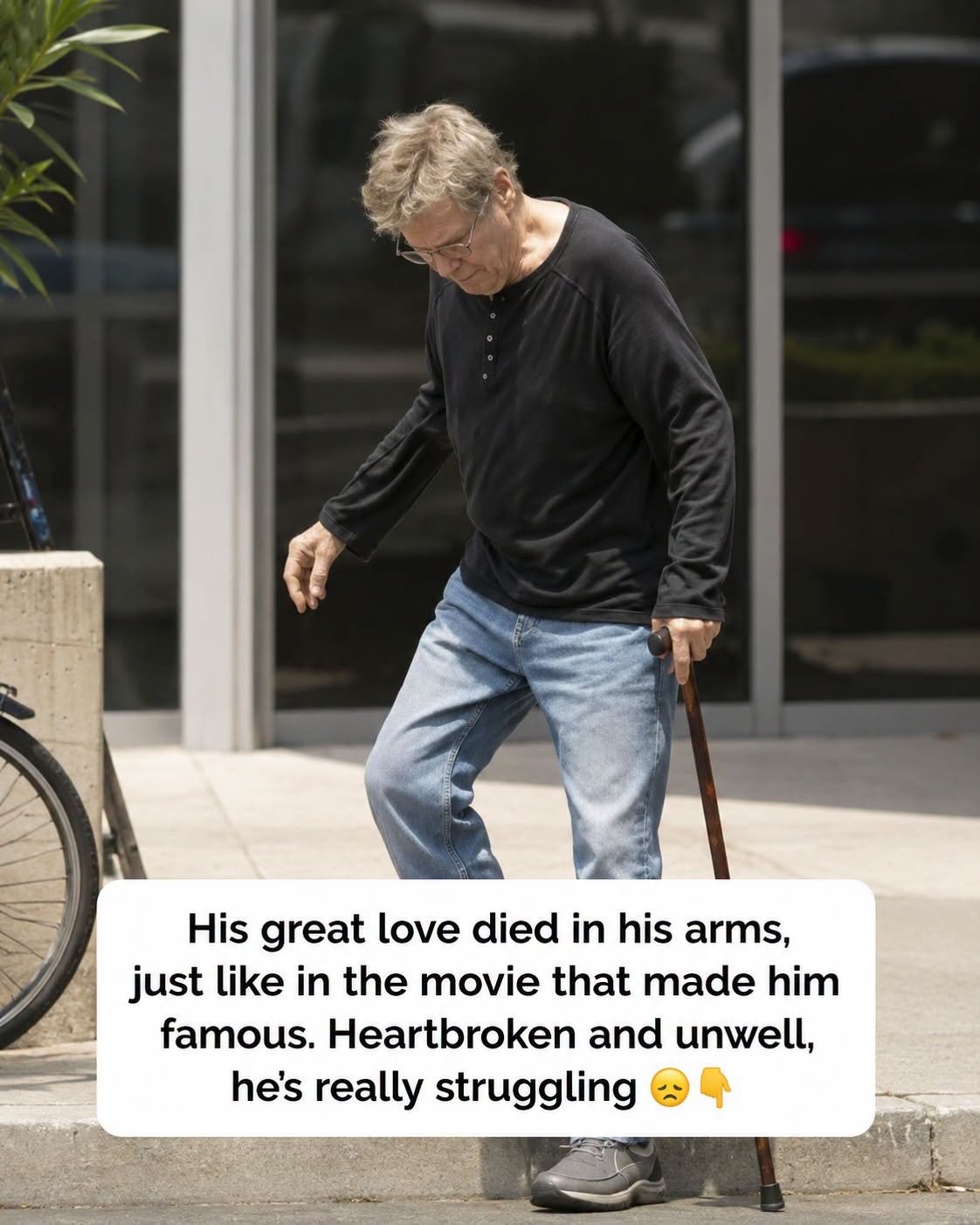
Ryan O’Neal spent more than five decades in the public eye, becoming one of Hollywood’s most recognizable leading men through films including Love Story, Paper Moon and Stanley Kubrick’s Barry Lyndon. His personal life, however, was considerably more complicated than the romantic image audiences often associated with him on screen. When O’Neal died on December 8, 2023, at age 82, his death prompted renewed reflection on his career, his long relationship with Farrah Fawcett, his serious health problems and the sometimes painful relationships he had with his four children.
O’Neal had faced significant medical challenges long before his death. He was diagnosed with chronic myelogenous leukemia in 2001 and later announced in 2012 that he had been diagnosed with prostate cancer. At the time of the prostate cancer announcement, he said the disease had been detected early and expressed gratitude for the medical care he was receiving. These diagnoses became an important part of his later life, but it is more accurate to say he had a history of both cancers than to claim without qualification that he was actively “battling two cancers until the very end.”
His official death certificate subsequently provided more specific information about his final illness. According to reporting based on the document, O’Neal died of congestive heart failure after suffering from cardiomyopathy for years. No other contributing causes were reportedly listed on the certificate. That distinction matters when describing his death accurately: leukemia and prostate cancer were major parts of his medical history, but congestive heart failure was identified as his cause of death.
The news was initially announced publicly by his son Patrick O’Neal, who shared an emotional tribute to his father. Patrick described Ryan as his hero and expressed enormous pride in the actor’s accomplishments. The response reflected one side of a family history that had frequently been much more turbulent, particularly in Ryan’s relationships with some of his other children.
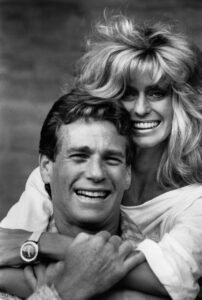
Long before those difficulties became public, O’Neal had established himself as a major television and film performer. His breakthrough came through the television series Peyton Place, where he played Rodney Harrington. The role helped transform him into a familiar face before his movie career moved him into another level of fame.
His defining cinematic breakthrough arrived with Love Story in 1970. O’Neal starred opposite Ali MacGraw as Oliver Barrett IV in the enormously successful romantic drama. The performance earned him an Academy Award nomination for Best Actor and permanently associated him with one of the era’s most famous screen romances.
He followed that success with a range of ambitious projects. In 1973, he appeared alongside his daughter Tatum O’Neal in Peter Bogdanovich’s Paper Moon. Tatum’s performance earned her the Academy Award for Best Supporting Actress at only ten years old, making her the youngest competitive Oscar winner in history at the time.
Two years later, Ryan starred in Stanley Kubrick’s Barry Lyndon. Although its initial reception was more divided than that of Love Story, the film’s reputation grew considerably over subsequent decades and it is now widely regarded as one of Kubrick’s major achievements.
Away from movie sets, O’Neal’s life was often turbulent.
He was married twice, first to actress Joanna Moore and later to Leigh Taylor-Young. With Moore, he had Tatum and Griffin O’Neal. His marriage to Taylor-Young produced son Patrick.
His longest and most famous relationship was with actress Farrah Fawcett.
Fawcett had become an international celebrity during the 1970s, particularly through Charlie’s Angels and the famous red-swimsuit poster that became one of the era’s defining pop-culture images. Later performances demonstrated her dramatic abilities, helping her move beyond the sex-symbol image that had initially dominated public perceptions of her career.
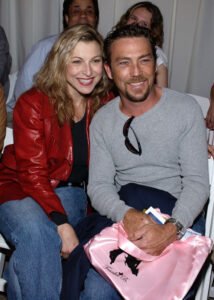
O’Neal and Fawcett began their relationship in 1979. Their partnership lasted, with periods of separation and reconciliation, for many years. They never married, but they shared a son, Redmond O’Neal, who was born in 1985.
Their relationship could be affectionate but was also publicly described as complicated and volatile. O’Neal himself later acknowledged mistakes he had made in his relationships and family life. In a 2009 Vanity Fair interview, he offered a particularly stark assessment of himself as a parent, saying he felt he had been a “hopeless father.”
The relationship between Ryan and Tatum became one of the most widely documented examples of those family difficulties. Father and daughter were estranged for approximately two decades before beginning a reconciliation process later in life.
Their history was complicated by addiction, family conflict and painful accusations that both discussed publicly.
Nevertheless, they eventually reconnected.
In 2020, Tatum experienced serious health problems after an overdose led to a stroke and coma. During the years that followed, father and daughter spent time together again. Their reconciliation continued close to Ryan’s death, including a visit around his birthday in April 2023.
After he died, Tatum issued a loving statement.
She said she felt tremendous sorrow and emphasized that her father meant the world to her. Importantly, she also expressed gratitude that their relationship had ended on good terms after so many years of difficulty.
That reconciliation provides important context when discussing Tatum’s reported absence from Ryan’s funeral. Her absence from the ceremony should not be interpreted as proof that the estrangement had returned. Her own public statement after his death made clear that she believed they had repaired their relationship before he died.
Griffin O’Neal’s relationship with his father remained much more difficult.
According to Griffin, he and Ryan had not spoken for approximately seventeen years. Their relationship deteriorated dramatically following a violent family confrontation in Malibu in 2007.
Accounts of that confrontation involved serious allegations and conflicting descriptions. Ryan was arrested after the incident but maintained that he had acted defensively during a confrontation involving Griffin. Because the episode involved competing family accounts, it should not be simplified into a definitive description of one person’s responsibility without appropriate legal context.
Despite their long estrangement, Griffin said he wanted to attend his father’s funeral.
He told the New York Post that he drove approximately 2,000 miles from Houston toward California believing the service was happening earlier than it actually was. Griffin said he subsequently learned that the funeral would occur after Christmas and claimed he had not been invited.
“I wasn’t even invited to send him off,” he told the publication.
Griffin’s comments also reflected his continuing anger toward his father. He described himself as the son who had spoken publicly about difficult aspects of their family history and repeated his criticism that Ryan rarely apologized for the pain surrounding their relationship.
Patrick, meanwhile, had become considerably closer to Ryan during his father’s later years.
According to reporting after the funeral, Patrick organized the memorial service.
The ceremony was intentionally small, reportedly attended by approximately 25 people at Pierce Brothers Westwood Village Memorial Park and Mortuary in Los Angeles.
Leigh Taylor-Young, Ryan’s former wife and Patrick’s mother, was among those reportedly present.
Tatum and Griffin were reportedly absent.
Redmond O’Neal was also not there.
Redmond’s absence involved circumstances different from those surrounding his siblings.
He has experienced years of serious legal, substance-use and mental-health problems. At the time of Ryan’s funeral, Redmond was reportedly being held in a California state psychiatric facility following earlier criminal proceedings.
Public records and reporting concerning Redmond have described diagnoses and treatment involving significant mental-health problems. Because medical and psychiatric conditions deserve careful handling, those details should not be used simply to sensationalize his absence from his father’s funeral.
His relationship with both parents had been shaped by extraordinary difficulties.
When Farrah Fawcett died from anal cancer in 2009, Redmond was incarcerated. He received permission to visit his mother during her final days while restrained and later attended her funeral under supervision.
Ryan had promised Fawcett that he would continue looking after their son.
In practice, however, Redmond’s subsequent addiction, legal problems and psychiatric treatment made the situation enormously complicated. Reports later suggested that his relationship with Ryan became strained as well.
Farrah’s death profoundly affected Ryan.
She had been diagnosed with anal cancer in 2006 and documented parts of her experience in Farrah’s Story. Ryan remained closely involved during her illness and was beside her near the end of her life.
Their relationship had survived breakups, reconciliation and years of public scrutiny.
Fawcett had also supported Ryan through his own leukemia diagnosis.
Following her death, Ryan frequently described her as the great love of his life and expressed regret that they had not had more time together.
That history explains the symbolism surrounding his burial.
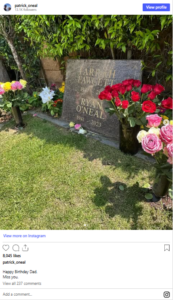
After Ryan’s funeral in December 2023, his coffin was taken to a grave beside Fawcett at Westwood Village Memorial Park.
The shared memorial now bears both of their names and dates.
Reports initially generated speculation that the words Love Story might eventually be included on the monument as a reference to Ryan’s most famous film.
That did not happen.
The gravestone ultimately carries their names without that inscription.
The burial nevertheless became controversial because several people connected to Fawcett publicly disputed Ryan’s portrayal of their relationship and questioned decisions surrounding her final arrangements.
Greg Lott, who had dated Fawcett during their college years and later said he remained connected with her, claimed she had not wanted a traditional burial or public monument.
Craig Nevius, a producer who worked with Fawcett, also questioned whether Ryan had appropriate authority concerning certain decisions.
These were claims made by Lott and Nevius, not established findings that Ryan or his representatives forged documents or unlawfully overrode Fawcett’s wishes. Allegations of that seriousness require clear attribution and should not be repeated as proven facts without supporting legal evidence.
Others who knew Fawcett strongly disputed the suggestion that Ryan had manufactured the importance of their relationship.
Alana Stewart, Fawcett’s longtime friend, publicly defended the couple’s bond.
Stewart acknowledged that their relationship had difficult periods but described the love between them as genuine and profound. She pointed to the way Fawcett supported Ryan during leukemia and the way Ryan remained beside Fawcett during her cancer battle.
Those differing accounts reflect the complexity of relationships viewed from outside.
Ryan and Farrah were together for many years, shared a child, separated and reconciled, and supported each other through serious illness.
Their relationship contained both affection and conflict.
Reducing it entirely to either a perfect Hollywood romance or a completely fabricated love story would ignore that complexity.
Patrick O’Neal became particularly protective of his father’s reputation after Ryan’s death.
He publicly challenged people he believed were unfairly attacking Ryan and repeatedly emphasized his father’s accomplishments as an actor.
That protectiveness became especially visible during awards season.
When the Television Academy presented the Primetime Emmy Awards in January 2024, Ryan was not included in the televised In Memoriam segment.
Patrick expressed anger and disappointment over the omission.
His reaction was understandable in the context of Ryan’s television history.
Before becoming a movie star, Ryan had built his reputation through television, particularly Peyton Place. Patrick believed his father’s contribution to the medium deserved formal recognition from the Television Academy.
Months later, ahead of the September 2024 Emmy ceremony, Patrick again expressed concern that his father might be overlooked.
This time, however, Ryan was included.
Patrick publicly thanked the Television Academy afterward and shared a photograph of his father from early in his television career.
The moment provided some closure to an issue Patrick had pursued since the earlier omission.
Ryan O’Neal’s story therefore cannot be summarized solely through his illnesses or the attendance list at his funeral.
He was an Oscar-nominated actor whose career included some of the most memorable films of the 1970s.
He was Farrah Fawcett’s longtime partner.
He was also a father whose relationships with his children ranged from close to painfully estranged.
Some relationships improved before his death.
Others apparently did not.
His medical history was similarly complicated.
He survived leukemia for many years.
He later faced prostate cancer.
And when he died at 82, his death certificate identified congestive heart failure, with cardiomyopathy having affected him for years, as the cause.
His funeral was small.
Three of his four children were reportedly absent, but each absence had a different context and should not be reduced to a single narrative about family rejection.
Redmond was institutionalized.
Griffin said he had not been invited after a long estrangement.
Tatum was absent despite publicly emphasizing that she and her father had reconciled and ended their relationship on loving terms.
Patrick was there and helped organize the farewell.
Ryan was then laid to rest beside Farrah.
For someone whose most famous movie helped define Hollywood romance for an entire generation, there is undeniable symbolism in that final resting place.
But the real Ryan O’Neal story was considerably more complicated than Love Story.
His career contained extraordinary success.
His personal life contained love, addiction, conflict, reconciliation and regret.
His final years included serious health problems alongside attempts to repair at least some damaged relationships.
Perhaps Tatum’s response to his death offers the most balanced conclusion.
Their relationship had endured years of estrangement and hardship, yet they found a way back to each other before time ran out.
She did not pretend the past had been perfect.
Instead, she expressed gratitude that father and daughter had reached a better place before his death.
For a family whose struggles were so frequently played out in public, that reconciliation may ultimately be one of the quieter but more meaningful chapters of Ryan O’Neal’s complicated legacy.
Website Disclaimer
The information provided on this website is for general informational and educational purposes only. While we strive to ensure that all content is accurate and up to date, we make no guarantees regarding the completeness, reliability, or accuracy of any information published.
The views and opinions expressed in articles belong to their respective authors and do not necessarily reflect the views of this website. Any action you take based on the information found on this website is strictly at your own risk. We will not be liable for any losses, damages, or inconveniences arising from the use of our content.
Some articles may contain opinions, third-party information, or external links. We do not endorse or guarantee the accuracy of content on external websites and are not responsible for their practices or policies.
All content on this website is provided in good faith and is intended for informational purposes only. Readers are encouraged to verify information independently and seek professional advice where appropriate.