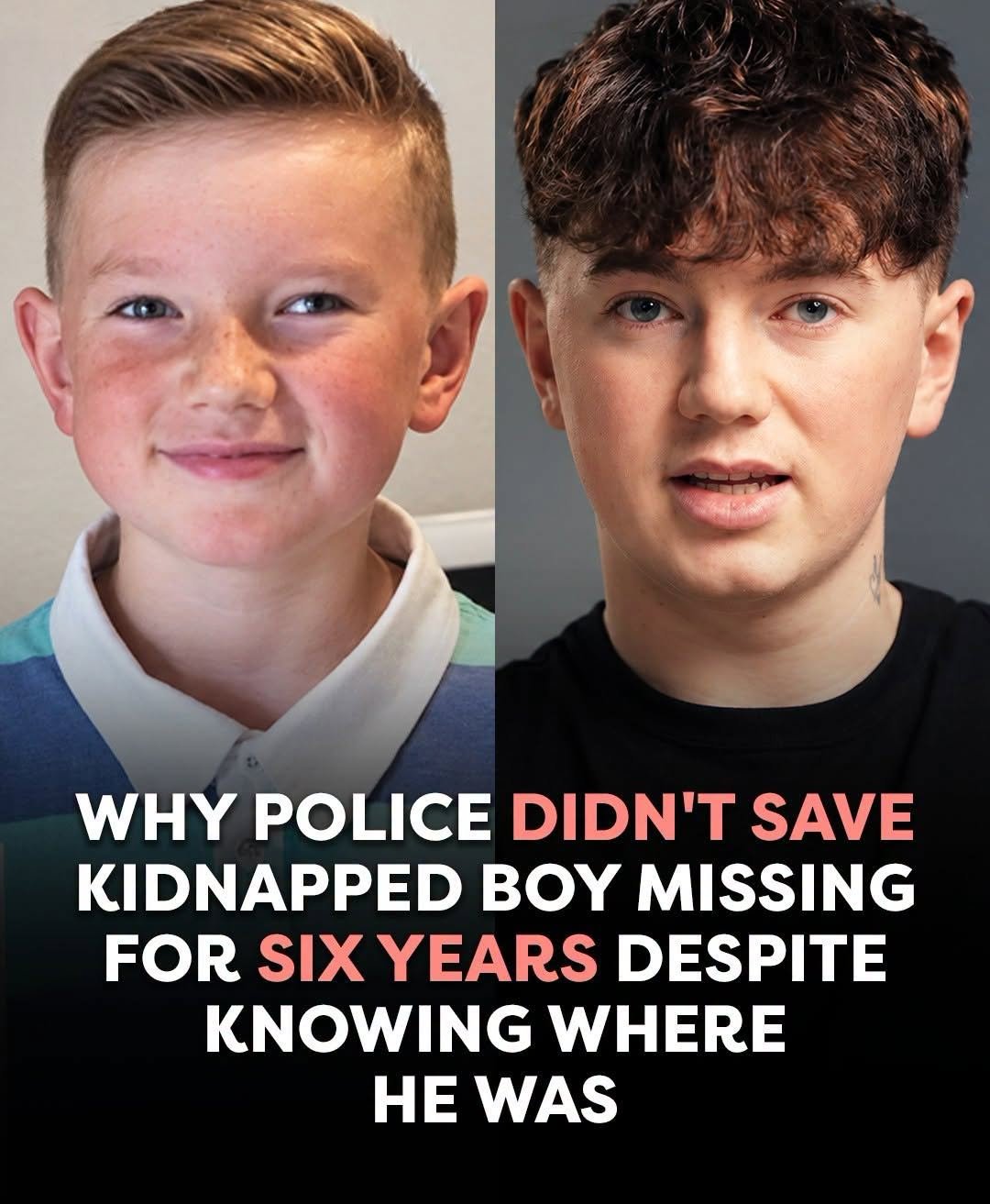
Police didn’t rescue the boy missing for six years, in spite of the fact they knew where he was.
A boy who disappeared aged just 11 spent six years living across several countries with his mother and grandfather, after being taken abroad on what was supposed to be a family holiday.
When Alex Batty finally resurfaced in December 2023, he was 17 and walking alone through the French Pyrenees. He had reportedly spent days travelling on foot after deciding to escape the alternative community where he had been living.
But his eventual discovery raised an unsettling question: if authorities had encountered Alex before he was found, why hadn’t anyone brought him home sooner?
Alex has since spoken about his experiences in a BBC documentary, Kidnapped by My Mum, describing how he tried to build a different life while growing up away from his grandmother, Susan Caruana, who had been his legal guardian.
His account also reveals how French authorities were alerted to his circumstances on more than one occasion, yet he remained with his mother and grandfather until he eventually left of his own accord.
The holiday that turned into a six-year disappearance
Alex was 11 when he travelled to Marbella, Spain, in 2017 with his mother, Melanie Batty, and grandfather, David Batty.
Although they were his close relatives, neither was his legal guardian. Alex was supposed to return to his grandmother in Oldham, Greater Manchester, after the trip.
When he failed to come home, concerns quickly grew. Susan had been expecting to see her grandson again, but the family holiday had turned into a disappearance that would last for years.
Susan suspected that Melanie and David had taken Alex abroad to pursue a lifestyle that differed from her own beliefs. The family had previously travelled to Morocco, where Alex had reportedly been introduced to a communal way of living.
In the years that followed, Alex lived with his mother and grandfather in different locations, including Spain, Morocco and France. He later described an upbringing that left him feeling he had missed out on important experiences, including a conventional education.
The family eventually moved to France in 2021, where Alex continued living away from the grandmother who had been responsible for his care.
For Susan, the years without him meant not knowing when, or even whether, she would see him again.
Alex’s life inside the alternative community
Alex has since explained that his childhood was shaped by the decisions made by his mother and grandfather, who rejected aspects of mainstream society.
His mother reportedly believed that taking him away was justified because she was his parent. Alex, however, came to understand that his removal from his grandmother’s care could be viewed very differently in legal terms.
During his years abroad, he was not living a conventional school life. At one point, he and his grandfather were working for a local woman in France, and Alex sought help to apply for a place at a coding college.
The attempt to enrol marked an important moment in his story because it brought his identity to the attention of people outside the community.
Alex has spoken candidly about the impact of his upbringing. In the BBC documentary, he said he was angry about the experiences he had missed and the education he had not received.
His feelings towards his mother have proved more complicated. Although he has criticised her decisions, he has also expressed affection for both her and his grandfather.
That conflict would later influence how he dealt with the police and what he wanted to happen to his relatives.
The moment Alex decided to escape
By December 2023, Alex had decided he wanted to leave the life he had been living.
The teenager set out on foot and spent several days walking through the French mountains. His journey eventually brought him to the attention of Fabien Accidini, a French student who worked part-time delivering medicines by lorry.
Accidini first noticed Alex walking in heavy rain. After passing him again, he decided to stop and ask whether the teenager needed help.
Alex was carrying a backpack, a skateboard and a flashlight. He initially gave the driver a false name, but as they continued talking, he eventually revealed who he really was.
Accidini later told French media that they spoke for several hours, with Alex eventually explaining his situation.
The teenager then used the driver’s phone to contact his grandmother, giving Susan the news she had waited years to hear: he was alive.
Accidini contacted the police because he was concerned about Alex’s welfare and took him towards a police station.
The discovery brought an end to Alex’s six-year disappearance and allowed him to return to the UK and reunite with his grandmother.
But the circumstances of his rescue also raised questions about earlier encounters with French authorities.
Alex’s identity had already come to the attention of police
Alex’s discovery in the mountains was not the first time officials in France had been alerted to his whereabouts.
According to his account in Kidnapped by My Mum, he had come into contact with French police after trying to enrol at a local coding college.
With help from a woman he and his grandfather were working for, Alex applied for a place at the college. He initially used a false name, but his identity was eventually revealed.
The college reportedly searched for information about him online and discovered that he was the British boy who had been missing for years. The information was passed to the authorities, and officers subsequently visited him.
Alex said the officers approached him under a false pretence. Despite the information available to them, they did not remove him from the situation.
There had also been concerns about his living arrangements while the family stayed at a campsite in southern France. The campsite owner reportedly contacted social services because of worries about Alex’s circumstances.
According to the account given in the documentary, the owner was told that officials could not intervene because Alex was a foreign national and they did not have his true identity.
Alex later expressed anger about the lack of action, questioning why his circumstances had not prompted a stronger response.
The encounters became a particularly painful part of his story because, in hindsight, they represented opportunities for someone to investigate his situation before he eventually escaped.
Alex’s reunion with his grandmother
After Alex returned to the UK, police interviewed him as part of an investigation into his disappearance.
However, his relationship with his mother and grandfather remained emotionally complicated. Although he was angry about what had happened, he was also frightened by the possibility that they could be arrested.
Alex initially gave British police false information about their whereabouts, claiming his mother had moved to Finland and his grandfather had died.
He later explained that he had lied because he wanted to protect them.
In the documentary, Alex said he believed he should have a say in what happened next, given that he was the person at the centre of the case.
The British investigation into the suspected abduction was eventually closed in January 2025, with Greater Manchester Police confirming that no arrests had been made.
Alex has also recently described making contact with his mother for the first time since escaping the community. In a message, he acknowledged that she had wanted to protect him, while also expressing the complicated feelings he continued to have about their relationship.
He wrote: “I know how much you care about me and how all you wanted to do was protect me. I love both of you.”
His decision to reach out highlights the difficult balance between his anger over losing years of a conventional childhood and the affection he still feels for his family.
Why didn’t police rescue Alex when they knew where he was?
The question of why Alex was not brought to safety earlier centres on the decisions made during the encounters with French authorities, alongside the practical difficulties surrounding his identity and circumstances.
According to Alex’s account, police visited him after his college application exposed his identity as a missing child. However, officers reportedly decided not to intervene after finding that he appeared healthy and was not in immediate danger.
That assessment did not necessarily mean officials had established that his living arrangements were appropriate, but it appears to have influenced their decision not to remove him at the time.
The campsite incident presented another obstacle. The owner reportedly raised concerns with social services, but was told they could not act because Alex was a foreign national whose true identity had not been established.
Alex’s reaction to that explanation was one of frustration. He later said he was angry that nobody had done more to help him.
French police and social services declined to comment when approached by the BBC, meaning their full reasoning for the decisions has not been publicly established in the material reported.
There was also a separate issue after Alex returned to Britain: whether his mother and grandfather could realistically be prosecuted.
British police opened an investigation into suspected abduction, but it was closed in January 2025. Greater Manchester Police said there was no realistic prospect of a successful prosecution, with the family’s reluctance to support proceedings also reported as a factor.
Alex himself had initially misled investigators to protect his relatives, complicating efforts to establish their whereabouts and circumstances.
The closure of the British case does not, by itself, explain every decision made by French authorities during the years Alex was missing. Nor does it establish that every earlier encounter was handled correctly.
What Alex’s account makes clear is that his rescue did not come when authorities first became aware of him. Instead, it happened only after he chose to leave, spent days walking through the mountains and met a stranger who stopped to help.
For Alex, the experience has left a lasting sense of anger that opportunities to intervene may have been missed. His story raises difficult questions about how authorities assess the welfare of a child whose identity is uncertain, whose family situation is complicated and who may not openly disclose what is happening to them.
Website Disclaimer
The information provided on this website is for general informational and educational purposes only. While we strive to ensure that all content is accurate and up to date, we make no guarantees regarding the completeness, reliability, or accuracy of any information published.
The views and opinions expressed in articles belong to their respective authors and do not necessarily reflect the views of this website. Any action you take based on the information found on this website is strictly at your own risk. We will not be liable for any losses, damages, or inconveniences arising from the use of our content.
Some articles may contain opinions, third-party information, or external links. We do not endorse or guarantee the accuracy of content on external websites and are not responsible for their practices or policies.
All content on this website is provided in good faith and is intended for informational purposes only. Readers are encouraged to verify information independently and seek professional advice where appropriate.