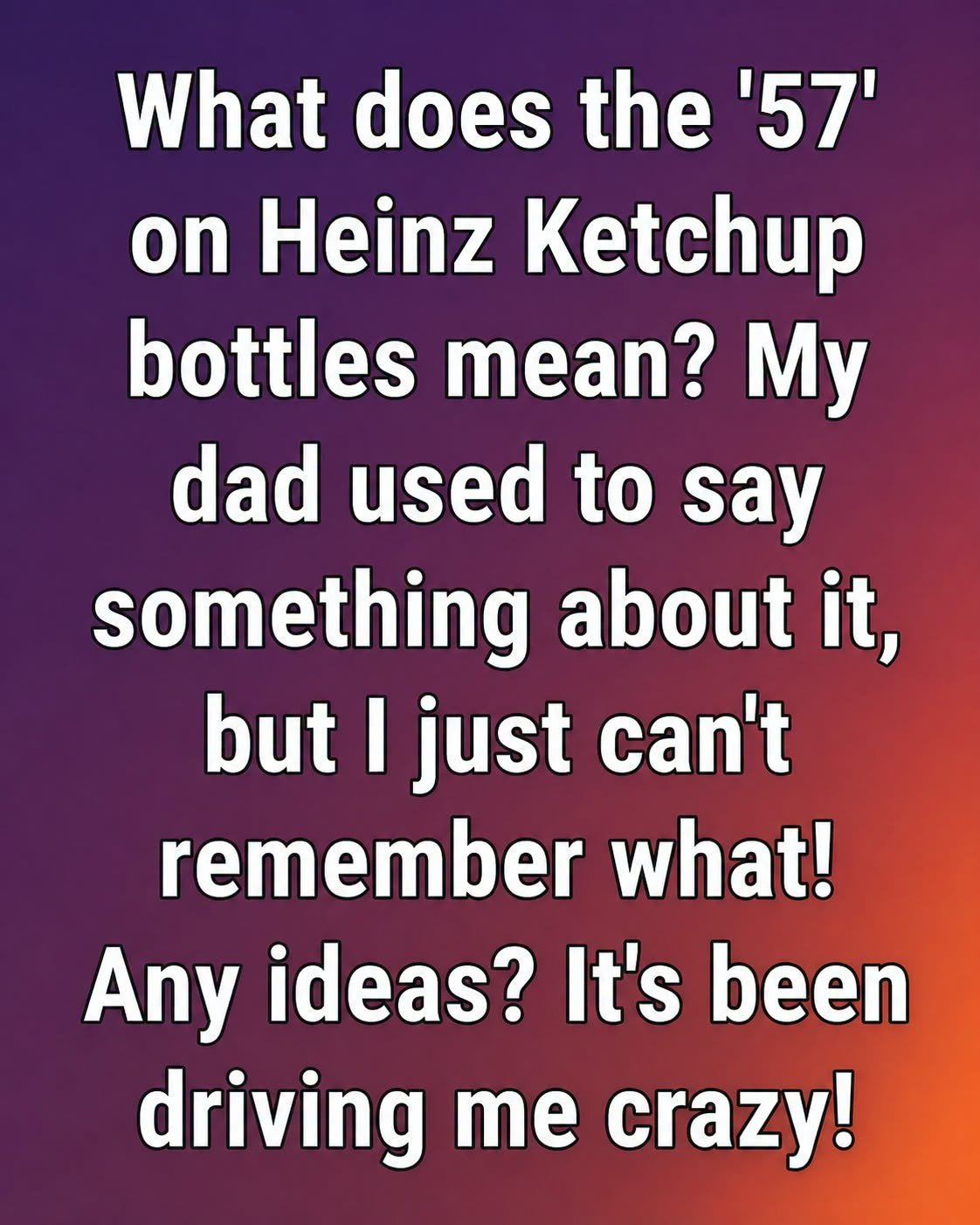
The “57” on your Heinz ketchup bottle is not what you think it is. It’s not the recipe. It’s not the variety count. It’s something stranger, more personal, and far more calculated. Born from a train ride, a superstition, and a marketing gamble, this tiny number quietly rewired how we remember brands. And it all started with a sin… Continues…
Henry J. Heinz didn’t stumble onto “57” by accident; he engineered it. Inspired by an ad boasting a specific number of products, he realized that a simple, striking figure could anchor his growing empire in people’s minds. He already sold more than 57 items, but that didn’t matter. Five was his favorite number. Seven was his wife’s. Together, they became a symbol that suggested abundance without ever needing to be literally true.
Over time, that invented number fused with everyday life. It lived on glass bottles you had to tap just right, on dinner tables, in diners, at family cookouts. Myths formed around it—57 ingredients, 57 sauces, 57 secrets—each wrong, yet each keeping the story alive. That is the real power of “57”: proof that a tiny, consistent, mysterious detail can outlive campaigns, slogans, and even generations, becoming part of our shared cultural memory.
Website Disclaimer
The information provided on this website is for general informational and educational purposes only. While we strive to ensure that all content is accurate and up to date, we make no guarantees regarding the completeness, reliability, or accuracy of any information published.
The views and opinions expressed in articles belong to their respective authors and do not necessarily reflect the views of this website. Any action you take based on the information found on this website is strictly at your own risk. We will not be liable for any losses, damages, or inconveniences arising from the use of our content.
Some articles may contain opinions, third-party information, or external links. We do not endorse or guarantee the accuracy of content on external websites and are not responsible for their practices or policies.
All content on this website is provided in good faith and is intended for informational purposes only. Readers are encouraged to verify information independently and seek professional advice where appropriate.