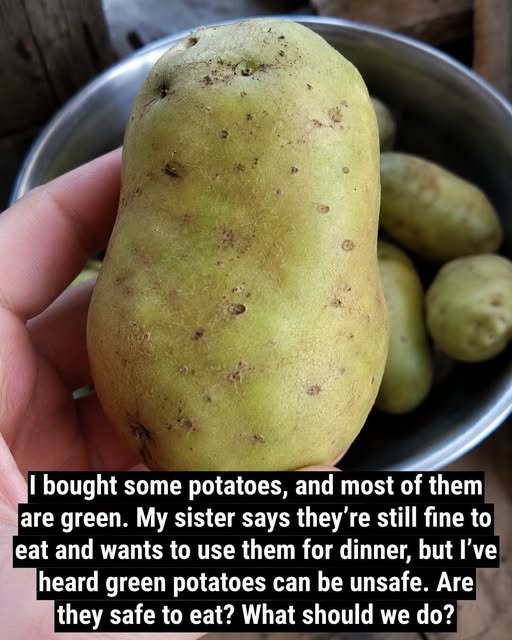
When a potato turns green, it’s not just a cosmetic change. Light triggers the potato to produce chlorophyll, which you see as that bright green tint. At the same time, it often ramps up solanine, a natural toxin the plant uses as self-defense. Solanine makes potatoes taste bitter and, in higher amounts, can cause nausea, vomiting, and stomach pain, especially in kids or if you eat a lot of it at once.
You don’t automatically need to throw away every potato with a hint of green. If the spots are small and shallow, you can cut them away generously, along with any sprouts, and the rest is usually fine to cook and eat. But if the potato is very green, bitter, or heavily sprouted, it’s safer to discard it. Store potatoes in a cool, dark, dry place, away from sunlight and bright kitchen lights, to keep them from turning green and to protect both their flavor and your health.
Website Disclaimer
The information provided on this website is for general informational and educational purposes only. While we strive to ensure that all content is accurate and up to date, we make no guarantees regarding the completeness, reliability, or accuracy of any information published.
The views and opinions expressed in articles belong to their respective authors and do not necessarily reflect the views of this website. Any action you take based on the information found on this website is strictly at your own risk. We will not be liable for any losses, damages, or inconveniences arising from the use of our content.
Some articles may contain opinions, third-party information, or external links. We do not endorse or guarantee the accuracy of content on external websites and are not responsible for their practices or policies.
All content on this website is provided in good faith and is intended for informational purposes only. Readers are encouraged to verify information independently and seek professional advice where appropriate.