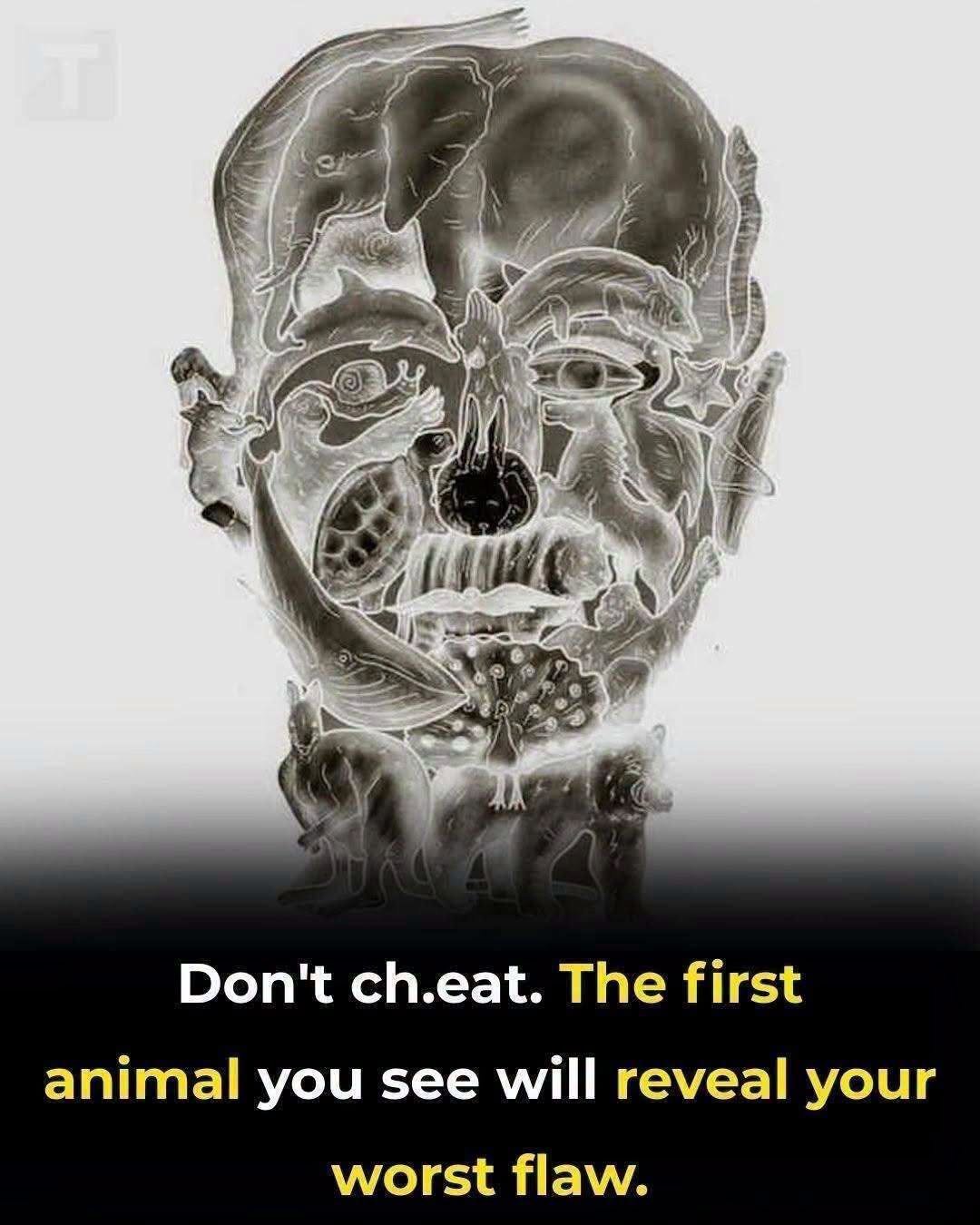
An image circulating widely on social media claims to reveal your worst flaw based on the first animal you see. The illustration initially resembles a human face but contains numerous hidden animal figures.
Viewers are encouraged to glance quickly and identify the first animal they notice—supposedly revealing a key personality flaw. Though these visual personality tests lack scientific backing, they’ve gained popularity for their entertainment value and ability to spark conversation.
The test works by prompting observers to look at the image briefly and naturally note the first animal they recognize. Each animal is linked to a specific character trait: for example, seeing an elephant suggests stubbornness, while noticing an iguana points to emotional aloofness. A pig symbolizes indulgence, the cricket represents anxiety, and a horse implies pride. Other animals like the dolphin (impulsiveness), bear (rigidity), or fox (avoidance) round out a diverse set of possible flaws.
More animals and their symbolic traits include the rabbit (insecurity), toucan (need for attention), kangaroo (inconsistency), and peacock (vanity). A turtle may indicate excessive caution, while seeing a whale could imply emotional isolation.
Other interpretations: gorilla (dominance), duck (mood swings), starfish (escapism), snake (manipulation), sloth bear (procrastination), bird (instability), and snail (resistance to change). These attributions are meant to be light-hearted and provoke reflection or laughter, not psychological diagnosis.
The appeal of these tests lies in their simplicity, the element of surprise, and the social interaction they inspire. They’re easy to share and fun to discuss with others. Many people are curious about how small details might “reveal” hidden truths about themselves, even if it’s just for amusement.
Ultimately, while these tests don’t offer genuine psychological insights, they’re harmless fun when viewed with a sense of humor.
They can offer a moment of introspection or simply a laugh with friends. Real personality and growth are far more nuanced—but if this viral illusion encourages self-reflection or social bonding, then it’s doing something positive in its own quirky way.
Website Disclaimer
The information provided on this website is for general informational and educational purposes only. While we strive to ensure that all content is accurate and up to date, we make no guarantees regarding the completeness, reliability, or accuracy of any information published.
The views and opinions expressed in articles belong to their respective authors and do not necessarily reflect the views of this website. Any action you take based on the information found on this website is strictly at your own risk. We will not be liable for any losses, damages, or inconveniences arising from the use of our content.
Some articles may contain opinions, third-party information, or external links. We do not endorse or guarantee the accuracy of content on external websites and are not responsible for their practices or policies.
All content on this website is provided in good faith and is intended for informational purposes only. Readers are encouraged to verify information independently and seek professional advice where appropriate.