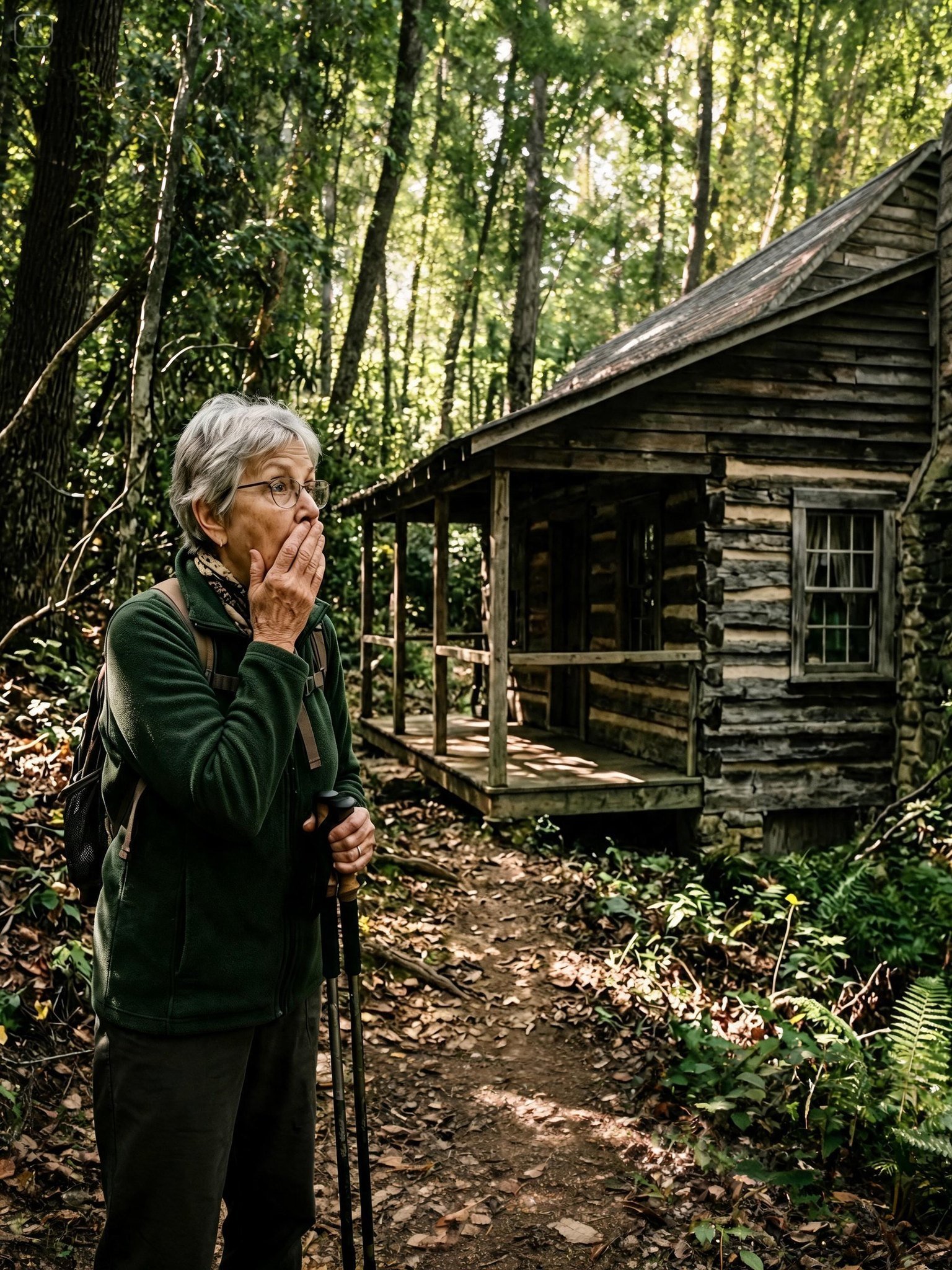
Elena Batchelder was seventy-three years old when her sons handed her thirty acres of forest and spoke of it as if they were handing her a box of old newspapers.
They sat across from her in the living room of the Upper West Side apartment where she had spent almost half her life. Edward had chosen the armchair near the window, the one George used to sit in on Sunday afternoons with his boots off and a forestry journal balanced on his knee. Marcus stood by the bookshelf, one hand in his pocket, his phone in the other, glancing down at it every few minutes with the half-hidden impatience of a man waiting for an elevator.
The apartment smelled faintly of furniture polish, coffee, and the lilies someone had sent after George’s funeral. Their sweetness had gone thick and tired. Elena had meant to throw them out that morning, but she had stood in front of the vase too long and finally walked away, unable to decide whether letting flowers die slowly was worse than admitting they were already gone.
Edward opened a manila envelope on the coffee table.
“Mom,” he said, in the careful voice he used when explaining things to people he believed were less informed than he was, “we need to talk through the estate.”
Elena looked at his hands. Lawyer’s hands. Clean, pale, confident. Hands that had never scrubbed beans from a pot, never wrung dishwater out of a rag, never held a sick child upright over a toilet at three in the morning.
“All right,” she said.
There had been a time when her sons’ presence in the apartment filled it with life. Edward arguing, Marcus eating cereal straight from the box, George laughing from the kitchen doorway while pretending not to take sides. Now the room felt smaller with them in it, not fuller. Their wives had come too. Fernanda stood near the kitchen island, scrolling through messages while pretending to listen. Patricia had taken a seat near the hall, her purse still on her shoulder, as if ready to leave the second duty permitted.
Edward drew out the will.
“Dad was very clear,” he said. “The apartment and the investment accounts are divided equally between Marcus and me.”
Elena’s thumb moved to her wedding band. She rubbed once, slowly.
The apartment was not just walls and windows. It was the watercolor of Harpers Ferry George had bought when they were still engaged. It was the terrace plants Elena watered every morning. It was the kitchen island where she had rolled dough for pies, where Marcus had once done homework, where Edward had announced he was going to law school with a pride that had made George slap the counter and shout like the Yankees had won the Series.
“Equally,” Elena repeated.
“Yes,” Edward said. “That is what Dad specified.”
Marcus did not look up.
“And me?” Elena asked.
Edward’s mouth tightened. Not quite discomfort. Something close, but covered with efficiency.
“For you,” he said, “Dad left the Virginia property.”
Elena blinked.
“What Virginia property?”
Edward and Marcus exchanged a look so quick most people would have missed it. Elena did not miss things. She had spent fifty years noticing what men believed women too quiet to see.
Edward turned a page. “Thirty acres in Augusta County. Appalachian foothills. Deeded in his name since the nineties. Protected woodland.”
The words entered the room strangely.
Woodland.
For a moment, she was back on the terrace one July night years earlier, waking at three in the morning to find George gone from bed. She had found him outside in his robe, sitting with a glass of whiskey untouched in his hand, staring over the city lights.
“When I’m gone,” he had said then, “don’t let them sell the forest.”
“What forest?” she had asked.
“The forest I’m tending.”
She had waited for more, but George had gone quiet, and Elena, who knew the difference between secrecy and solemnity, had let the silence stand.
Now she looked at Edward. “Your father bought land?”
“Yes,” he said. “But Mom, before you make more of it than it is, you need to understand something. It is just forest. Dense forest. No paved road. No electrical service. No running water. No neighbors. Barely any access. It doesn’t have development value because of the protections.”
Marcus finally spoke. “We checked satellite maps.”
Elena turned toward him. “Did you go there?”
Marcus frowned, as if the question were irrelevant. “No.”
Edward leaned forward. “There’s no reason to. We looked it up. It’s wilderness.”
Fernanda came in smoothly from the kitchen doorway. “Honestly, Elena, it may be more of a burden than an asset. Taxes, maintenance, liability.”
“What maintenance?” Elena asked. “You said it was forest.”
Fernanda paused.
Edward continued before his wife could answer. “The point is, Dad’s will is unusual. We want to be fair. You can stay here a few months while things are transferred. Then we can discuss arrangements.”
“A few months,” Elena said.
“It’s reasonable,” Marcus said.
Reasonable.
That word had followed Elena all her life like a broom sweeping inconvenient feelings into corners. It had been reasonable when she quit her job after Edward was born. Reasonable when George’s work trips stretched longer and she handled the boys alone. Reasonable when she hosted every Sunday lunch because everyone was busy and she was home. Reasonable when the grandchildren had music lessons and soccer and could not visit. Reasonable now, apparently, for a widow to leave the apartment where she had washed the same windows every last Friday of the month for thirty years.
She looked around the room. George’s books still lined the wall. Some had pressed leaves between the pages. Some had pencil notes in margins. His coat still hung in the hall closet because she had not been able to move it. His coffee mug sat on the second shelf because her hand refused to place it anywhere else.
“And where,” she asked, “am I supposed to go?”
Edward exhaled gently. “We can help with a rental.”
“With what money?”
“The pension will come through.”
“Eventually,” Marcus said.
Edward shot him a look.
Elena felt something quiet settle inside her. Not anger. Anger was hot and temporary. This was older. A dense inward stillness she recognized from childhood, from mornings in Harpers Ferry when fog sat low over the Shenandoah River and the oak trees held still beneath it.
Her grandmother Eunice used to say Elena had the blood of an oak tree.
“You grow slow,” she would say, “but when you decide to stand, child, nobody moves you.”
Elena folded her hands in her lap.
“I will not stay with either of you,” she said.
Edward looked startled. “No one said you had to.”
“No. But you were preparing to offer it as if it were kindness.”
Marcus put his phone away. “Mom, we’re trying to handle this properly.”
“No,” Elena said. “You are trying to handle me properly.”
The room went very quiet.
Edward’s expression hardened by a degree. “The will is legal.”
“I did not say it wasn’t.”
“The apartment has to be transferred.”
“I heard you.”
“And the forest is yours.”
Elena rubbed her thumb once over her wedding band. “Then I will go see my forest.”
Edward almost smiled, but checked himself. “Mom, it’s not practical. It’s thirty acres of dense woodland. Dad probably bought it for conservation reasons. Sentimental reasons. It doesn’t mean you can live there.”
“Perhaps not.”
“Then why go?”
Elena looked at him fully.
“Because your father left it to me.”
Three months later, on a Thursday morning in September, Elena stood on the sidewalk outside the building with one blue suitcase, two cardboard boxes, and the last thirty years of her life sorted down to what her sons had allowed her to take.
The Harpers Ferry watercolor was in one box. The burgundy wedding album was wrapped in towels. A few of George’s books. Her mother’s floral tablecloth. Photographs. The letters George had written during their courtship. A framed picture of the boys when they were ten and seven, grinning beside a Christmas tree, still young enough to believe their mother was the center of the world.
The rest stayed.
The terrace plants stayed because Fernanda said they matched the light and would be cared for. Elena did not believe her, but there were griefs too small to fight when larger ones had already entered the house.
Edward stood in the lobby doorway.
“If you need anything, Mom,” he said.
She looked at him for a long second. There were many answers. None would change him.
The cab pulled up.
The driver, a heavyset man with kind eyes, got out and lifted the suitcase before she could ask.
“Where to, ma’am?”
“Penn Station,” Elena said. “Then Virginia.”
As the cab moved away, she looked once at the eighth-floor windows. For a moment, she thought of George standing behind the glass, one hand raised, smiling that tired little smile he wore after returning from the mountains.
But the window was empty.
Elena turned forward.
In her purse was the deed to thirty acres of wilderness her sons believed had no value.
In the side pocket was a small envelope she had found in George’s nightstand weeks earlier. On the front, in his careful handwriting, were six words.
Open it only when you’re there.
Part 2
Staunton, Virginia, received Elena with fog.
It hung over the old courthouse and softened the brick buildings downtown. It slipped between church steeples and settled in the low streets before the sun began burning it away. Elena stood at the hotel window on her first morning and watched the town appear slowly from white air, as if the mountains were remembering it piece by piece.
She had not slept well.
The hotel bed was too wide. The air conditioner hummed with a sound unlike the apartment radiators. Every time a pipe clicked in the wall, she woke thinking George had come home and was setting down his field bag in the hallway. Then the unfamiliar ceiling returned, and with it the hard fact of his absence.
For six days, she lived from the blue suitcase.
She ate the hotel breakfast because it was included. She drank coffee that tasted burned but hot. She walked the historic district slowly, her right knee aching on hills, and called numbers from George’s old address book. Most went nowhere. One belonged to a retired Forest Service colleague who cried when he heard her name but did not know the property. Another belonged to a disconnected office.
On the fourth day, she called Roger Narayan.
He answered on the third ring.
“Elena?” he said, and the way he said her name nearly made her sit down.
“Yes.”
There was a silence full of recognition and grief.
“I’m sorry,” Roger said. “I should have called sooner.”
“You came to the wake.”
“That wasn’t enough.”
“No,” she said gently. “It wasn’t. But it was something.”
Roger had been George’s supervisor once, then his colleague, then his friend in the quiet way men who worked outdoors became friends. Elena remembered him from the funeral: white hair, weathered face, red eyes he kept wiping with the back of his hand when he thought no one was looking.
“I need to find the land,” Elena said.
Roger did not ask which land.
“I know where it is,” he said. “George took me once. Years ago.”
Her hand tightened around the phone.
“You’ve been there?”
“Only to the trailhead. He walked me in partway, then told me he needed to check something alone.” Roger paused. “That was George.”
“Yes,” Elena said. “That was George.”
“I can take you Thursday.”
“Thank you.”
“Elena?”
“Yes?”
“Wear boots if you have them.”
She looked down at the city shoes she had brought from New York, black leather, sensible for sidewalks and useless for mud.
“I’ll buy boots,” she said.
Thursday morning came cold and damp.
Roger picked her up in front of the courthouse at seven-thirty in an old green truck that smelled of diesel, canvas, and dry earth. He climbed out to help her, but Elena got in herself, accepting only the hand he offered after she was already steady. Respect, not pity. She knew the difference and appreciated him for knowing it too.
They drove out of town as the sun rose pale behind the Blue Ridge. The road narrowed, then narrowed again. Farms appeared between folds of woodland—fenced pastures, low barns, cattle standing like dark stones in the mist. Elena watched the land pass and thought of George driving these roads alone for years.
“Did he talk about it?” she asked.
Roger kept his eyes on the road. “Not directly.”
“What did he say?”
“He said he was tending something.”
Elena almost smiled. “He said that to me too.”
Roger nodded. “Near the end, he seemed…” He searched for the word. “Satisfied.”
“With what?”
“I didn’t know then.”
“And now?”
Roger glanced at her. “I think I’m about to find out with you.”
They turned off the state road onto a dirt track marked only by an old wooden post. The truck bounced over ruts and stopped near a place where the forest grew so thick it looked less like an entrance than a refusal.
Roger cut the engine.
The quiet came down at once.
No traffic. No horns. No voices from other rooms. Just water somewhere unseen, birds hidden in the canopy, and leaves dripping from last night’s rain.
Elena stepped down. Mud took the heel of her new boot and held it for a second before letting go. She adjusted the backpack on her shoulder. Inside were water, a turkey sandwich wrapped in hotel napkins, the deed, and George’s envelope.
The trail began in shadow.
After ten steps, the truck disappeared behind them.
After twenty, the road sound vanished.
The forest was dense, but not dead. It moved in layers. Ferns brushed Elena’s calves. Wild grapevine twisted around trunks. Moss grew thick on stones. The oaks were old here, larger than any trees she had seen in city parks, their branches forming high green vaults that filtered the light into shifting patterns. There were tulip poplars, pawpaws, hickories, and pine. Roger named some as they walked, but after a while he stopped, sensing that Elena needed the silence more than information.
Her knee hurt before the first quarter mile.
She did not mention it.
At seventy-three, the body became a country with its own weather. Some mornings clear. Some mornings storm. Elena had learned to negotiate with pain the way her mother had negotiated with stubborn dough: patiently, without surprise, refusing to be ruled by it.
The trail rose, curved, dipped through a damp hollow where the earth smelled of mushrooms and black leaves. A bird called three notes from somewhere high and invisible. Roger stopped once to move a fallen branch aside. Elena leaned against an oak while pretending to admire a cluster of pale mushrooms near its roots.
“You all right?” Roger asked.
“Yes.”
He did not insult her by asking again.
Seventeen minutes after leaving the truck, the trail narrowed between two old oaks grown so close their upper branches touched, forming a natural arch. Roger stopped before it.
Elena knew before he spoke.
He turned. “Are you ready?”
She rubbed her thumb over the wedding band.
“No,” she said honestly.
Roger waited.
Then she lifted her chin. “But go on.”
They passed beneath the oaks.
At first, Elena saw only more forest.
Then the house appeared.
It did not reveal itself all at once. The eye had to adjust. The roofline emerged first, dark and sloped beneath the canopy. Then walls, honey-brown and solid among the trunks. Then windows facing east, catching pale morning light. Ferns cascaded from window boxes. Black walnut boards gleamed even in shade. The house sat in a natural clearing as if the forest had grown around it not to hide it, but to protect it.
Elena stopped.
Her breath left her.
It was not a cabin. It was not a shack or a hunting shelter or some rough structure a man put up on weekends.
It was a house.
A whole house.
L-shaped, broad-porched, carefully built, every line intentional. Solar panels rested on one roof pitch where sunlight reached through the canopy. A rain chain hung from a gutter into a stone cistern. Beyond the house, partly hidden by hedges and late-season growth, was a garden—raised beds, herbs, climbing beans gone dry on poles. Farther down the slope stood fruit trees heavy with the last of the season.
“Elena,” Roger said softly.
She could not answer.
For forty-six years, she had slept beside a man who carried this in his silence.
She thought of the sawdust on his cuffs. The sealed photo envelopes. The toolbox he took on trips. The blueprints he covered when Edward walked into his study. The weekends he came home exhausted but lit from within. All the mysteries she had swallowed because trust was easier than suspicion, because marriage was sometimes built from the questions one chose not to weaponize.
George had not been leaving her.
He had been building somewhere for her to arrive.
Elena walked toward the porch.
The steps did not creak. Someone had maintained them. The black walnut front door had carved oak leaves near the top, so delicately worked she had to touch them to believe they were real. The latch opened under her hand with a clean, oiled sound.
The first smell was wood.
Not damp rot. Not abandonment. Clean wood, linseed oil, cedar, a faint sweetness of dried herbs. Beneath that, the earth-and-leaf scent of the forest seemed to move through the house like breath.
The entry opened into a living room with high ceilings and wide windows. Light came through the trees in soft green-gold panes. A long table stood near the north windows. Four chairs. Shelves from floor to ceiling filled with books. George’s order was everywhere: forestry by region, botany by family, law and conservation, natural history, then novels and poetry placed where the hand might want them.
Elena stepped inside as if entering a memory she had never lived.
On one shelf were photo albums numbered in pencil.
She pulled the first one out.
The first photograph showed a clearing in 1995. Open ground, raw earth, sunlight, a much younger George standing with one hand on his hip and the other shading his eyes.
Edward had been twenty. Marcus seventeen. Elena had been making Sunday lunches in New York, folding laundry, going to quilting class, watering terrace plants, while George stood here at the beginning of something enormous.
Roger came in behind her and removed his cap.
“He did this,” Elena whispered.
“Yes,” Roger said.
The kitchen waited at the back of the living room. Terracotta tile. Stone counters. Louvered cabinets. A small refrigerator. A gas stove. A sink connected, Roger guessed, to the rainwater system. Elena opened one cabinet and found glass jars labeled in George’s handwriting: rice, beans, coffee, salt, cornmeal. Another shelf held preserves. Pickled ramps. Apple butter. Pawpaw jam. The most recent label was July 2019.
Sixteen months before George died.
Elena touched the label with one finger.
“You came back,” she said, not to Roger.
The master bedroom faced east.
The bed was made with a white sheet and an indigo wool blanket. Two pillows. Two lamps. Two nightstands.
On the right nightstand was a framed photograph.
Elena approached slowly.
It was the same photograph she had found in George’s drawer in New York—the one of herself young on a beach she did not remember, laughing toward someone outside the frame. Here, it was larger. Clearer. Set on what had always been her side of the bed.
Her legs weakened, and she sat on the edge of the mattress.
Roger stood in the doorway, then quietly stepped away.
Elena took the frame in both hands.
In the city apartment, her sons had measured walls before she had finished grieving. Here, a dead man had remembered which side of the bed was hers.
Outside, footsteps sounded on the porch.
Roger returned to the living room. Elena heard the door open, heard a man’s voice, low and respectful.
“Are you Miss Elena?”
She walked out holding the frame against her chest.
A man stood at the door with a straw hat in his hands. He was in his sixties, brown-faced from weather, wearing canvas pants and rubber boots. Two buckets sat at his feet, one filled with tools, the other with late apples and pears.
“My name is Benedict Cordero,” he said. “I worked with your husband for thirty years.”
Elena gripped the chair beside her.
Benedict lowered his eyes for a moment. “He told me when you arrived, I should tell you he had been waiting a long time for this.”
Part 3
Benedict had the patience of a man who had learned from trees.
He sat at the long table with his hat resting near his elbow and answered Elena’s questions one at a time. He did not hurry her. He did not soften the truth until it became useless. He spoke plainly, and because of that, Elena trusted him before the hour was over.
George had bought the land in 1995.
He had found Benedict soon after, first as a guide, then as a helper, then as the keeper of the place. George paid him fairly. Benedict said that more than once, as if it mattered to him that Elena understand her husband had never taken advantage of a local man’s knowledge.
They had cleared the first foundation by hand. Hauled lumber in sections along a service path too narrow for trucks. Mixed concrete in small batches. Raised walls over years. Put on the roof one spring weekend in 2002 with rain threatening and whiskey waiting under a tarp. Installed the solar panels in 2012. Finished the study in 2018.
“He built slow,” Benedict said, “but he built like a man arguing with time.”
Elena looked toward the shelves. “Why didn’t he tell me?”
Benedict folded his hands.
“I only know what he told me.”
“What did he tell you?”
“That if you knew, your sons would know. And if your sons knew, they would find a way to make it theirs before it could become yours.”
Elena went still.
Roger shifted uncomfortably, but Benedict did not look away.
“I’m sorry,” Benedict said. “But he was clear on that.”
Elena rubbed her wedding band. “He knew them.”
“Yes, ma’am.”
“So did I,” she said.
The admission hurt more than she expected. A mother could know the shape of her children’s selfishness and still keep setting plates for them. She could see the calculation in their eyes and still remember them feverish and small, clutching at her nightgown. That was the trap of motherhood. Memory kept arguing with evidence.
Benedict opened the bucket of fruit.
“Orchard’s still giving,” he said. “Apples are nearly done. Pears holding. Pawpaws went soft last week, but I put some pulp in the freezer.”
Elena almost laughed. “There’s a freezer?”
“In the utility shed. Solar runs it if the battery bank stays right. Mr. George wrote instructions.”
“Of course he did,” Roger murmured.
Benedict nodded toward a ceramic pot on the table. “Most instructions are in there. Water system. Batteries. Gas. Stove. Garden rotation. He liked instructions.”
“He did,” Elena said.
When Benedict left, he did so quietly, promising to return Tuesday unless she needed him sooner. He gave her a phone number written on a card, plus his wife Nilda’s number “because she answers faster and argues better.”
Roger went outside to inspect the solar panels, leaving Elena alone in the living room.
For the first time since entering, she remembered the envelope.
Her backpack was on the floor near the chair. She knelt slowly, feeling the protest in her knee, and unzipped the outer pocket. The envelope came out slightly bent from travel, but intact.
Open it only when you’re there.
She sat at the table.
For a moment, she could not break the seal.
The house seemed to wait with her. The forest light shifted across the floor. Somewhere outside, water ticked from leaf to leaf.
Finally, Elena opened it.
Inside were several pages covered in George’s handwriting.
Not the quick notes he left on grocery lists. Not the block letters of field labels. This was his careful hand, the one he used when writing something he knew must last.
Elena,
If you are reading this, then you are sitting somewhere in the house. I hope it is at the living room table, because from there you can see the north window, and outside that window is a walnut tree with an orchid that blooms in October. If you arrive in October, I hope it is waiting for you.
I need to start at the beginning.
She read slowly.
George wrote of finding the trail by accident after a flat tire in March of 1995. Of following it because he could never resist an unmapped path. Of entering the clearing and feeling, in his words, that the place had been waiting.
I bought the land that November. Thirty acres. Protected. Cheap, because men who measure value only by what can be paved do not understand forests.
Elena stopped and pressed the page to her chest.
Then she read on.
He told her he had learned carpentry by stubbornness. That he built one room at a time, every year adding something: walls, roof, kitchen, water, shelves, orchard, garden, study. He told her the windows faced east because she loved morning light. The right side of the bed was made for her because it had always been hers. The kitchen herbs were the ones she used most. The library held books he had bought over years because he thought she would like to discover them slowly.
Then the letter changed.
Now I need to tell you what this place is.
He had cataloged the land for twenty-five years.
Twelve vulnerable native species. Orchids. Appalachian running cedar. Rare understory plants. A mixed forest of old-growth pockets and reforested acreage he had planted tree by tree with Benedict. White oak. Tulip poplar. American chestnut. Red maple. Species chosen not for quick money, but for a future he knew he might never see.
The land was eligible for a federal conservation program paying fifty-five thousand dollars a year.
Dr. Martha Saito at NYU had already prepared a proposal for the property to serve as a field research station, twenty-seven thousand dollars a year, renewable, with Elena’s right to live there protected.
A carbon credit firm in Richmond had estimated the forest’s value at over a million dollars across a long-term management plan.
Elena lowered the pages.
The room did not move, but something in the world had shifted so completely that she had to put both hands flat on the table.
Her sons had kept the apartment.
They had kept the accounts.
They had looked at thirty acres of forest and seen inconvenience.
George had looked at the same land and built her a life.
She returned to the letter.
I know you will wonder why I did not put the value plainly in the will. Because a will becomes a battlefield if greedy people smell money. Edward is a lawyer. Marcus understands numbers only when they benefit him. I am their father, Elena. I love them. But I am not blind.
I left them what they would recognize.
I left you what mattered.
You were never forgotten. You were never left behind. You were protected.
They kept the concrete.
You kept the forest.
And the forest always mattered more.
With all the love a whole life can hold,
George.
P.S. The orchid by the north window needs water once a week, not too much. It does not like direct sun. You will know how to care for it. You always knew how to care for everything.
Elena cried then.
Not the quiet tears she had allowed herself in hotel bathrooms or on sidewalks. Not the polite grief people could witness without discomfort. This was older and heavier. It bent her forward over the table until her forehead nearly touched George’s pages. It came from the months of being managed, the years of being underestimated, the long loneliness of marriage to a man who had loved her better in wood and planning than he had known how to say aloud.
Roger returned to the doorway and stopped.
He did not speak. He sat in the farthest chair and looked at his hands, giving her the dignity of privacy without abandonment.
When the crying passed into breath, Elena wiped her face with the heel of her palm.
“He knew everything,” she said.
Roger’s eyes were wet.
“That was George.”
For fifteen days, Elena made no major decisions.
This was not weakness. It was recovery.
She moved into the house with the blue suitcase and two boxes. Benedict and Roger carried them from the truck, and Benedict’s wife Nilda arrived the next morning with black beans, smoked pork, cornbread, and a way of looking at Elena that contained no pity at all.
“So,” Nilda said, setting the pot on the counter, “you staying?”
Elena looked around the kitchen. Morning light rested on the stone counter. George’s jars lined the shelves. Outside, the forest breathed against the windows.
“I am.”
“Good,” Nilda said. “This house waited long enough.”
Those first weeks unfolded slowly.
Elena learned the rainwater system. The cistern collected from the roof, filtered into a storage tank, and fed the sink by a small pump powered by the solar batteries. There was a composting toilet in a separate bathroom that made her wrinkle her nose at first, then nod in grudging respect once Benedict explained it. The refrigerator could be run when the battery bank was strong. The gas stove lit with a match. The porch faced a path where deer appeared at dusk.
The forest demanded attention, but not panic.
If a storm came, she checked the shutters.
If batteries dipped, she used less power.
If the trail muddied, she stayed put and made soup.
If the water filter needed cleaning, she took it apart carefully, following George’s instructions written in neat, numbered lines.
The first time she succeeded without calling Benedict, she stood at the sink and smiled like a girl.
“I did it,” she said aloud.
No one answered.
But the house seemed to.
In the second week, she found the stream.
It ran two hundred yards behind the house, over smooth stones and under arching rhododendron, cold enough to numb her fingers. Elena sat on a rock and listened. City silence had always been false, filled with elevators and pipes and traffic. This silence was layered with life. Water. Birds. Insects. Leaves. Her own breathing.
For the first time in fifty years, she had no one to feed before herself. No schedule to manage. No man’s shirts to sort. No sons to appease. No daughter-in-law measuring walls while she made coffee in a kitchen that had stopped belonging to her.
She was alone.
And slowly, to her own surprise, alone stopped meaning abandoned.
Part 4
On the twentieth day, Elena opened the blue folder in George’s study.
The study was in the eastern wing, behind a door she had avoided at first because it felt too much like entering the part of her husband she had never been invited into while he was alive. But rain fell hard that morning, steady and silver, drumming on the dark roof and running in chains from the gutters. The forest had disappeared behind mist. The house smelled of coffee, wet leaves, and cedar.
Elena stood outside the study door with her hand on the latch.
“You left it for me,” she said. “So I’m coming in.”
The room was smaller than the living room but perfectly arranged. A wide desk faced the east window. Shelves held field notebooks, maps, specimen guides, tools, measuring tapes, a GPS unit, old cameras, and boxes labeled by year. On the wall hung a topographic map of the property with George’s pencil markings layered like a second forest.
She sat in his chair.
For a moment, it seemed impossible that he would not come through the door and say, “Careful, Lena, that pile means something.”
She opened the folder.
George had organized everything.
Species assessments, each with photographs, GPS coordinates, observation dates, and notes. Soil reports. Water tests. Reforestation maps. Timber inventories. A formal proposal from Dr. Martha Saito of NYU. A preliminary valuation from Green Carbon Solutions in Richmond. At the bottom lay a letter from attorney Camilla Fuentes, an environmental lawyer retained by George two years before his death.
Elena read it twice.
The applications had been prepared. The documentation was complete. All Elena had to do was appear with the deed and George’s death certificate.
The future had not merely been imagined.
It had been pre-filed.
She carried the folder to the study window, where George had noted cell service was best, and called the number.
“Fuentes Environmental Law,” a woman said.
“This is Elena Batchelder.”
There was a pause.
Then the woman’s voice changed.
“Mrs. Batchelder,” she said. “Your husband told me you would call.”
Elena closed her eyes.
“I suppose he did.”
“When can you come to Richmond?”
The next months moved like a creek after thaw, gathering speed because the channel had already been cut.
Elena took the early bus to Richmond with the blue folder held on her lap the whole way. Camilla Fuentes was fifty-one, calm, brisk, and surrounded by office plants that seemed to thrive on legal precision. She shook Elena’s hand with both of hers.
“Your husband was one of the most prepared clients I ever had,” Camilla said.
“That sounds like him.”
“He anticipated objections.”
“That also sounds like him.”
Camilla smiled. “Including from your sons.”
Elena looked down at her wedding band. “Especially from them.”
The conservation application was filed. The university contract was reviewed. The carbon credit certification process began its next phase. Dr. Martha Saito came to the forest with two doctoral researchers and walked the land with Benedict for hours. When she returned to the porch, her face carried the bright exhaustion of someone who had found treasure and knew it was real.
“Mrs. Batchelder,” Martha said, “your husband preserved one of the finest research sites I have seen in this region.”
Elena poured coffee into mugs. “He would have liked hearing that.”
“I wish I had said it more while he was alive.”
“We all have things we should have said more.”
Martha looked toward the trees. “He talked about you often.”
Elena’s hand stilled.
“Did he?”
“Constantly. Not dramatically. George wasn’t dramatic. But always. Your patience. Your cooking. Your love of libraries. The way you noticed details. He once said you were the only person he knew who could look at a room and know who was hurting in it.”
Elena turned toward the sink because grief had risen fast.
“That sounds too generous.”
“No,” Martha said. “It sounded accurate.”
The researchers began visiting twice a month. Felipe, solemn and intense, carried field notebooks like religious texts. Isabel, twenty-six and sharp-eyed, could identify orchids at a glance and treated Elena with a formal kindness that warmed the house. They slept in the guest room, left muddy boots by the porch, and returned each evening smelling of rain and leaf mold.
The house grew fuller.
Not crowded. Full.
Books opened on tables. Coffee cups gathered by the sink. Mud tracked across the entry. Nilda came Fridays with too much food and sat at the kitchen table discussing local politics, medicinal plants, and the character flaws of half the county with surgical accuracy. Benedict repaired, taught, checked, and occasionally argued with Elena about lifting things too heavy for her.
“I have carried heavier,” she said once, trying to move a crate of jars.
“Not while I’m standing here,” Benedict replied.
She looked at him. “Are you always this bossy?”
“Yes, ma’am.”
Nilda laughed so hard she had to sit down.
Then Edward called.
It was a cold afternoon in December. Elena sat on the porch wrapped in a wool shawl, reading one of George’s field notebooks. The forest stood bare and silver around her, all branch and shadow. The phone rang on the table.
Edward.
She let it ring twice before answering.
“Hello.”
“Mom.”
His voice had that careful tone again. She heard the lawyer in it before she heard the son.
“How are you?” he asked.
“Well.”
“We’ve been trying to reach you.”
“No, Edward. You sent three texts.”
A pause.
“Are you at the property?”
“Yes.”
Another pause, longer.
“We found out some things.”
Elena watched a wren hop along the porch rail.
“What things?”
“About the land. About Dad’s work there. Marcus has a contact in environmental finance. Your name came up in a filing.”
“Of course it did.”
“Mom,” Edward said, “if we had known the true value of the property, the division would have been different.”
There it was.
Not How are you living? Not Did you find shelter? Not Are you safe alone in the mountains at seventy-three?
Value.
Elena set the notebook down.
“I’m going to say this once,” she said.
Edward went quiet.
“Your father left exactly what he intended to leave. You and Marcus received the apartment and the investments. You accepted them without asking whether I had enough to live on. I received the forest. You accepted that too, because you believed it was worthless.”
“That’s not fair.”
“No,” Elena said. “It wasn’t. But not in the direction you mean.”
“Mom—”
“I’m not finished.”
Another silence.
“The land is mine. The house is mine. The conservation agreements, research contracts, and carbon rights belong to me because your father planned them that way. If you wish to speak to me as my son, I will listen. If you wish to speak to me as an unhappy heir, call Attorney Camilla Fuentes.”
Edward exhaled.
“You have an attorney.”
“Yes.”
“Of course Dad arranged that.”
“Yes.”
“Did he leave you a letter?”
Elena looked toward the north window, where the orchid had bloomed in October, pale and delicate against the glass.
“He did.”
“What did it say?”
The question was quieter than the others. Almost human.
Elena considered refusing. Then she chose mercy without surrender.
“He said you kept the concrete,” she answered. “And I kept the forest.”
Edward said nothing.
“The forest is worth more,” Elena added. “That is not revenge. It is simply what happened.”
For a long while, she heard only his breathing.
Finally he said, “We were wrong.”
“Yes.”
“I don’t know how to fix that.”
“You don’t fix it by asking for land.”
“No,” he said, and this time his voice cracked slightly. “I suppose not.”
The first deposit from the conservation program arrived in late February.
Elena was making coffee when the notification appeared on her phone. Fifty-five thousand dollars. She stared so long the kettle screamed, and Benedict, who was outside checking the pump, came running.
“What happened?”
She turned the phone toward him.
Benedict looked, then grinned slowly.
“Well,” he said, “Mr. George planted a good tree.”
The university contract had been signed in January. The research station was formal now. Small weather instruments were installed discreetly among the trees. Two monitoring transects were marked. Martha came with sparkling wine made from Virginia grapes, and they drank it from plain tumblers on the porch because Elena had no interest in pretending the woods required crystal.
“To George,” Martha said.
“To George,” Elena echoed.
“And to you,” Martha added.
Elena shook her head.
Martha held her gaze. “Yes. To you.”
In April, when the forest floor flushed green and the orchard bloomed, Martha asked Elena’s permission to name a newly confirmed orchid species found on the property.
“We would like the epithet to honor both of you,” Martha said. “George and Elena Batchelder.”
Elena rubbed her wedding band. “Both?”
“Both.”
The porch blurred for a second.
“Yes,” Elena said. “You may.”
Part 5
Edward came in May.
He came alone, without Fernanda, wearing canvas pants too new for the trail and shoes that proved within five minutes he had not understood mud. Benedict met him at the road and led him in. Elena watched from the porch as her oldest son emerged beneath the oak arch and stopped dead at the edge of the clearing.
For once, Edward had no prepared expression.
His face opened with unguarded astonishment.
The house stood behind Elena in full spring light, walnut walls warm beneath the canopy, ferns spilling from boxes, smoke thin from the chimney because Nilda had bread in the oven. The garden beds were newly planted. Pea vines climbed strings. Herbs grew near the kitchen door. Beyond the clearing, white blossoms still clung to the apple trees.
Edward looked at all of it.
“My God,” he said.
Elena stood.
“Come in.”
He walked through the house slowly, touching nothing at first. Then he laid his palm against the living room wall as if trying to feel his father through the wood. He stood before the bookshelves for a long time. He opened the first photo album and turned the pages in silence.
When he reached the photographs of George raising the first wall with Benedict, Edward sat down heavily.
“He did this for twenty-five years,” he said.
“Yes.”
“And we never knew.”
“I did not know either.”
Edward looked up. “But he meant it for you.”
“Yes.”
That answer filled the room.
They had coffee on the porch. For a while, Edward tried to speak like a lawyer, explaining grief, pressure, legal obligations, the complexity of New York real estate, the uncertainty after George died. Elena listened without helping him. Eventually the explanations ran out.
His shoulders dropped.
“I treated you like part of the estate,” he said.
Elena’s face did not change, but inside, something flinched.
“Yes.”
“I told myself I was being practical.”
“You were being careless.”
He nodded, eyes fixed on the garden. “Careless is a generous word.”
“It is the word I chose.”
Edward swallowed.
“I thought Dad was the important one,” he said. “The one with the work, the money, the plans. And you were…” He stopped.
“The furniture?” Elena asked.
He closed his eyes. “Yes.”
She looked toward the orchard.
There was pain in hearing it said aloud, but there was also relief. A truth named clearly could no longer move around the room disguised as something else.
“You were not a cruel boy,” she said. “You became a careless man. There is a difference. Cruelty is harder to correct.”
Edward looked at her, and for the first time in years she saw the boy who used to come into the kitchen after nightmares and pretend he only wanted water.
“Can carelessness be corrected?” he asked.
“If a person is willing to be embarrassed for a long time.”
He laughed once, painfully. “That sounds like a yes with conditions.”
“It is.”
He asked if he could bring his sons.
Elena thought of the grandchildren absent from George’s funeral, kept away because it was inconvenient, because grief had been scheduled around babysitters and work calls. Then she thought of two boys seeing the forest, learning what their grandfather had built, touching soil instead of screens.
“Yes,” she said. “But they walk the trail. No complaining.”
Edward smiled faintly. “They’ll complain.”
“Then they’ll learn.”
Marcus came two weeks later.
He arrived with less drama and more discomfort. He had always been quieter, and his failures wore a different shape. He did not argue or explain much. He stood in the study looking at George’s notebooks, then said, “I didn’t know him.”
Elena, who was labeling jars of dried basil, looked up.
“No,” she said. “You didn’t try very hard.”
Marcus accepted the blow with a small nod.
“I didn’t know you either,” he said.
“No.”
“I don’t know what to say.”
“Then don’t say much.”
He almost smiled. “That I can do.”
They walked to the stream. Marcus stood with his hands in his pockets while water moved over stones George had once described as sounding like a Saturday morning.
“Edward said there’s money in bottling it,” Marcus said.
“I’m not bottling it.”
He turned, surprised. “Why not?”
Elena sat carefully on a flat rock, her knee stiff from the walk. “Because not everything has to become its highest price.”
Marcus looked back at the stream.
For once, he did not respond with numbers.
By summer, the grandchildren came.
Edward’s boys, eight and six, arrived with clean sneakers and city impatience. By the end of the first visit, they were mud-streaked, mosquito-bitten, and radiant. The older one stood for nearly an hour watching a spider build a web between two saplings. Felipe gave him an illustrated guide to North American spiders, and the boy held it against his chest like treasure.
The younger one helped Elena water herbs and asked if the house had Wi-Fi.
“No,” Elena said.
“What do you do?”
She handed him a basket. “Pick beans.”
He stared as if she had assigned him to build a bridge.
By the third visit, he asked for the basket before she offered it.
Marcus brought his daughter in July. She was twelve, guarded and sharp, with headphones around her neck and suspicion in her eyes. Elena recognized the look. Children often wore their parents’ neglect before they understood where it came from. The girl said little until Isabel showed her a rare orchid under a magnifying lens.
“It’s that small?” she asked.
“Small things survive all the time,” Isabel said.
The girl glanced at Elena, then back at the flower.
Something began there.
Not forgiveness. Not yet. But a path.
Late that summer, Green Carbon Solutions revised the property’s valuation upward after the full mapping. Camilla called with the news while Elena was kneading bread in the kitchen.
“One point three five million,” Camilla said.
Elena looked out the window at Benedict teaching her grandson how to identify a young chestnut.
“George would say the trees did the work.”
“George did some of it.”
“Yes,” Elena said. “He did.”
She did not call Edward.
She did not call Marcus.
Money had announced itself enough.
The real victory was quieter.
It was Nilda’s cushion on the walnut rocker. Benedict’s boots by the porch when rain came suddenly and he stayed for supper. Martha’s researchers laughing over coffee at the long table. The orchid by the north window blooming again. Grandchildren learning where food came from. Her sons walking twenty minutes through mud before reaching her door, because love that arrived too easily had failed them all before.
On the first anniversary of her arrival, Elena woke before dawn.
The east window held a pale line of light. For a moment, she stayed in bed on the right side, her side, listening to the forest move from night to morning. Birds began in layers. One call. Then another. Then many. The house warmed slowly around her.
She dressed, made coffee, and carried George’s first letter to the porch.
The clearing lay silver with mist. The garden waited dark and wet. The orchard trees stood heavy with fruit. Down the slope, the stream continued over stones, unbottled and free.
Elena unfolded the letter, though she knew the important lines by heart.
You were never forgotten.
You were never left behind.
You were protected.
She pressed the paper to her lap and looked at the forest her sons had dismissed as useless.
They had been wrong about the land.
They had been wrong about George.
Most of all, they had been wrong about her.
She was not a leftover obligation. Not a widow to be managed. Not a quiet woman who could be moved from room to room like furniture after the man of the house was gone.
She was Elena Batchelder, daughter of Harpers Ferry fog and oak-root patience, wife of a man who had loved her in beams and orchards and hidden systems, mother of sons who were learning late what should have been learned early, guardian of thirty acres that had waited for her longer than she had known.
Behind her, the door opened.
Her oldest grandson stepped onto the porch in pajamas and boots.
“Grandma,” he whispered, “can we go see if the spider’s still there?”
Elena folded the letter carefully.
“Yes,” she said. “But first we water the orchid.”
He nodded solemnly, as if this were sacred work.
And perhaps it was.
Together they went inside, where the north window held the soft morning light, and the orchid George had asked her to care for lifted its small pale face toward another day.
Website Disclaimer
The information provided on this website is for general informational and educational purposes only. While we strive to ensure that all content is accurate and up to date, we make no guarantees regarding the completeness, reliability, or accuracy of any information published.
The views and opinions expressed in articles belong to their respective authors and do not necessarily reflect the views of this website. Any action you take based on the information found on this website is strictly at your own risk. We will not be liable for any losses, damages, or inconveniences arising from the use of our content.
Some articles may contain opinions, third-party information, or external links. We do not endorse or guarantee the accuracy of content on external websites and are not responsible for their practices or policies.
All content on this website is provided in good faith and is intended for informational purposes only. Readers are encouraged to verify information independently and seek professional advice where appropriate.