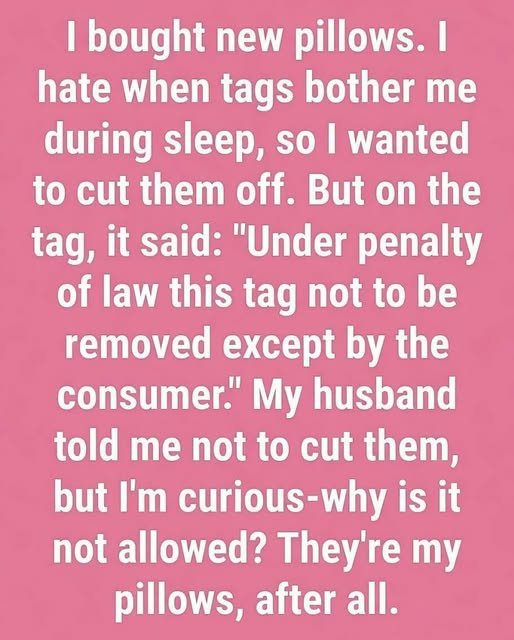
For years, a tiny piece of fabric on pillows and mattresses made people nervous. The words “DO NOT REMOVE” sounded like a warning that removing the tag could lead to trouble.
But the truth is much less frightening. The label was never created to punish people sleeping in their own beds—it was designed to protect consumers.
The rule began because some manufacturers used questionable materials and failed to clearly explain what was inside their products. Authorities wanted buyers to know exactly what they were purchasing.
That is why companies were required to keep labels attached during manufacturing and sales. The warning was directed at sellers, not the people who eventually owned the item.
Once you buy the pillow or mattress, removing the tag is generally a personal choice. It is not a crime for a homeowner to cut it off for comfort or appearance.
However, the label can still be useful. It often contains washing instructions, material information, and details that may help people with allergies or sensitivities.
The little tag also helps when items are donated or resold because it provides important information about the product’s condition and contents.
So the famous “Do Not Remove” label was never a threat hiding in your bedroom. It is actually a reminder of consumer protection and the importance of knowing what we buy.
Website Disclaimer
The information provided on this website is for general informational and educational purposes only. While we strive to ensure that all content is accurate and up to date, we make no guarantees regarding the completeness, reliability, or accuracy of any information published.
The views and opinions expressed in articles belong to their respective authors and do not necessarily reflect the views of this website. Any action you take based on the information found on this website is strictly at your own risk. We will not be liable for any losses, damages, or inconveniences arising from the use of our content.
Some articles may contain opinions, third-party information, or external links. We do not endorse or guarantee the accuracy of content on external websites and are not responsible for their practices or policies.
All content on this website is provided in good faith and is intended for informational purposes only. Readers are encouraged to verify information independently and seek professional advice where appropriate.