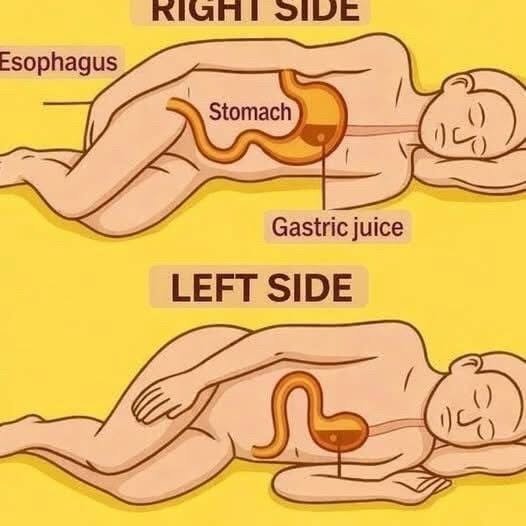
It feels natural, comfortable—even harmless. Rolling onto your right side at night is something many people do without a second thought. But what most don’t realize is that this position can quietly affect how your body functions while you sleep. What seems like a simple habit could actually be influencing your digestion in ways you’ve never considered.
Inside your body, the stomach and digestive system aren’t positioned evenly. When you lie on your right side, gravity allows stomach acids to move more freely toward the esophagus. This can increase the chances of acid reflux, that uncomfortable burning sensation many people feel after meals or during the night. Over time, this repeated exposure can lead to more noticeable discomfort and disrupted sleep.
On the other hand, when you shift to your left side, the position naturally helps keep stomach acids where they belong. The way your organs are aligned allows gravity to work in your favor, reducing the likelihood of acid moving upward. This simple change can make a surprising difference, especially for people who often wake up feeling uneasy or dealing with nighttime indigestion.
Many people who struggle with poor sleep or unexplained discomfort never think to look at their sleeping position. They focus on pillows, mattresses, or routines—while something as basic as which side they sleep on goes unnoticed. Yet this small adjustment can have a direct impact on how your body processes food and how comfortably you rest.
In the end, it’s not about completely changing how you sleep overnight—it’s about understanding how your body reacts and making small choices that support it. Sometimes, the difference between a restless night and a peaceful one comes down to something as simple as turning to the other side.
Website Disclaimer
The information provided on this website is for general informational and educational purposes only. While we strive to ensure that all content is accurate and up to date, we make no guarantees regarding the completeness, reliability, or accuracy of any information published.
The views and opinions expressed in articles belong to their respective authors and do not necessarily reflect the views of this website. Any action you take based on the information found on this website is strictly at your own risk. We will not be liable for any losses, damages, or inconveniences arising from the use of our content.
Some articles may contain opinions, third-party information, or external links. We do not endorse or guarantee the accuracy of content on external websites and are not responsible for their practices or policies.
All content on this website is provided in good faith and is intended for informational purposes only. Readers are encouraged to verify information independently and seek professional advice where appropriate.