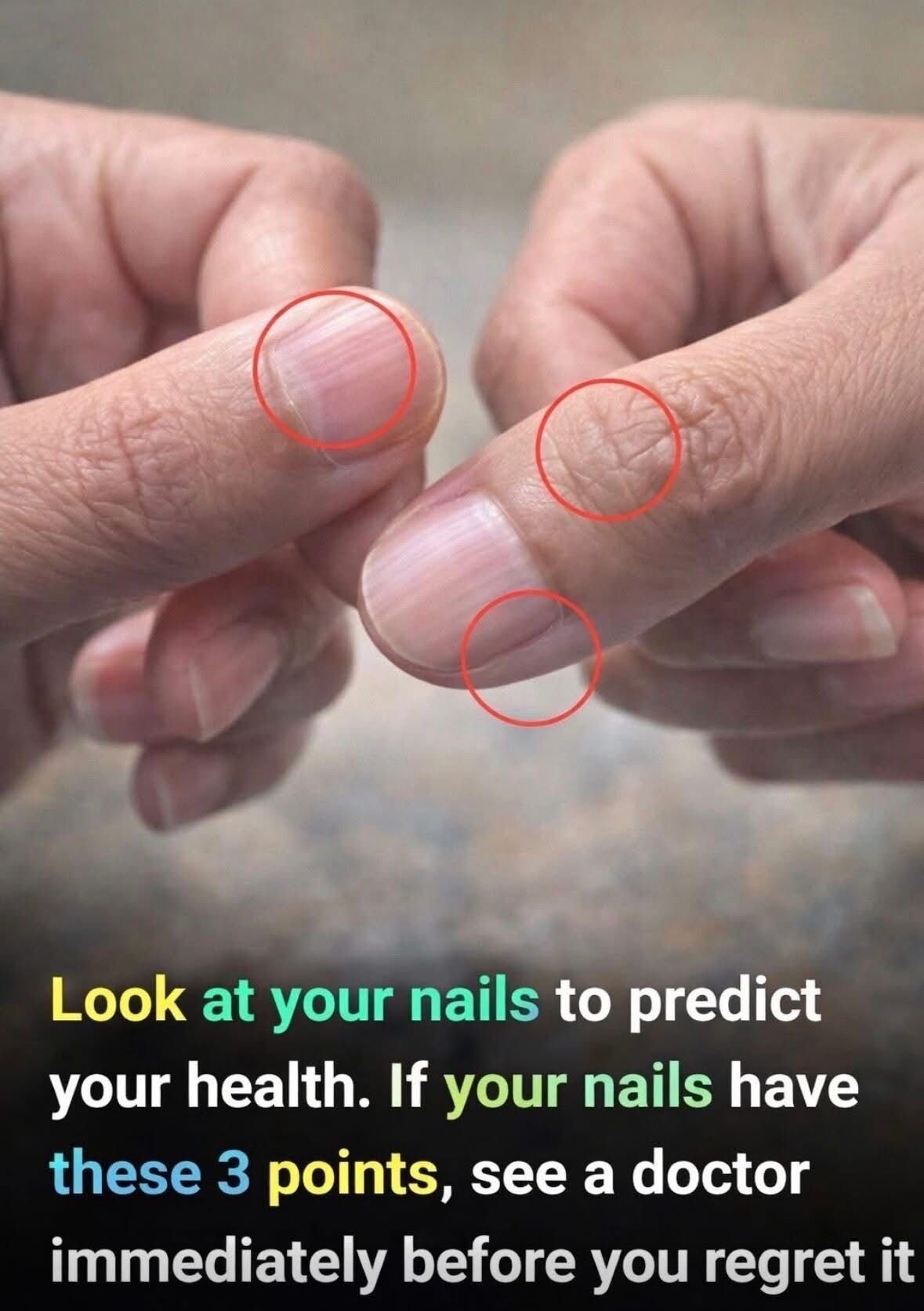
Your nails can provide subtle clues about your overall health, often reflecting changes in the body before they become obvious elsewhere. Lines or ridges may appear gradually and can run vertically or horizontally. While many of these changes are harmless, they can sometimes relate to nutrition, stress, or general health habits.
Vertical ridges, also called longitudinal ridges, are the most common nail change. They usually develop slowly with age and are often a normal part of the nail growth process. As the nail matrix changes over time, growth can become slightly uneven, creating these lines.
In some cases, vertical ridges may be linked to nutritional factors such as low iron or B vitamin intake. A balanced diet, proper hydration, and overall good health habits can help support stronger, smoother nail growth, although mild ridging is often not a cause for concern.
Horizontal lines, known as Beau’s lines, are less common and may indicate a temporary disruption in nail growth. This can happen after illness, physical stress, or significant changes in the body that temporarily slow nail production.
These horizontal grooves can also appear after injuries to the nail or repeated exposure to harsh chemicals. Because nails grow slowly, these lines may reflect events that happened weeks or even months earlier.
Observing when these changes appear can sometimes help identify past stressors or health disruptions. However, nail changes alone are not a diagnosis and should be considered alongside other symptoms and overall health.
Supporting nail health generally involves good nutrition, stress management, and protecting hands from excessive damage or harsh products. Keeping nails clean, moisturized, and protected can also improve their appearance over time.
If nail changes persist, worsen, or occur with other symptoms, it is wise to consult a healthcare professional. In many cases, though, nail ridges are harmless reminders of how the body naturally changes and responds to life’s conditions.
Website Disclaimer
The information provided on this website is for general informational and educational purposes only. While we strive to ensure that all content is accurate and up to date, we make no guarantees regarding the completeness, reliability, or accuracy of any information published.
The views and opinions expressed in articles belong to their respective authors and do not necessarily reflect the views of this website. Any action you take based on the information found on this website is strictly at your own risk. We will not be liable for any losses, damages, or inconveniences arising from the use of our content.
Some articles may contain opinions, third-party information, or external links. We do not endorse or guarantee the accuracy of content on external websites and are not responsible for their practices or policies.
All content on this website is provided in good faith and is intended for informational purposes only. Readers are encouraged to verify information independently and seek professional advice where appropriate.