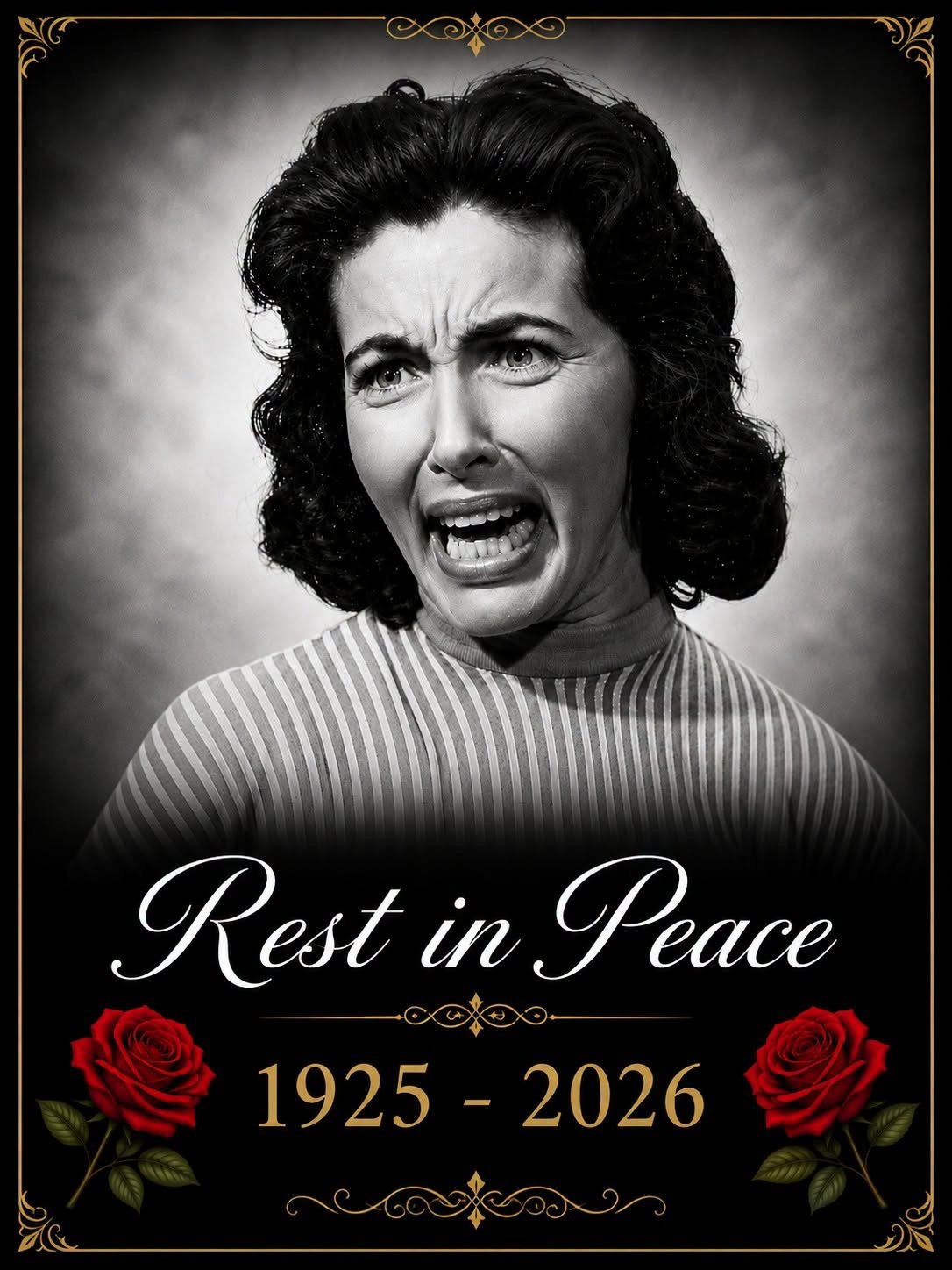
Peggy Webber, the remarkably prolific actress whose voice became familiar to generations of American radio listeners before she built an equally varied career in film and television, has died at the age of 100. Webber died on August 15, 2026, of natural causes at an independent-living facility in Napa, California, her son Rob Sinskey confirmed to The Hollywood Reporter. Her death closes an extraordinary chapter in American broadcasting history, one that stretched from radio’s golden age into the modern era of audio drama.
Although Webber was not always as publicly recognizable as some of the stars beside whom she worked, millions of listeners encountered her performances over the decades. Her remarkable ability to change her voice allowed her to portray an enormous range of characters. Webber had relocated to Northern California relatively late in her life. According to reporting on her death, she previously lived in Los Angeles but had to evacuate her home during the destructive wildfires in January 2025.
She subsequently moved north to Napa, where she spent the final period of her life. Her death there came only about a month before what would have been her 101st birthday. For an artist whose professional story had begun when radio drama was among America’s dominant forms of entertainment, reaching 100 represented another remarkable milestone in an already exceptional life. Her career ultimately connected several very different eras of entertainment.
Born Peggy Webber on September 15, 1925, in Laredo, Texas, she discovered performance at an extraordinarily young age. Accounts of her life describe her entertaining audiences during intermissions at silent movie theaters while she was still a very young child. Her family later lived in Arizona, and Webber attended Tucson High School, graduating in 1942 after participating in dramatic activities there. Radio soon became the medium with which she would be most closely associated. She began appearing on radio while still a child, years before most young performers would have been thinking seriously about a professional career.
Her early start developed rapidly into professional work. Webber made an early radio appearance at San Antonio station WOAI, and by the 1940s she was building an extraordinary collection of credits. Her greatest asset was not simply having a distinctive voice, but possessing the flexibility to create many different ones. She could alter the apparent age, personality and characteristics of a character through vocal performance. That versatility made her especially valuable during an era when radio performers were expected to create entire worlds for audiences who could hear the characters but never see them.
Her productivity soon attracted national attention. A 1946 Time magazine profile described the astonishing number of characters she had already created during the early years of her career. The magazine reported that within three years, Webber’s highly adaptable voice had been used for about 150 different characters across roughly 2,500 broadcasts. She was only in her early twenties at the time. Those numbers provide a sense of the pace at which radio actors could work during the medium’s golden age and demonstrate why Webber became such a valuable performer.
Webber’s radio résumé eventually included some of the best-known programs and performers of the era. She worked on The Adventures of Sherlock Holmes, which starred Basil Rathbone as Sherlock Holmes and Nigel Bruce as Dr. Watson. She also performed on The Story of Dr. Kildare, alongside Lionel Barrymore and Lew Ayres, and appeared in programs including The Man Called X and Escape. These productions placed her among performers whose voices were reaching households across the United States during the period when network radio was a central part of everyday entertainment.
One particularly interesting assignment came in 1944, when Webber portrayed Ilsa in a serialized radio adaptation of Casablanca. Ingrid Bergman had famously played Ilsa Lund opposite Humphrey Bogart in the 1942 film, but radio adaptations frequently required other performers to reinterpret established movie characters using only their voices. Webber took on that challenge for NBC Radio’s Star Playhouse. It was one example among thousands of how her career crossed between original radio characters and adaptations of stories that audiences already knew from literature, theater or cinema.
The volume of her work was extraordinary even by the standards of busy radio performers. Webber later recalled periods when she was working on several soap operas simultaneously. Radio production schedules could move rapidly, requiring actors to arrive prepared, perform scripts with limited rehearsal and then move on to another program or character. Her ability to maintain such a demanding schedule helps explain why she accumulated thousands of radio appearances over the course of her career. Rather than becoming associated with only one character, Webber built her reputation through versatility.
One of her most important radio associations was with Dragnet. The groundbreaking police drama became closely identified with creator and star Jack Webb, who played Los Angeles police detective Joe Friday. Webber participated in the original radio version of the series and eventually became particularly associated with the role of Joe Friday’s mother. She also played numerous other characters connected with Dragnet over the years. Her involvement with the franchise would later extend beyond its original radio incarnation.
Webber’s relationship with Jack Webb was an important professional connection. She became one of the dependable performers who could be called upon to handle different roles, something especially valuable for productions requiring large numbers of supporting characters. According to biographical accounts, she appeared in more than 100 Dragnet radio programs. She later continued appearing in television productions associated with Webb, including the television version of Dragnet and other programs connected with his production work.
Yet Webber was never limited to radio. As television emerged as a major entertainment medium, she also worked behind and in front of television cameras. Her career developed during a fascinating transitional period in entertainment history, when radio remained powerful but television was rapidly entering American homes. Webber was therefore part of a generation of performers who learned to move between different forms of storytelling rather than relying on a single medium.
Cinema provided another important part of her career. One of her most notable early film appearances came through Orson Welles. In 1948, Webber appeared as Lady Macduff in Welles’ film adaptation of William Shakespeare’s Macbeth. Welles directed the film and played Macbeth himself. For Webber, the production represented an opportunity to work with one of the most influential filmmakers and performers of the twentieth century while bringing her dramatic experience to the screen.
Her work with Welles was followed by another significant film connection several years later. In 1956, Webber appeared in Alfred Hitchcock’s The Wrong Man, starring Henry Fonda. The film was inspired by the real-life case of a man mistakenly identified as a criminal and stands apart from some of Hitchcock’s more stylized thrillers because of its restrained, reality-based approach. Webber’s participation placed her in the orbit of another director whose work would become central to film history.
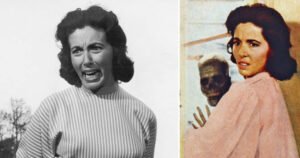
Two years later, Webber took on a very different kind of film role. She starred in the 1958 horror movie The Screaming Skull, portraying Jenni Whitlock, a newly married woman confronted with increasingly frightening experiences. The low-budget supernatural film eventually became a cult title among fans of classic horror cinema. Webber’s performance has also led to her being remembered as an early example of what later generations of horror fans would call a “scream queen.”
Her screen career continued beyond those famous film associations. Webber appeared in television programs over several decades, often working as a character actress rather than pursuing conventional celebrity. That kind of career required considerable adaptability. A supporting performer might appear in a police drama one week and a completely different type of program later, sometimes playing characters who had little resemblance to one another. Webber’s background in radio made her particularly well prepared for such assignments.
But despite her work in movies and television, radio remained at the heart of her professional identity. Webber belonged to a generation that understood audio drama as a complete dramatic art form rather than simply an earlier version of television. A microphone, carefully designed sound effects, music and strong vocal performances could allow audiences to construct elaborate scenes entirely in their imaginations. Webber remained committed to preserving that style of storytelling even after commercial network radio drama had declined dramatically.
That commitment eventually led to one of her most important contributions. In 1984, Webber founded the California Artists Radio Theatre, commonly known as CART. The organization was established to preserve and continue the tradition of dramatic storytelling through sound. Instead of allowing classic radio theater to exist only through old recordings, CART created and presented productions featuring professional actors performing drama, comedy, literary adaptations and other spoken-word material.
Through CART, Webber became much more than a performer. She worked as a producer, director, writer and adapter, helping transform stories into productions designed specifically for listeners. The organization brought together performers with backgrounds in Hollywood, Broadway, British theater and radio. Its productions included adaptations of classic literature as well as works connected with prominent writers, demonstrating Webber’s belief that audio theater could remain artistically relevant long after radio’s original golden age had ended.
CART also attracted an impressive collection of performers over the years. Actors associated with its productions included figures such as David Warner, Roddy McDowall, Jeanette Nolan, William Windom, Shelley Long, Michael York, Samantha Eggar and many others. The productions helped create a bridge between generations of performers while keeping the techniques of classic radio drama alive. Webber’s leadership was central to that mission.
The organization also produced adaptations and performances connected with the work of celebrated author Ray Bradbury. CART’s archive includes productions based on Bradbury stories and other literary works, with Webber serving in creative roles including adaptation, direction and production. These projects illustrate how seriously she regarded radio drama. It was not nostalgia alone; she continued treating audio storytelling as a medium capable of bringing significant literary material to life.
Webber’s dedication continued well beyond the age at which many performers would have retired. In a 2015 interview with L.A. Weekly, published when she was 90, she spoke about the sense of responsibility that kept her working. She explained that she viewed the opportunities she had received throughout her career almost as something entrusted to her care. That philosophy helps explain why she remained involved in radio theater for decades instead of simply looking back on her achievements.
Her longevity made her an extraordinary connection to broadcasting history. By the time she reached her nineties, the entertainment world looked almost nothing like the industry she had entered as a child. Radio drama had moved from massive network audiences to a more specialized format, television had gone from experimental technology to a global industry, and digital audio had created new opportunities for podcasts and downloadable productions. Through all those changes, Webber continued believing in the power of storytelling through sound.
Her career is also a reminder of how important character performers were during the golden age of American radio. Famous stars often received top billing, but enormous numbers of programs depended on actors capable of moving between different supporting roles. Webber could be a mother, a dramatic heroine or another entirely different character depending on what a particular script required. That flexibility allowed her voice to become familiar even when listeners did not necessarily recognize her name.
The sheer scale of her radio work illustrates that versatility. Historical accounts have credited Webber with thousands of radio performances across her long career. Some industry profiles placed the number at roughly 8,000 radio shows, an extraordinary total that reflects decades of continuous work. Such figures help explain why describing her simply as a film or television actress would leave out the central achievement of her professional life.
She also contributed creatively beyond acting. Webber wrote, produced and directed projects, responsibilities that allowed her to shape productions rather than merely perform in them. Her work through CART became particularly important in this respect because she could use decades of experience to preserve techniques developed during network radio while introducing them to audiences who had grown up in completely different media environments.
Webber’s life also connected her personally with an extraordinary list of entertainment figures. Orson Welles and Alfred Hitchcock are the most immediately recognizable names in discussions of her film career, but her radio work brought her alongside many other respected actors. Basil Rathbone, Nigel Bruce, Lionel Barrymore and Lew Ayres were among the performers associated with programs on which she appeared. Later generations of actors joined her through California Artists Radio Theatre.
Yet the most enduring part of her legacy may be the commitment she showed to the medium that first captured her imagination as a child. Webber did not abandon radio when newer forms of entertainment became dominant. Instead, she helped preserve dramatic audio performance and demonstrated that the form could survive beyond the era in which families routinely gathered around household radios for evening entertainment.
Her work through CART anticipated, in some respects, the renewed popularity of audio storytelling in the digital era. Modern podcasts, scripted audio series and downloadable dramas use technologies very different from the network broadcasts of Webber’s youth, but they rely on the same basic principle: compelling voices and sound can encourage listeners to imagine an entire world without seeing it. Webber spent decades defending and demonstrating the creative possibilities of that principle.
Her death at 100 therefore represents the loss of someone with a direct connection to an increasingly distant period of entertainment history. When Webber entered radio, television had not yet become the dominant household medium. By the final decades of her life, audiences could carry thousands of audio programs on smartphones and listen whenever they wanted. Few performers had careers long enough to witness such a dramatic transformation from beginning to end.
Webber also remained active long enough to share her knowledge and enthusiasm with people who had never experienced radio’s original golden age. Her commitment to producing audio drama provided later performers and audiences with opportunities to experience the medium as a living art rather than merely an artifact preserved in archives.
According to her son Rob Sinskey, Webber’s death came from natural causes. She had reached her centennial birthday in September 2025 and lived for nearly another year. The circumstances reported by her family indicate a peaceful conclusion to an unusually long life and career. She died on August 15 at an independent-living facility in Napa after having relocated from the Los Angeles area following the January 2025 fires.
Her professional accomplishments now form part of the historical record of American broadcasting and entertainment. There is her work with Jack Webb and Dragnet, her performances alongside major radio stars, her film appearances for Orson Welles and Alfred Hitchcock, her memorable starring role in The Screaming Skull, and decades of work devoted to California Artists Radio Theatre.
Those achievements span mediums, genres and generations. They also reveal why Webber’s career cannot easily be summarized by one famous performance. Unlike performers remembered primarily for a single movie or television character, she built her legacy through thousands of individual assignments and through her sustained dedication to an art form she loved.
Peggy Webber’s story began with a young performer discovering radio when the medium was still shaping American popular culture. It continued through Hollywood films, television appearances, writing, producing and directing, and eventually through her determined effort to keep audio drama alive for future audiences.
After approximately eight decades connected with performance and broadcasting, Webber leaves behind an unusually broad body of work. Her career crossed from the golden age of network radio into the twenty-first century, allowing her to serve as a living link between generations of actors, writers, directors and listeners.
She may never have pursued the kind of celebrity associated with some of the famous people she worked alongside, but that does not diminish the scope of her contribution. For generations of radio listeners, her voice appeared again and again, sometimes in characters so different that audiences might never have realized the same performer was behind them.
Peggy Webber died at 100 after spending most of her life connected in some way to storytelling. From her childhood introduction to radio to the decades she devoted to California Artists Radio Theatre, she demonstrated a remarkable commitment to performance and the spoken word.
Her death marks the passing of one of the surviving links to radio’s golden age, but the recordings and productions she helped create remain. They preserve not only her performances but also the tradition she spent so much of her life protecting.
Peggy Webber leaves behind a legacy built through versatility, persistence and an enduring belief in the imaginative power of a human voice. For audiences who remember classic radio, film and television, as well as those discovering her work for the first time, her extensive career offers a remarkable window into nearly a century of American entertainment history.
Website Disclaimer
The information provided on this website is for general informational and educational purposes only. While we strive to ensure that all content is accurate and up to date, we make no guarantees regarding the completeness, reliability, or accuracy of any information published.
The views and opinions expressed in articles belong to their respective authors and do not necessarily reflect the views of this website. Any action you take based on the information found on this website is strictly at your own risk. We will not be liable for any losses, damages, or inconveniences arising from the use of our content.
Some articles may contain opinions, third-party information, or external links. We do not endorse or guarantee the accuracy of content on external websites and are not responsible for their practices or policies.
All content on this website is provided in good faith and is intended for informational purposes only. Readers are encouraged to verify information independently and seek professional advice where appropriate.