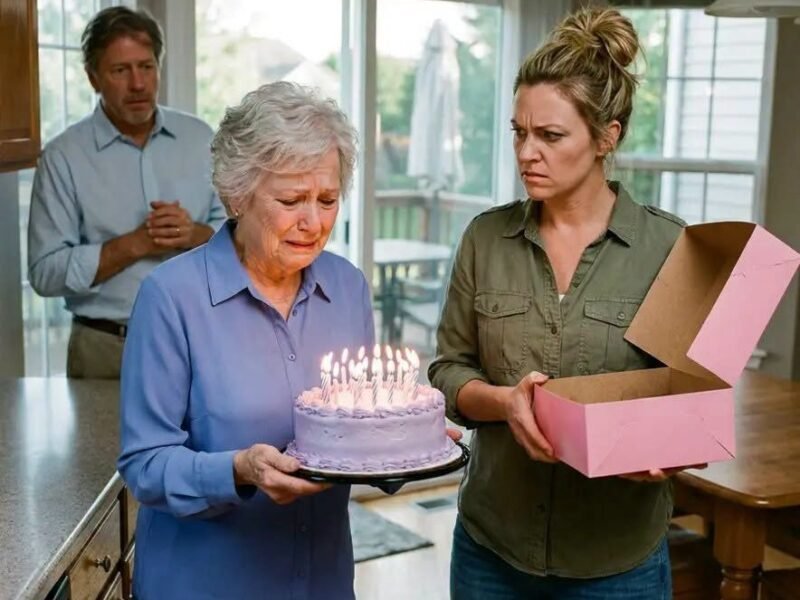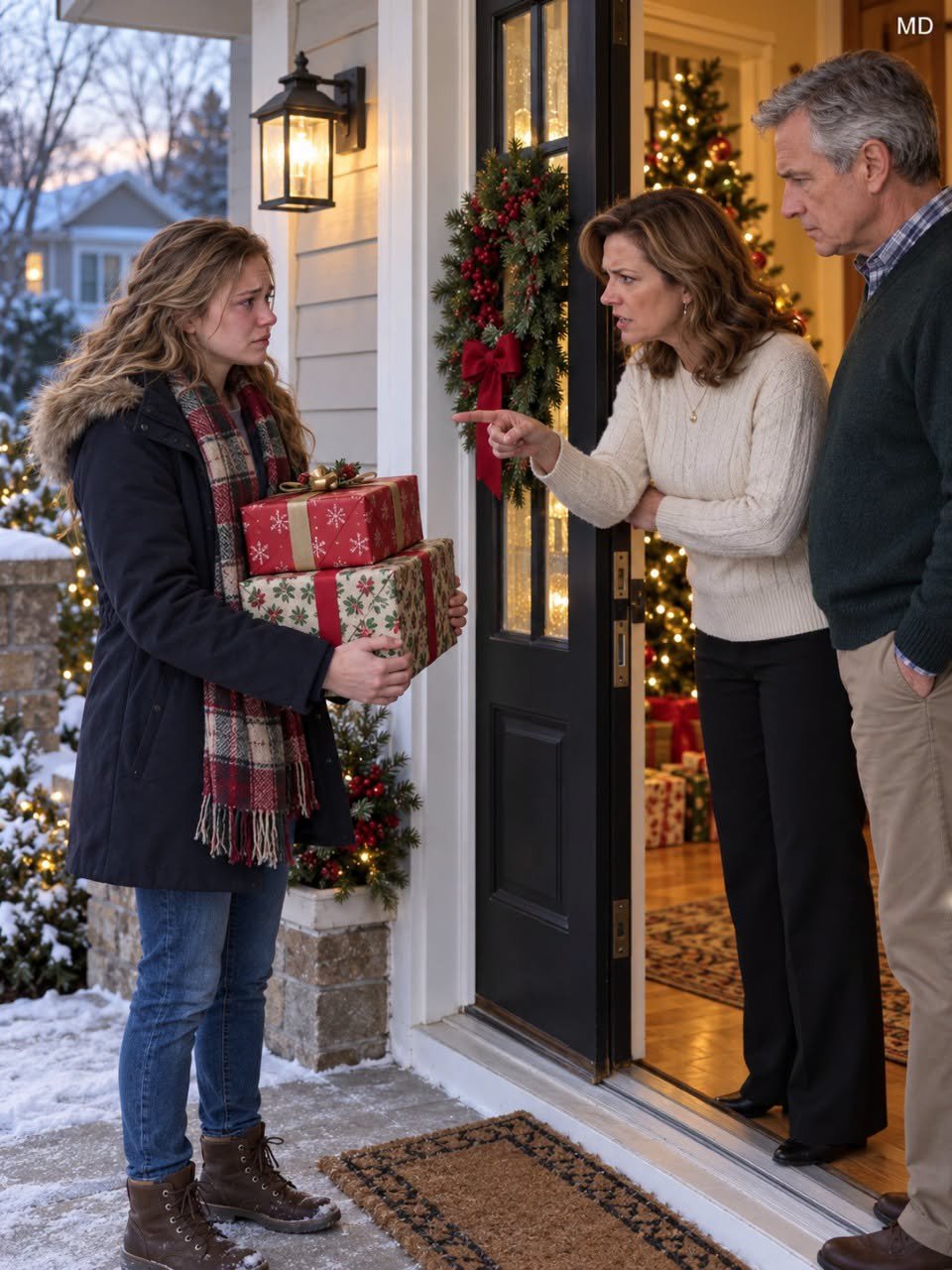
“Mom, Grandma won’t let me come inside.”
My 11-year-old daughter, Ellie, spoke in a trembling voice while I was working an emergency nursing shift on Christmas Day. She had walked nine blocks home alone, carrying gifts she had spent three weeks making for our family. My parents had promised to look after her, yet they refused to open their door because my brother Mark’s children supposedly felt uncomfortable around her.
When I finally reached our house, Ellie was sitting in the empty kitchen, holding three wrapped presents. One contained a handmade clay ornament shaped like her grandfather’s dog. Then I noticed a message on my phone that changed everything I thought I knew about my family.
I was working a twelve-hour emergency shift that Christmas, doing my best to help patients while wishing I could be home with my daughter. Ellie had been excited about spending the afternoon at her grandparents’ house. My mother had invited her weeks earlier, promising a warm meal, presents, and the family traditions Ellie loved.
I hesitated before accepting the arrangement. My parents had always treated Mark’s children differently from Ellie, but I never imagined they would leave my daughter outside in the cold on Christmas Day.
“Don’t worry,” my mother had told me. “She’s our granddaughter, too.”
Those words stayed with me as I hurried through my shift, believing Ellie was safe.
Then my phone rang.
“Mom, Grandma won’t let me come inside,” Ellie whispered.
I stepped away from the nurses’ station, my heart pounding.
“What do you mean, sweetheart? Where are you?”
“I’m home now.”
“Home? How did you get there?”
“I walked.”
Nine blocks. Alone. Carrying the presents she had made for the people who had just rejected her.
I wanted to leave the hospital immediately, but patients were waiting, and I couldn’t abandon an emergency department without arranging appropriate coverage. I asked a colleague for help, contacted a trusted neighbor to check on Ellie, and arranged to leave as soon as I could safely do so.
All I could think about was my little girl walking through the cold, trying not to cry because her own grandparents had turned her away.
When I finally arrived home, Ellie was sitting at the kitchen table. Her coat was still on, and her cheeks were red from the cold. Three carefully wrapped gifts rested in front of her.
I knelt beside her.
“Baby, look at me. Are you hurt?”
She shook her head.
“Did Grandma tell you why she wouldn’t let you inside?”
Ellie looked down at the presents.
“She said Mark’s kids didn’t want me there. She said I would make Christmas awkward.”
I felt something inside me break.
Ellie had spent weeks making those gifts. She had shaped clay into a little ornament resembling my father’s beloved old dog, carefully painted it, and wrapped it herself. She had made a bracelet for my mother and a small picture frame for her grandfather.
She hadn’t brought expensive presents. She had brought pieces of her heart.
“Why didn’t you call me sooner?” I asked gently.
“Because you were helping sick people,” she replied. “I didn’t want you to get in trouble at work.”
That answer hurt more than anything else.
My daughter had been rejected by her own family, yet she was still worried about making my difficult day harder.
I hugged her tightly and promised she had done nothing wrong.
Then my phone buzzed.
It was a message from my mother.
Don’t make a big deal out of what happened today. Mark’s children were uncomfortable, and we had to put their feelings first. Ellie is old enough to understand that not every gathering works out.
I read it twice.
There was no apology. No concern about whether Ellie had reached home safely. Not even a question about how long she had been standing outside.
Instead, my mother expected me to accept the humiliation of my child as an ordinary family inconvenience.
But that wasn’t the message that changed everything.
A few minutes later, another notification appeared in our family group chat. Mark had accidentally—or perhaps carelessly—sent a screenshot of a private conversation.
It showed my mother discussing Christmas arrangements with him.
One sentence stood out.
If Ellie comes, she’ll ask questions about the money. Better to keep her away until everything is settled.
I stared at the screen.
What money?
For months, my parents had been telling relatives that they were struggling financially. They had mentioned unexpected bills and asked me whether I could contribute more toward household expenses. Because I worked long shifts and wanted to help them, I had sent money whenever I could.
I had never questioned them.
Now I was beginning to wonder whether the family gathering had never been the real issue.
I took a screenshot of the conversation and put my phone down. Ellie was watching me carefully.
“Mom, are you mad at Grandma?”
I took her hand.
“I’m upset about what happened, sweetheart. But none of this is your fault.”
She nodded, although I could see she was trying to understand why the people who were supposed to love her had treated her that way.
That evening, instead of forcing ourselves to celebrate as though nothing had happened, we made our own Christmas dinner. We put on comfortable clothes, heated the food I had prepared earlier, and placed Ellie’s three presents beneath our little tree.
She gave me the first gift.
Inside was a handmade card with a drawing of the two of us holding hands beneath a Christmas tree.
The message read:
To Mom, because you always make room for me.
I couldn’t hold back my tears.
For years, I had tried to keep the peace with my parents. I had excused their favoritism, ignored their cutting remarks, and convinced myself that maintaining family relationships was worth the discomfort.
But sitting across from my daughter, I realized that keeping the peace had sometimes meant asking Ellie to accept treatment she never deserved.
And I couldn’t ask her to do that anymore.
The next morning, I called my mother.
I didn’t shout. I didn’t insult her. I simply asked why she had left my daughter outside and what the message about money meant.
At first, she insisted I was misunderstanding everything.
Then she admitted that Mark had asked her to keep Ellie away because he didn’t want her hearing a conversation about our parents’ finances. She claimed it was only temporary and that she hadn’t expected Ellie to walk home alone.
But when I asked why she hadn’t called me, she had no convincing answer.
I told her that whatever disagreement existed between the adults, Ellie should never have been placed in the middle of it.
Then I explained that I would no longer send money or make arrangements for Ellie to visit until I could trust that she would be treated with kindness and respect.
My mother accused me of overreacting. Mark said I was turning one unfortunate incident into a family crisis.
I told them that leaving an 11-year-old outside on Christmas wasn’t a minor misunderstanding.
It was a decision they had made, and Ellie had been the one forced to live with the consequences.
Over the following weeks, I focused on helping my daughter recover from the experience. We talked about what happened without pressuring her to forgive anyone before she was ready. We spent time with friends who welcomed her warmly, and we began building Christmas traditions of our own.
The handmade gifts remained beneath our tree for several days.
Eventually, Ellie asked whether she should throw them away.
I told her she could do whatever felt right to her.
She decided to keep the clay ornament.
“Grandpa might not have wanted it,” she said quietly, “but I still like how it turned out.”
I smiled and helped her hang it on our tree.
That little ornament became a reminder of something I wanted her to understand as she grew older: someone else’s rejection does not make your kindness worthless.
My parents eventually reached out, but rebuilding trust required more than pretending the incident had never happened. It required acknowledging the harm they had caused and demonstrating that Ellie would be treated differently in the future.
I didn’t know whether our relationship would ever return to what it had been.
What I did know was that my daughter would never again have to earn her place in a family by accepting humiliation.
That Christmas, I had gone to work believing I was leaving Ellie with people who would protect her.
I came home understanding that protecting her sometimes meant setting boundaries with the very people I had spent years trying to please.
Family should be a place where a child feels wanted, not a place where she has to wonder whether she’s welcome.
And sometimes, the most important Christmas gift a parent can give is the promise that their child will never have to stand outside a closed door and beg to belong.
Website Disclaimer
The information provided on this website is for general informational and educational purposes only. While we strive to ensure that all content is accurate and up to date, we make no guarantees regarding the completeness, reliability, or accuracy of any information published.
The views and opinions expressed in articles belong to their respective authors and do not necessarily reflect the views of this website. Any action you take based on the information found on this website is strictly at your own risk. We will not be liable for any losses, damages, or inconveniences arising from the use of our content.
Some articles may contain opinions, third-party information, or external links. We do not endorse or guarantee the accuracy of content on external websites and are not responsible for their practices or policies.
All content on this website is provided in good faith and is intended for informational purposes only. Readers are encouraged to verify information independently and seek professional advice where appropriate.