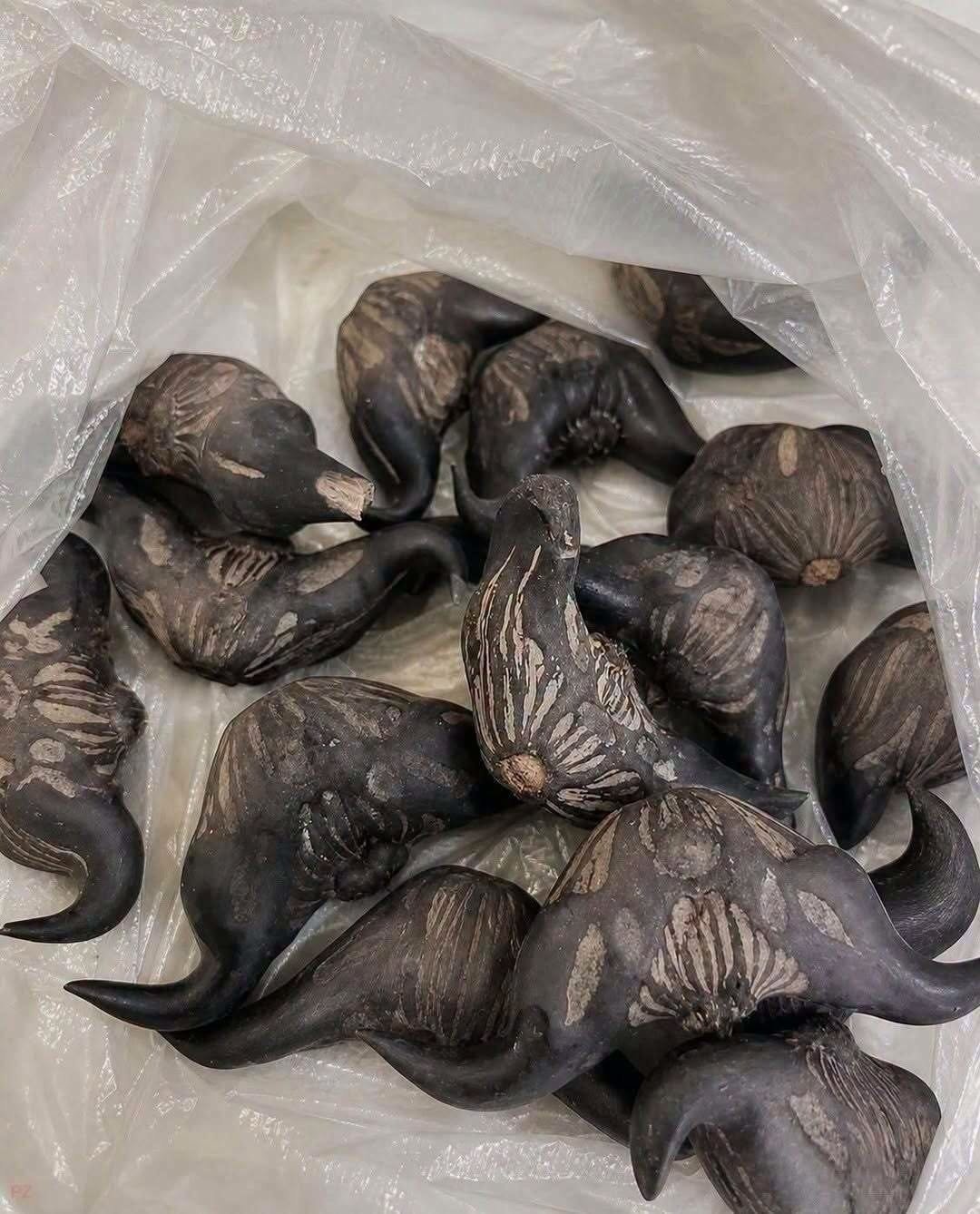
At first glance, the strange black fruits in the photograph look almost prehistoric. With dark, hard shells and pointed horns, they are difficult to recognize as something edible. They appear to be water caltrops, also called buffalo nuts, bat nuts, devil’s nuts, or singhara, depending on the species and region. These unusual fruits belong to the genus Trapa and grow in freshwater environments.
Water caltrops are aquatic fruits found in ponds, lakes, and slow-moving waterways. Their distinctive horns are part of the fruit’s structure and help protect the seed inside. Depending on the species, fruits can have two, three, or four projections. Although the outside looks intimidating, the interior contains a pale, firm, starchy kernel that has been eaten traditionally for generations.
The edible center is sometimes compared with a chestnut because of its texture and mild, slightly nutty flavor. It may be eaten as a snack or added to soups, rice dishes, stir-fries, porridge, and traditional sweets. In parts of South Asia, especially India, water caltrops known as singhara are also dried and ground into flour for various traditional foods.
It is important to remember that water caltrops are not the same as Chinese water chestnuts, Eleocharis dulcis. Despite the similar name, Chinese water chestnuts are aquatic sedges that produce edible underground corms, while water caltrops are fruits produced by Trapa plants.
Water caltrops should not simply be washed and eaten raw. Because they grow in freshwater, aquatic foods can potentially carry microorganisms or parasites. One concern in some regions is Fasciolopsis buski, an intestinal fluke associated with raw or inadequately cooked aquatic plants. Thorough cooking helps reduce these risks.
If you have positively identified them as an edible species from a reliable source, wash the fruits thoroughly, then boil or steam them according to a trusted recipe. After cooking, allow them to cool before carefully cracking or cutting away the hard shell. The pointed projections can be sharp, so handle them cautiously.
If a neighbor gives you a bag of these fruits, ask where they were harvested or purchased and whether they are intended for eating. A photograph alone cannot guarantee identification or safety. Unknown wild plants should be confirmed by a qualified local expert before consumption, particularly if they came from an unfamiliar waterway.
Water caltrops are fascinating because their bizarre appearance hides a simple, starchy food with a long culinary history. Properly identified and cooked, they can be a nutritious traditional food. But the safest rule is simple: know exactly what you have, know where it came from, and cook freshwater plant foods thoroughly before eating them.
Website Disclaimer
The information provided on this website is for general informational and educational purposes only. While we strive to ensure that all content is accurate and up to date, we make no guarantees regarding the completeness, reliability, or accuracy of any information published.
The views and opinions expressed in articles belong to their respective authors and do not necessarily reflect the views of this website. Any action you take based on the information found on this website is strictly at your own risk. We will not be liable for any losses, damages, or inconveniences arising from the use of our content.
Some articles may contain opinions, third-party information, or external links. We do not endorse or guarantee the accuracy of content on external websites and are not responsible for their practices or policies.
All content on this website is provided in good faith and is intended for informational purposes only. Readers are encouraged to verify information independently and seek professional advice where appropriate.