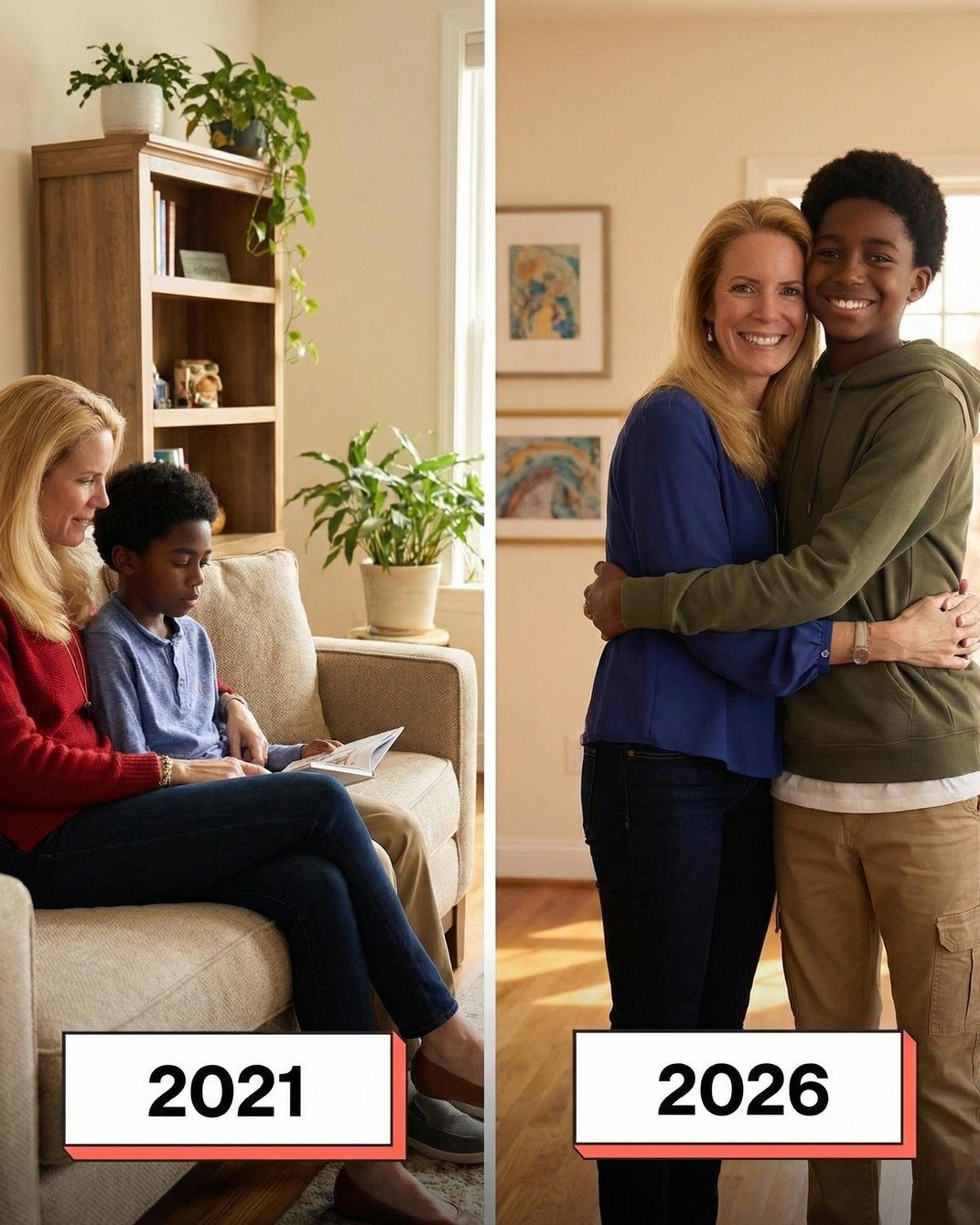
When Sylvie first agreed to foster nine-year-old Alan, she didn’t imagine she could heal the pain he carried. She simply understood loneliness and knew what it meant to live with silence. Years earlier, miscarriages and the end of her marriage had left her home painfully quiet, and volunteering with children eventually led her to foster care. When social services told her about a boy who hadn’t spoken in years and whom most families refused, something in her heart recognized him. Alan arrived with a small backpack and cautious eyes, saying nothing, watching everything. Sylvie didn’t pressure him to speak; she simply offered steady kindness—warm meals, bedtime stories, gentle routines—and allowed trust to grow at its own pace.
Life together unfolded quietly. Sylvie packed lunches with small handwritten notes, shared stories while cooking, and filled the house with simple comforts. Alan rarely reacted outwardly, but signs of connection appeared in subtle ways: saved notes, quiet smiles, and small acts of care. When Sylvie fell ill one winter, she woke to find water and a handwritten note beside her bed. Over time, he began sitting closer during storytime, waiting by the door when she searched for keys, and helping without being asked. Though words never came, their bond deepened through gestures that proved he felt safe. Sylvie learned that love didn’t always need conversation—it needed patience.
As Alan grew into his teenage years, their home slowly warmed with shared routines. Outsiders questioned whether he would ever speak, but Sylvie never treated silence as a problem to solve. To her, Alan simply needed time and reassurance that he wouldn’t be sent away again. When she decided to begin adoption proceedings, she didn’t demand an answer; she only asked for a nod if he was ready. He nodded, though nervousness lingered as the court date approached. Sylvie reassured him that nothing about the hearing meant losing his home—it was simply making official what already felt true.
In the courtroom, when the judge gently asked whether Alan wanted Sylvie to become his legal mother, silence stretched uncomfortably. Then, unexpectedly, Alan cleared his throat and spoke for the first time. He shared memories of being abandoned and moved between homes, explaining how fear of losing another family kept him silent. Sylvie had never forced him to change—she stayed, cared, and allowed him to feel safe. With quiet courage, Alan told the judge he wanted her to adopt him because she had already been his mother in every way that mattered. Later, outside the courthouse, he handed Sylvie a tissue and softly called her “Mom.” That evening, when he offered to read their bedtime story aloud, Sylvie realized something precious: love doesn’t always arrive loudly. Sometimes, it grows quietly until one day, it finds its voice.
Website Disclaimer
The information provided on this website is for general informational and educational purposes only. While we strive to ensure that all content is accurate and up to date, we make no guarantees regarding the completeness, reliability, or accuracy of any information published.
The views and opinions expressed in articles belong to their respective authors and do not necessarily reflect the views of this website. Any action you take based on the information found on this website is strictly at your own risk. We will not be liable for any losses, damages, or inconveniences arising from the use of our content.
Some articles may contain opinions, third-party information, or external links. We do not endorse or guarantee the accuracy of content on external websites and are not responsible for their practices or policies.
All content on this website is provided in good faith and is intended for informational purposes only. Readers are encouraged to verify information independently and seek professional advice where appropriate.