# My Father Paid My Son $10 While His Cousins Received $40 for the Same Work — So I Finally Spoke Up
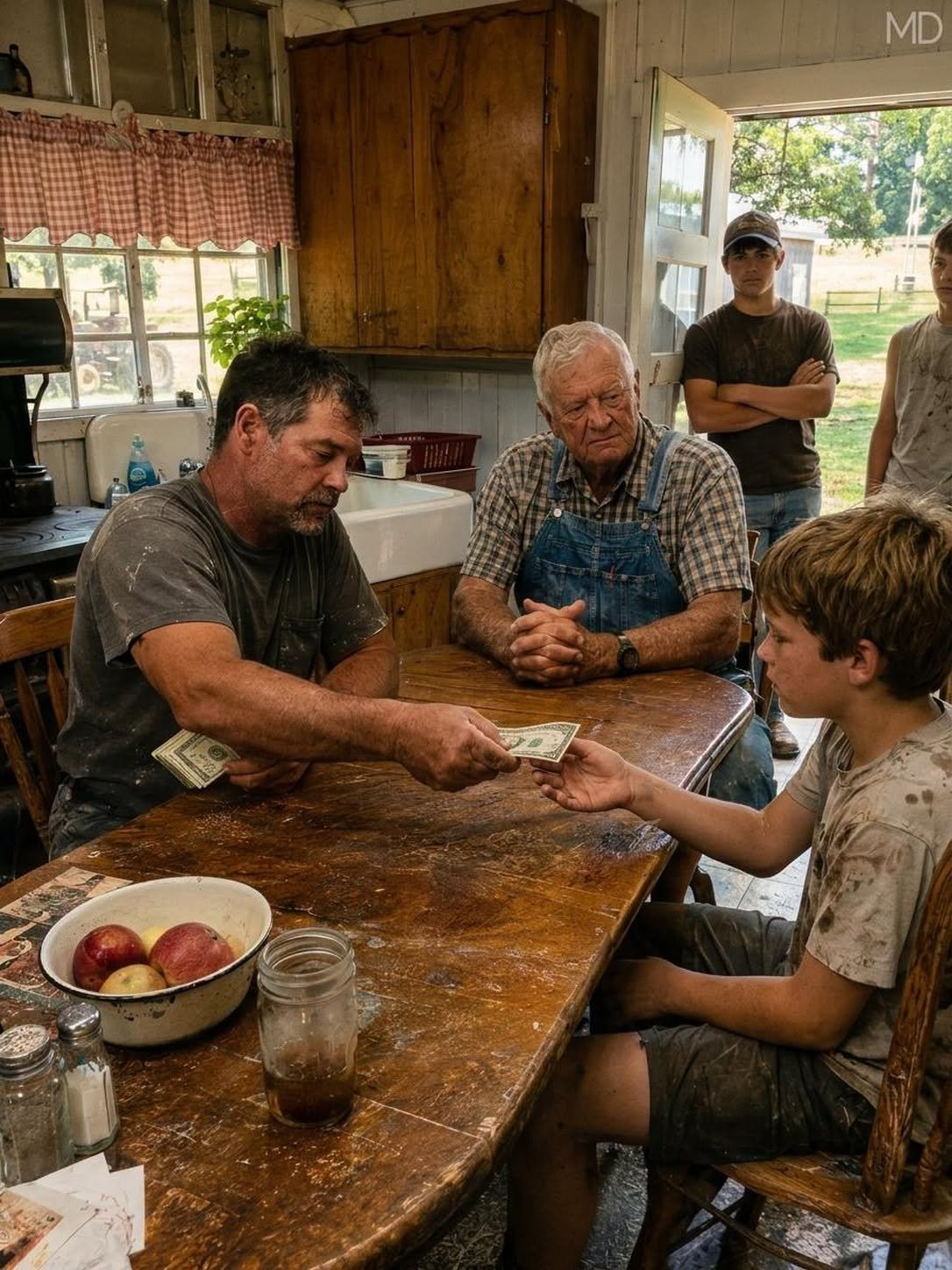
My 12-year-old son stood silently in my father’s kitchen, staring at the money in his hand. He had spent three hours mowing the same two-acre lawn as his older cousins, working through the humid Kansas heat.
All three boys had completed their assigned jobs, rotating between the riding mower, push mower, and weed trimmer. Yet when Grandpa handed out their wages, my son received just $10 while his cousins each collected $40.
My father smiled proudly at the older boys and remarked that they had promising futures ahead of them. I watched my son’s expression change from excitement to confusion.
He looked at the money again, then quietly asked, “Grandpa, did I do something wrong?”
My father chuckled.
“No, buddy. You’re just younger. You’ll understand when you’re older.”
My son nodded, slipped the $10 into his pocket, and walked toward the living room.
But I couldn’t ignore what had just happened.
I approached my father and asked why the boys had received different amounts.
He shrugged.
“Your nephews are older. They worked harder, and they deserve more.”
I reminded him that all three boys had worked for the same amount of time and completed the same assignments. My son had even spent extra time clearing grass clippings near the fence.
My father waved away my concerns.
“Life isn’t always fair. He needs to learn that.”
I looked at him and replied, “Learning that life isn’t always fair is different from learning that his own family doesn’t value his effort.”
The kitchen suddenly became quiet.
My sister, whose two sons had received $40 each, tried to smooth things over.
“Please don’t turn this into a big deal. Dad was just being generous.”
I didn’t argue with her. Instead, I went to find my son.
He was sitting on the back steps, rubbing a small grass stain on his jeans.
“Are you upset?” I asked.
He shrugged.
“I thought I did a good job. My cousins said I did.”
Those words hurt more than I expected.
I sat beside him and explained that his work mattered. His age didn’t make his effort worthless, and receiving less money didn’t mean he had done something wrong.
He looked at me and asked a question I’ll never forget.
“Does Grandpa like them more because they’re older?”
I pulled him close and told him that his worth had nothing to do with the amount of money someone handed him.
But I also knew that words alone wouldn’t fix what had happened.
The following morning, I returned to my father’s house with an envelope.
Inside were $30.
I handed it to my son in front of his grandfather.
“That’s the difference between what you received and what your cousins received. You earned the same payment for the same work, and I want you to know that.”
My father frowned.
“You’re undermining my authority in my own house.”
I calmly replied, “I’m not questioning your right to pay people however you choose. I’m teaching my son that he doesn’t have to accept being treated as less valuable simply because he’s younger.”
Then I added something I had been thinking about all night.
“If you want the boys to learn responsibility, teach them that hard work deserves recognition. Don’t teach one child that his effort counts less than everyone else’s.”
My father didn’t respond immediately.
For several seconds, he simply stared at the envelope.
Later that afternoon, he called my son into the kitchen. I couldn’t hear every word, but I watched my father’s expression soften.
He apologized for making him feel that his work wasn’t important.
My son smiled and accepted the apology.
That evening, while driving home, he told me he wanted to save his money to buy a bicycle.
I smiled and asked how much he had saved so far.
Then he said, “Mom, next time I’ll work just as hard, even if nobody gives me extra money.”
I told him that was a wonderful attitude, but he should also remember that he deserved fairness and respect.
That experience taught me something important about parenting.
Children don’t always remember how much money they received, but they remember how adults made them feel. They notice when their efforts are overlooked, when comparisons are made, and when someone they love treats them differently.
The greatest lesson that day wasn’t about $10 or $40. It was about teaching a child that his value is never determined by someone else’s willingness to recognize it. ❤️
Website Disclaimer
The information provided on this website is for general informational and educational purposes only. While we strive to ensure that all content is accurate and up to date, we make no guarantees regarding the completeness, reliability, or accuracy of any information published.
The views and opinions expressed in articles belong to their respective authors and do not necessarily reflect the views of this website. Any action you take based on the information found on this website is strictly at your own risk. We will not be liable for any losses, damages, or inconveniences arising from the use of our content.
Some articles may contain opinions, third-party information, or external links. We do not endorse or guarantee the accuracy of content on external websites and are not responsible for their practices or policies.
All content on this website is provided in good faith and is intended for informational purposes only. Readers are encouraged to verify information independently and seek professional advice where appropriate.