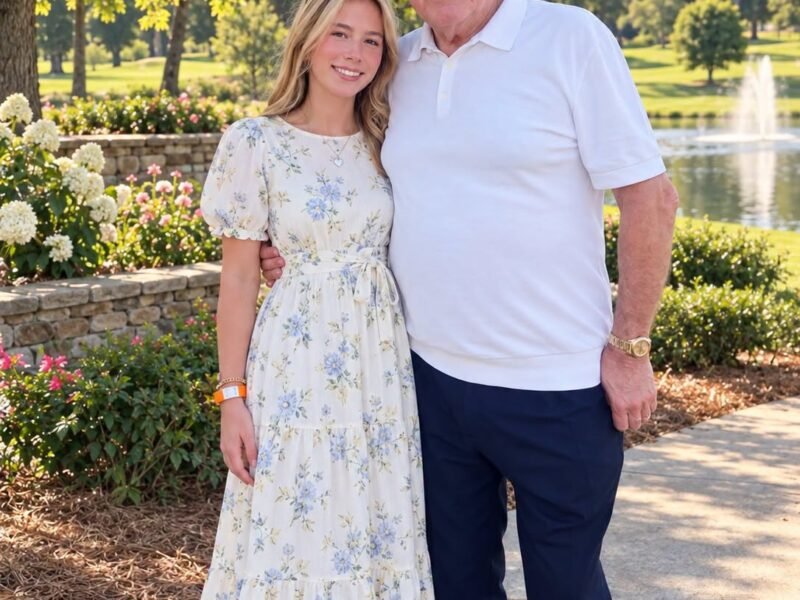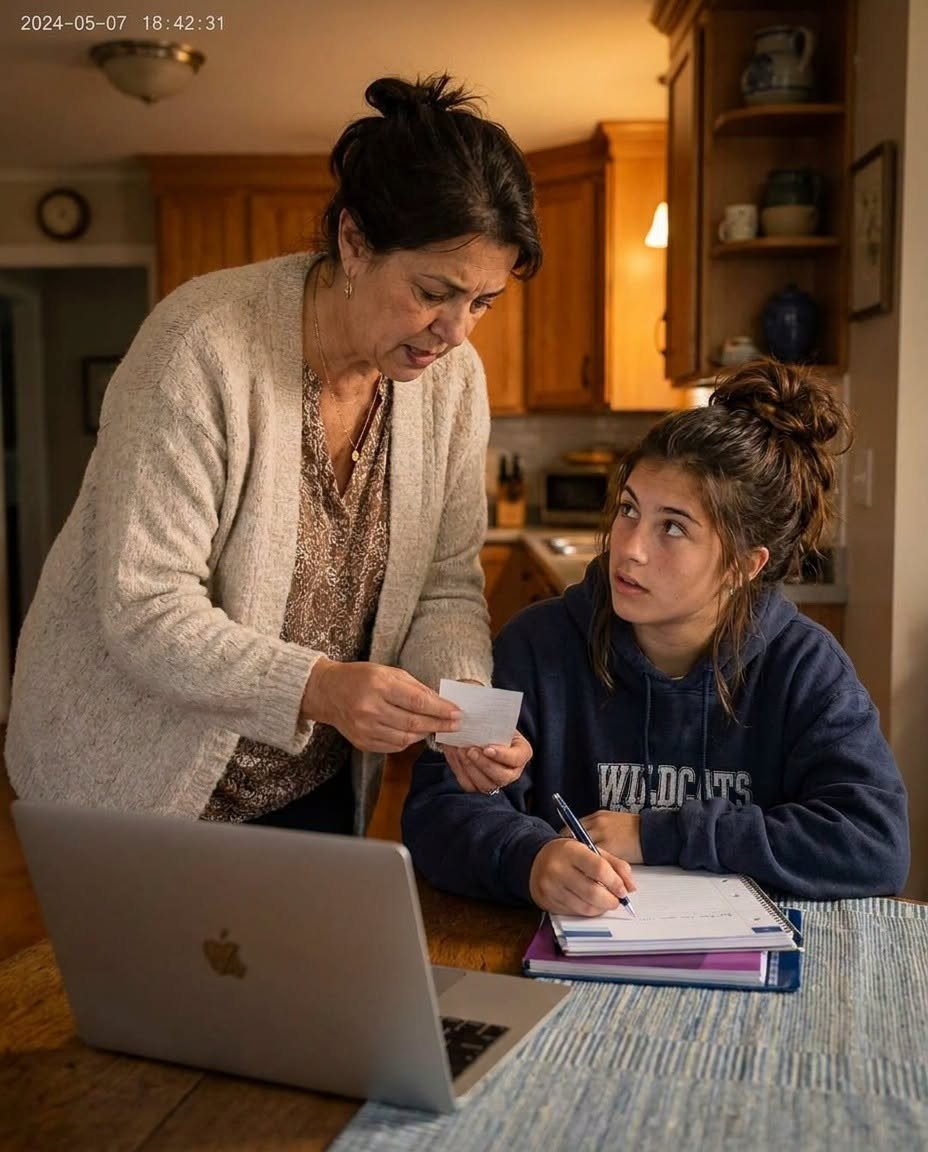
The first phone buzzed beside my father’s plate while he was still talking about highway traffic. Then my mother’s screen lit up, followed by Tessa’s and Rachel’s, until the Christmas table seemed to pulse with quiet alarms. I had just sent a carefully documented letter to our extended family containing the wedding invitation, screenshots, dates, and every message they had used to deny my adopted daughter Maya’s place among them. No one had been warned, and there was no speech to interrupt or argument to overpower. My mother’s smile froze as replies began arriving, Tessa lost color, and Rachel whispered, “What is this?” Across from them, Maya sat perfectly still, not triumphant but relieved. For the first time in fourteen years, the adults who had made her uncomfortable were carrying the discomfort themselves.
I adopted Maya when she was three, promising that she would never again feel unwanted in her own family. Yet my parents and sisters treated her as optional through small cruelties that were always easy to deny: introducing her as “Claire’s girl,” referring to her as “your daughter,” overlooking her artwork while displaying her cousins’, and accepting her help without offering belonging in return. When my sister Tessa became engaged, seventeen-year-old Maya saved dress ideas, made a glitter-covered card, and spoke hopefully about attending her aunt’s wedding. The invitation arrived addressed only to me and imposed a strict eighteen-and-over rule, despite Maya being trusted repeatedly as a babysitter for family children. She understood immediately and asked whether she was excluded because she was adopted. I declined the invitation rather than request an “exception” that would frame my daughter as a problem requiring special permission.
My refusal triggered months of pressure, accusations, and efforts to rewrite the exclusion as a neutral policy. When I stopped hosting the annual Christmas gathering, relatives claimed I was punishing the family and isolating Maya, while my mother eventually came to my home and said aloud what everyone else had spent years implying: Maya was not blood and was not truly one of them. Soon afterward, Rachel circulated a message portraying my daughter as manipulative, difficult, and responsible for separating me from my family. The story spread far enough that a stranger commented beneath Maya’s artwork, warning her not to forget who had given her a home. Watching my daughter retreat into the same careful silence she had learned in early childhood ended my willingness to argue privately. I created a chronological record so she would never again be asked to doubt what she had seen with her own eyes.
The file included the wedding invitation, complete message threads, family posts, voicemails, correspondence, and examples establishing a prolonged pattern of disparate treatment. Although the dispute was personal rather than a formal legal claim, preserving the evidence created a reliable contemporaneous record and prevented selective quotations or later denials from controlling the narrative. I sent the complete package during Christmas dinner to the relatives who had received Rachel’s version of events. My family demanded that I retract it, delete it, and restore their privacy, but distribution had already occurred and several recipients had forwarded the material. Ethan asked them to leave after Rachel again called Maya a weapon and my father ordered me to “fix” the disclosure. Once they were gone, I blocked direct contact and ended further attempts at mediation because no reconciliation process could begin while my daughter’s dignity remained negotiable.
Maya is now studying art in college and calls most nights because she wants to, not because she fears losing her place with us. On the day I left her at the dormitory, she held me in the parking lot and whispered that she was not going anywhere. I knew she was speaking about more than distance. Families often claim that blood cannot be replaced, yet blood had been the language used to make my child feel temporary. I chose the daughter who had spent years asking permission to belong over traditions that required her to accept humiliation quietly. Sometimes I still remember my mother standing on the porch with cookies, trying to make rejection smell like kindness. Then I remember Maya at the Christmas table saying, with complete calm, “They can’t pretend anymore,” and I know she finally understood that her place in my life had never been conditional.
Website Disclaimer
The information provided on this website is for general informational and educational purposes only. While we strive to ensure that all content is accurate and up to date, we make no guarantees regarding the completeness, reliability, or accuracy of any information published.
The views and opinions expressed in articles belong to their respective authors and do not necessarily reflect the views of this website. Any action you take based on the information found on this website is strictly at your own risk. We will not be liable for any losses, damages, or inconveniences arising from the use of our content.
Some articles may contain opinions, third-party information, or external links. We do not endorse or guarantee the accuracy of content on external websites and are not responsible for their practices or policies.
All content on this website is provided in good faith and is intended for informational purposes only. Readers are encouraged to verify information independently and seek professional advice where appropriate.