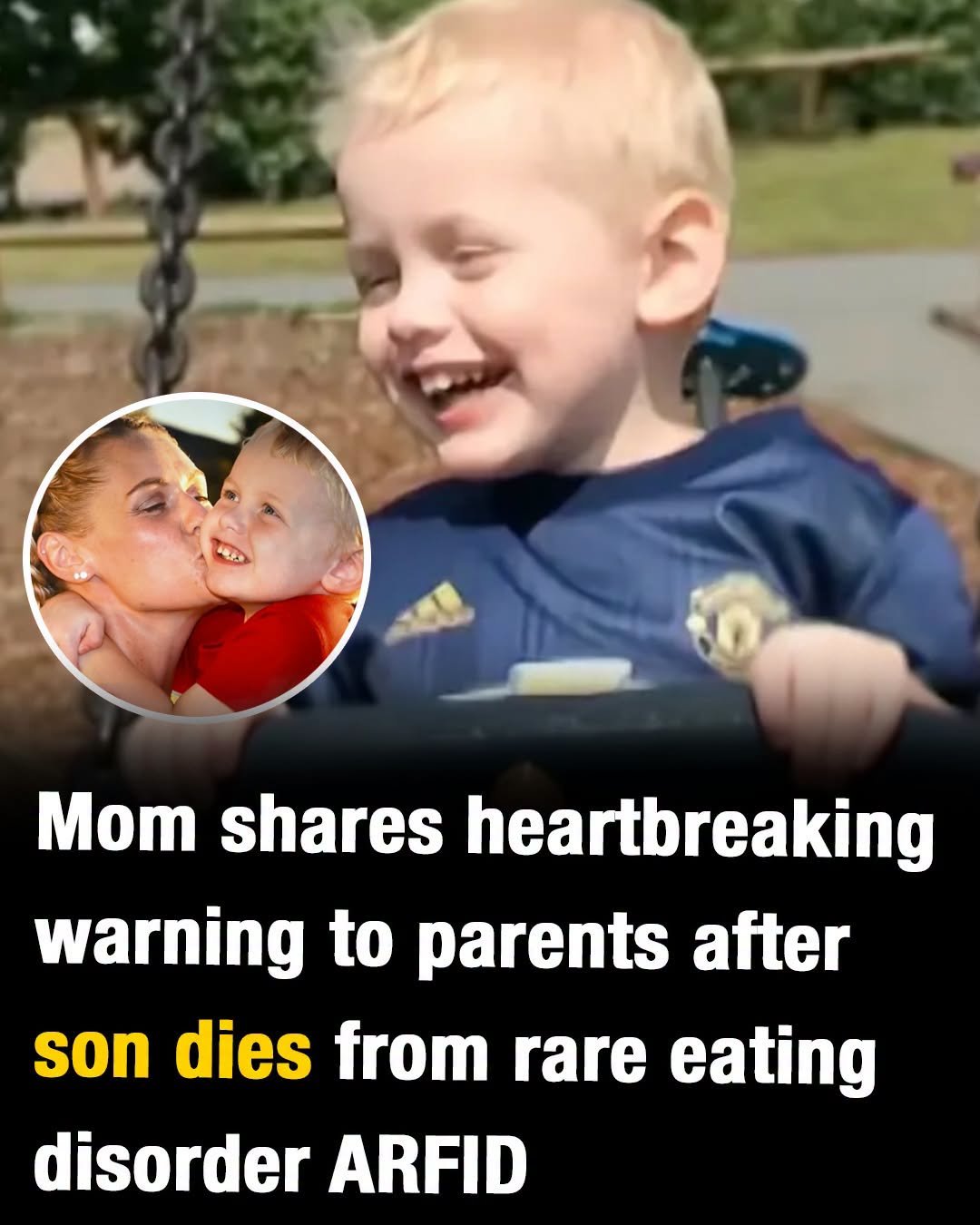
Seven-year-old Alfie passed away after being diagnosed with a rare eating disorder. Now, his mother has opened up about the heartbreaking and unimaginable loss and issues a warning out of fear that other families could go through the same thing.
Seven-year-old Alfie passed away after being diagnosed with a rare eating disorder. Now, his mother has opened up about the heartbreaking and unimaginable loss and issues a warning out of fear that other families could go through the same thing.
Five years ago, Lucy Morisson lost her son, Alfie. He died from malnutrition after struggling with eating and drinking for much of his young life.
Now, Lucy wants other parents to know about a condition called ARFID, which she believes was missed while her son was still alive.
ARFID stands for Avoidant/Restrictive Food Intake Disorder. It can lead people to avoid certain foods or struggle to eat and drink enough. It can affect both children and adults.
In an interview with ITV News, Lucy remembered her son as a happy little boy who always smiled.
She said he was “full of magic” and a “beautiful” boy, and would “smile all the time.” However, when it came to food and drink, Alfie faced serious problems.
Lucy explained that he would choke and vomit when he tried to eat. Sometimes, he would refuse food entirely, and even drinking water could be difficult.
“Alfie would choke, he would vomit, he would hit himself. Sometimes Alfie would not eat at all. Drinking was just as difficult,” the mother said. “I would have to place the water onto his hand, and Alfie would lick his hand.”
Mum issues warning to other parents after losing son to rare eating disorder ARFID
Lucy explained her son had struggled with eating for years. However, she believes the professionals who cared for him focused too much on his autism and failed to realize that something else could be wrong before it was too late.
In the heartbreaking interview, Lucy Morrison admitted that she even blamed herself.
“I honestly thought it must have been me because I was aware Alfie died from malnutrition, but I wasn’t aware that it was from an eating disorder called ARFID,” she continued, explaining that she asked professionals several times for help, but felt that she wasn’t being taken seriously.
According to Lucy, Alfie’s eating problems were too often seen as part of his autism.
“And the hardest part is then, as a parent who is going asking for help, not once, not twice, but for seven years, it was this full lifetime, to be shut down constantly, then you start to believe, ‘Oh, maybe this is his autism,’” she explained.
How can we not be further than we already are?”
After Alfie’s death, a devastated Lucy sent a report to several authorities involved in her son’s case, where she raised concerns.
But while authorities agreed things weren’t handled right, five years after losing her little boy, Lucy is still worried that other children could suffer the same fate. In the ITV News interview, she warned other parents that it could happen to their children, and that it already has.
“Honestly, I know change doesn’t happen overnight, but how can we not be further than we already are?” she said.
If a child regularly refuses food, struggles to drink, or has trouble eating, parents should seek medical advice to find out what is causing the problem. We send our deepest condolences to Lucy; may Alfie rest in peace.
Please share this article on Facebook with friends and family to spread awareness about the horrifying disorder that is ARFID.
Website Disclaimer
The information provided on this website is for general informational and educational purposes only. While we strive to ensure that all content is accurate and up to date, we make no guarantees regarding the completeness, reliability, or accuracy of any information published.
The views and opinions expressed in articles belong to their respective authors and do not necessarily reflect the views of this website. Any action you take based on the information found on this website is strictly at your own risk. We will not be liable for any losses, damages, or inconveniences arising from the use of our content.
Some articles may contain opinions, third-party information, or external links. We do not endorse or guarantee the accuracy of content on external websites and are not responsible for their practices or policies.
All content on this website is provided in good faith and is intended for informational purposes only. Readers are encouraged to verify information independently and seek professional advice where appropriate.