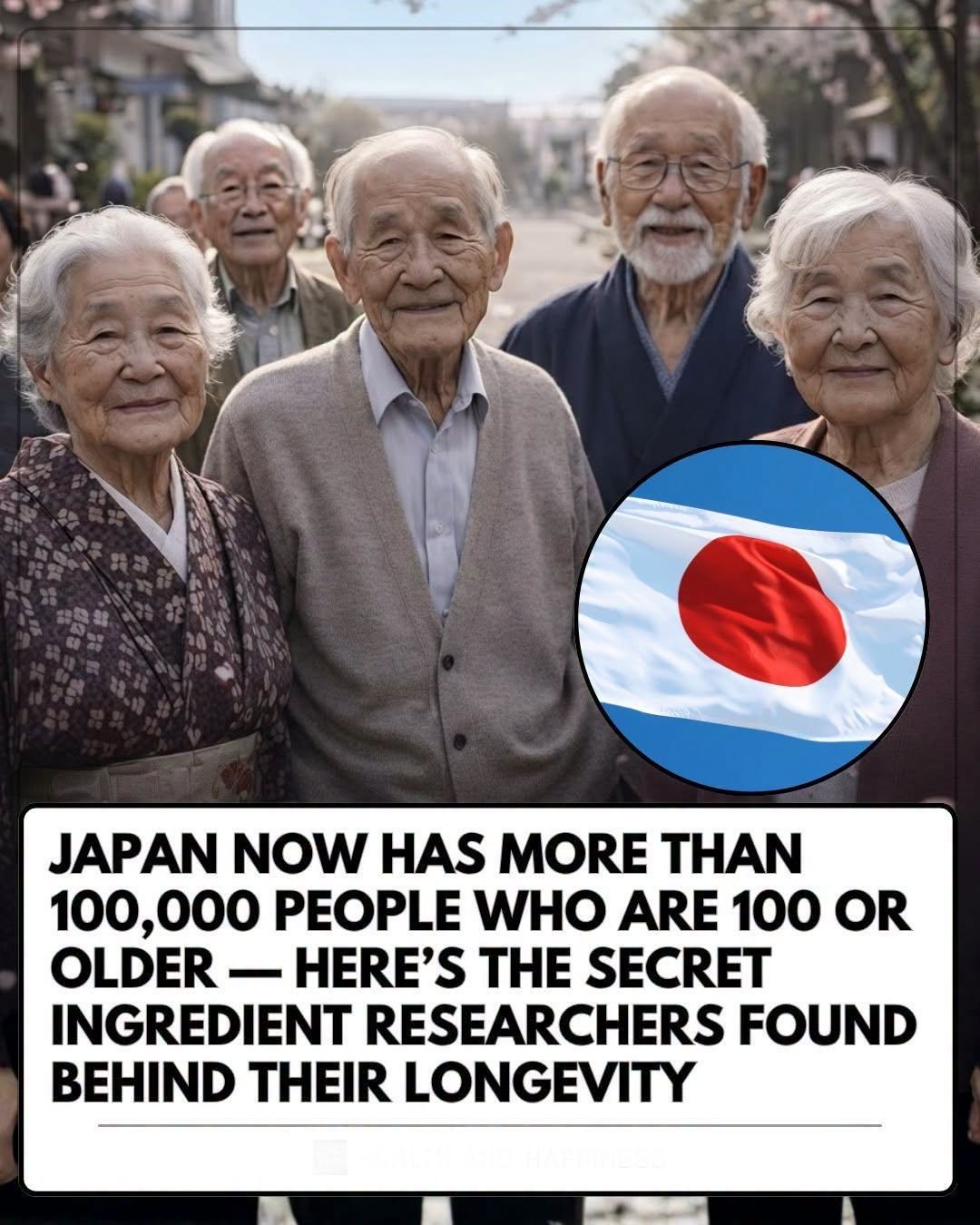
Japan has reached a remarkable milestone, with more than 100,000 people aged 100 or older. The country now has 107,677 centenarians, an increase of 7,914 from the previous year. Women make up nearly 88% of the total. The dramatic rise has renewed interest in how diet, daily routines, healthcare, genetics, and social connections may contribute to living longer. ❤️
Japan’s centenarian population has grown enormously since official records began in 1963, when there were only 153 people aged 100 or older. The number passed 1,000 in 1981, exceeded 10,000 in 1998, and has now crossed 100,000. The milestone highlights longer lifespans, but it also reflects Japan’s broader demographic challenge: a growing elderly population alongside declining birth rates.
Researchers studying healthy aging often find that Japan’s oldest residents share several everyday patterns rather than one magical habit. Traditional meals commonly include vegetables, seafood, rice, soy products, seaweed, and fermented foods, while many older adults remain active through walking, gardening, household tasks, and community activities. Strong relationships and having meaningful responsibilities can also provide structure and social connection. 🧠
Still, there is no single food, exercise routine, or lifestyle that guarantees a person will reach 100. Longevity is influenced by many factors, including genetics, environment, medical care, nutrition, activity, and circumstances throughout life. Japan’s centenarians give scientists a valuable population to study, offering clues about healthy aging—but perhaps the biggest lesson is that long life is shaped by many small influences repeated over decades. ✨
Website Disclaimer
The information provided on this website is for general informational and educational purposes only. While we strive to ensure that all content is accurate and up to date, we make no guarantees regarding the completeness, reliability, or accuracy of any information published.
The views and opinions expressed in articles belong to their respective authors and do not necessarily reflect the views of this website. Any action you take based on the information found on this website is strictly at your own risk. We will not be liable for any losses, damages, or inconveniences arising from the use of our content.
Some articles may contain opinions, third-party information, or external links. We do not endorse or guarantee the accuracy of content on external websites and are not responsible for their practices or policies.
All content on this website is provided in good faith and is intended for informational purposes only. Readers are encouraged to verify information independently and seek professional advice where appropriate.