The tragic death of an experienced animal keeper at Adventure Park in Port Moresby, Papua New Guinea, has brought renewed attention to the inherent risks associated with caring for dangerous wildlife. On September 6, seasoned crocodile handler Kupi Rapura lost his life following a drawn-out and desperate struggle with a crocodile—a creature he had nurtured for nearly two years. This incident, witnessed by park visitors and staff, serves as a powerful reminder of the unpredictability of wild animals and the critical need for robust safety protocols in animal handling environments worldwide.
Background: The Incident Unfolds
Kupi Rapura, a well-known and senior animal keeper at Adventure Park, had spent several years working with crocodiles both in Port Moresby and previously at Baiyer Zoo. On the morning of September 5, Rapura entered a crocodile enclosure to conduct a routine public feeding demonstration, bringing a chicken for the animal. It was during this demonstration, according to eyewitness accounts, that the crocodile attacked without warning.
Gibson John, a park visitor who witnessed the incident, described how Rapura approached the fence with food when the crocodile “attacked the person and tried to bring him into the pool” (ABC). What began as an educational moment for onlookers quickly turned into a harrowing scene, with the handler’s legs trapped in the animal’s powerful jaws.
The Struggle For Survival
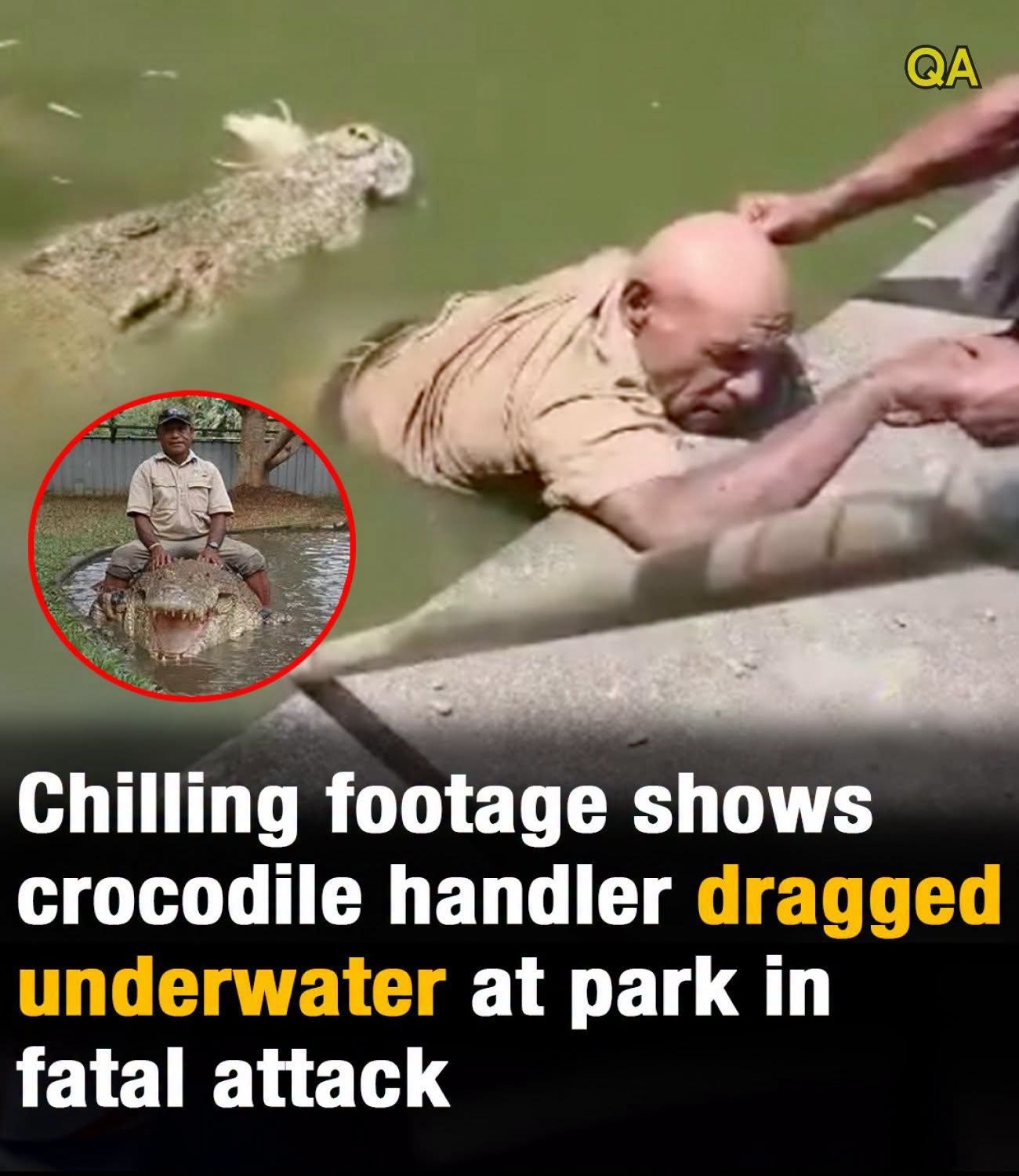
Video footage, filmed through the bars of the enclosure, captured fragments of the tense standoff. Rapura was forcibly taken to the ground, and as the camera angle shifted, he was seen desperately clinging to the edge of the pool while the crocodile maintained its grip on his legs. Bystanders and colleagues outside the fence scrambled to help, trying various methods to free Rapura by passing him a pole or urging the crocodile to release him, but their efforts were hampered by the danger involved and the strength of the animal.
As the minutes ticked by, more people gathered in attempts to assist. One individual scaled the enclosure to grasp Rapura’s arms, trying to provide both physical support and comfort. Yet, despite their efforts, the crocodile’s bite remained unyielding.
The Bleak Reality of Wildlife Handling
The ordeal lasted for over an hour—an unusually prolonged duration for such an incident. Throughout the attack, witnesses noted Rapura’s remarkable composure and resilience. He remained conscious, though clearly in excruciating pain, unable to scream due to the severity of his injuries and shock. “He was in severe pain, but he couldn’t scream,” John recounted. “He couldn’t speak properly at that time. It was the pain I could see from his eyes.” As the rescue effort continued, witnesses recalled his haunting words: “I haven’t done anything wrong.”
The protracted struggle highlighted the immense power of crocodiles, which are renowned for their ability to clamp down with thousands of pounds of pressure per square inch. Their predatory behavior, even in captivity, presents challenges for those who interact with them daily.
Emergency Response and Aftermath
Despite desperate attempts from staff and the public, on-site resources were insufficient. Security personnel, lacking firearms or non-lethal deterrents, handed Rapura a small iron rod in the hope it might help. As the situation worsened, officials from the police and St John’s Ambulance arrived to assist.
Eventually, Adventure Park authorized the euthanization of the crocodile during the rescue to free Rapura. The process resulted in significant trauma; Rapura lost a leg due to the animal’s vice-like grip. He was rushed to the hospital for emergency treatment, but the severe physical trauma proved fatal, and he passed away early the next morning.
The incident prompted Adventure Park management and local authorities to review emergency response procedures and workplace safety policies in facilities that care for dangerous wildlife.
Website Disclaimer
The information provided on this website is for general informational and educational purposes only. While we strive to ensure that all content is accurate and up to date, we make no guarantees regarding the completeness, reliability, or accuracy of any information published.
The views and opinions expressed in articles belong to their respective authors and do not necessarily reflect the views of this website. Any action you take based on the information found on this website is strictly at your own risk. We will not be liable for any losses, damages, or inconveniences arising from the use of our content.
Some articles may contain opinions, third-party information, or external links. We do not endorse or guarantee the accuracy of content on external websites and are not responsible for their practices or policies.
All content on this website is provided in good faith and is intended for informational purposes only. Readers are encouraged to verify information independently and seek professional advice where appropriate.