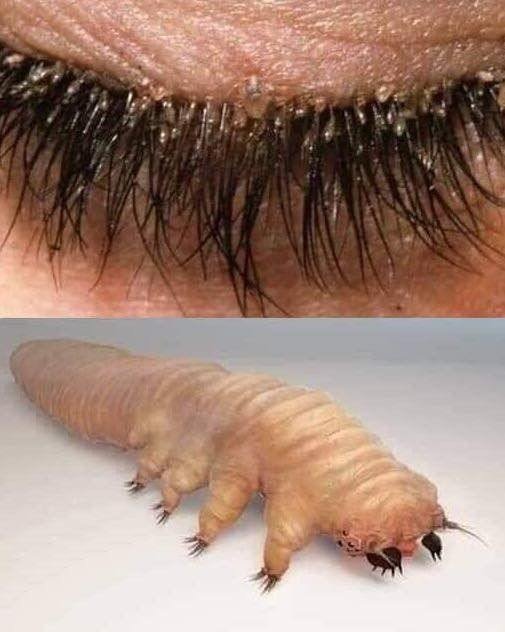
Eyelash mites (Demodex mites) are microscopic organisms that naturally live on most people’s skin, especially around hair follicles and oil glands. In normal amounts, they’re harmless, but when they multiply excessively, they can lead to eye and eyelid problems.
There are two main types: Demodex folliculorum, which lives in hair follicles like eyelashes, and Demodex brevis, which prefers oil glands. Overgrowth can happen due to factors like aging, weakened immunity, or poor hygiene.
When this imbalance occurs, it can cause a condition called blepharitis (eyelid inflammation). Common symptoms include red, swollen, or itchy eyelids, a gritty or burning feeling in the eyes, crust or debris at the base of eyelashes, thinning lashes, increased sensitivity to light, and sometimes lash loss.
Not everyone with these mites experiences symptoms, so many people don’t even know they have them unless irritation develops or is checked by an eye doctor.
Treatment and prevention mainly focus on hygiene. Regularly cleaning the face—especially the eyelid area—with a gentle, fragrance-free cleanser can help keep mite populations under control. In some cases, doctors may recommend specific eyelid cleansers or treatments if symptoms are more severe.
If you notice persistent irritation or any of the symptoms above, it’s best to consult a healthcare professional or eye specialist for proper diagnosis and care.
Website Disclaimer
The information provided on this website is for general informational and educational purposes only. While we strive to ensure that all content is accurate and up to date, we make no guarantees regarding the completeness, reliability, or accuracy of any information published.
The views and opinions expressed in articles belong to their respective authors and do not necessarily reflect the views of this website. Any action you take based on the information found on this website is strictly at your own risk. We will not be liable for any losses, damages, or inconveniences arising from the use of our content.
Some articles may contain opinions, third-party information, or external links. We do not endorse or guarantee the accuracy of content on external websites and are not responsible for their practices or policies.
All content on this website is provided in good faith and is intended for informational purposes only. Readers are encouraged to verify information independently and seek professional advice where appropriate.