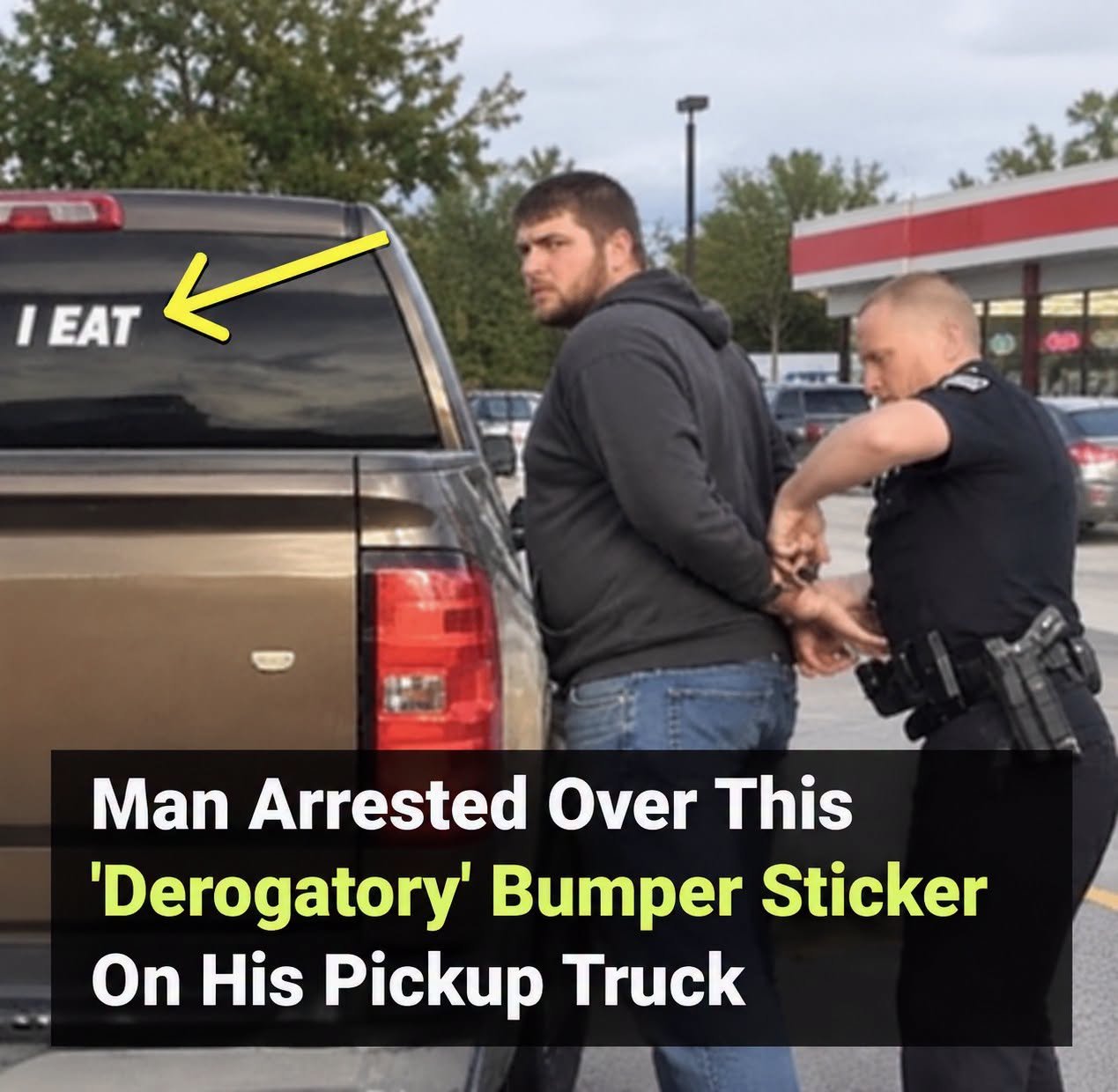
The incident happened in May 2019, when Webb was 23 and driving his Chevrolet pickup near Lake City. According to the arrest report, Deputy Travis English stopped him after seeing the sticker and told Webb that it violated Florida’s obscenity law. Webb was asked to remove or alter part of the message. He refused, arguing that the words were protected expression.
The exchange escalated quickly. Webb was arrested and charged with possession of obscene material and resisting an officer without violence. His truck was searched and towed, and he was taken to jail. The entire encounter became even more controversial because much of the stop was captured on the deputy’s dash-camera video.
But the criminal case did not last long.
Just days later, the State Attorney’s Office declined to prosecute. Prosecutors concluded that Webb had a valid First Amendment defense and determined that the case was unlikely to result in a conviction. The decision effectively ended the criminal prosecution, but it opened the door to a much larger legal fight.
Webb subsequently filed a federal civil-rights lawsuit against members of the Columbia County Sheriff’s Office. He argued that his constitutional rights had been violated, including his rights to free expression and protection against unreasonable searches and seizures.
That lawsuit, however, produced a far more complicated result than simply declaring Webb the winner.
In September 2021, a federal judge ruled that the officers were entitled to qualified immunity on Webb’s First Amendment claims. The court found that, at the time of the arrest, reasonable officers could have believed the sticker fell within Florida’s obscenity law. The ruling did not revive Webb’s criminal charges or establish that the sticker was definitively obscene; rather, it addressed whether the officers could personally be held liable under the demanding legal standard for qualified immunity.
At the same time, part of Webb’s challenge concerning the search and impoundment of his vehicle continued. The parties ultimately reached an agreement and the federal case was dismissed in November 2021. Public records do not establish a publicly disclosed settlement amount.
And that is what makes the story more complicated than the viral headline suggests.
The case was never simply about whether someone should be allowed to put an offensive joke on a truck. It raised difficult questions about obscenity, free expression, police discretion, searches, and qualified immunity.
The First Amendment does not protect every category of expression equally. Obscenity can fall outside constitutional protection, but something being vulgar, offensive, or sexually suggestive does not automatically make it legally obscene. That distinction was at the heart of the dispute surrounding Webb’s arrest.
For Webb, what began as a joke on the back of a truck became a night in jail, a criminal case that was abandoned, and years of federal litigation.
For everyone watching, the episode became an unusual reminder that constitutional rights are often tested in the most ordinary places—and sometimes over the most ridiculous-looking disputes.
A bumper sticker may seem trivial.
But the question behind it wasn’t:
“Is this a good thing to put on your car?”
The constitutional question was much narrower:
Can the government punish someone simply because an officer considers their expression offensive or inappropriate?
In Webb’s case, prosecutors ultimately declined to pursue the criminal charges, while the later civil lawsuit ran into the separate protections of qualified immunity.
And that distinction is the part that often gets lost when the story is reduced to a viral headline.
Four words on a truck created a legal battle that lasted years—and demonstrated just how complicated the boundary between offensive speech, obscenity, police authority, and constitutional protection can become.