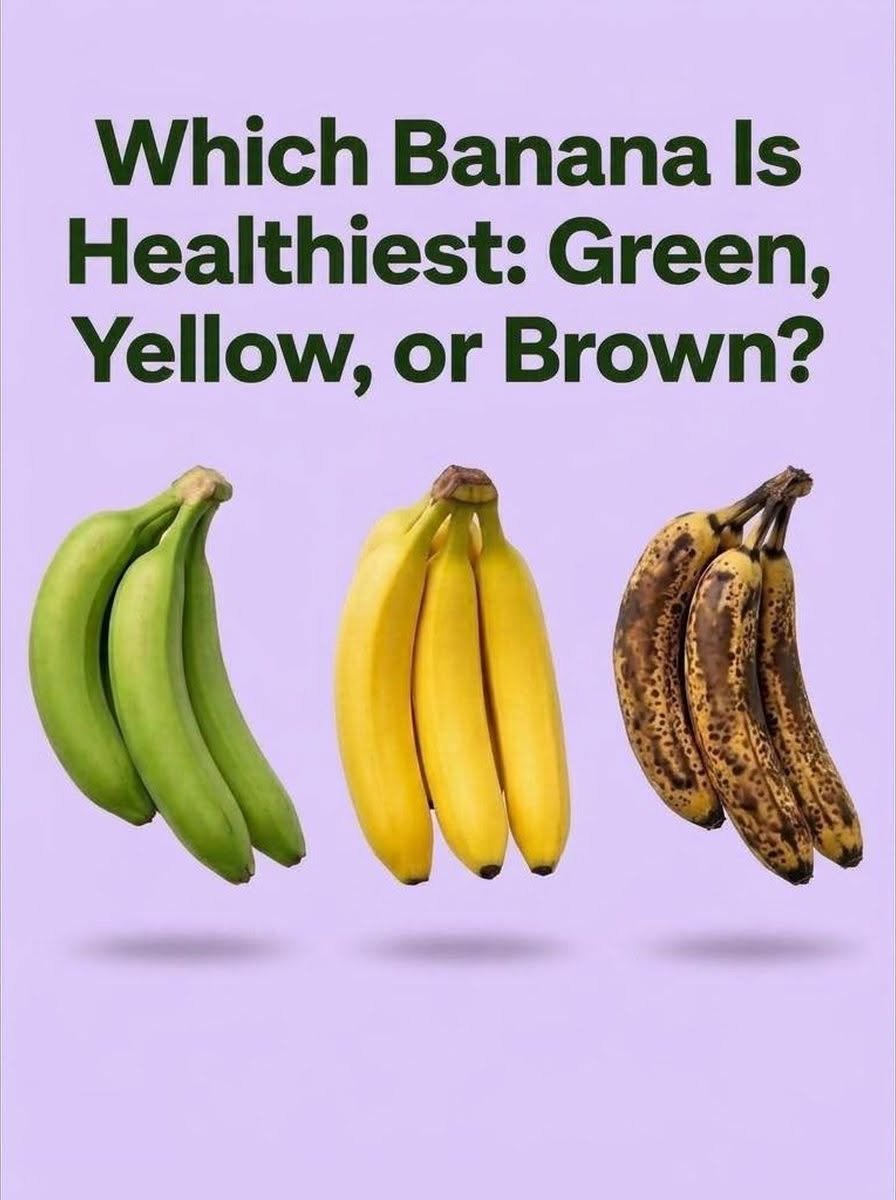
Green, Yellow, or Brown-Spotted Bananas: Which Is Best for Your Health?
You reach for a banana at breakfast, but have you ever wondered whether its color changes what happens inside your body? A firm green banana, a bright yellow one, and a soft banana covered in brown spots might look like different versions of the same fruit. Surprisingly, their nutritional characteristics aren’t exactly identical.
As bananas ripen, their texture, sweetness, and carbohydrate composition gradually change. These differences may influence digestion, feelings of fullness, and how the body processes the fruit’s natural carbohydrates. While bananas are widely appreciated for their convenience, potassium, and fiber, their stage of ripeness deserves a closer look.
1. Green Bananas: More Resistant Starch
Green bananas are firm, less sweet, and generally contain more resistant starch than ripe bananas. Resistant starch behaves somewhat like dietary fiber because it resists digestion in the small intestine and can be fermented by beneficial bacteria in the large intestine.
This makes green bananas an interesting choice for people who want to increase their intake of resistant starch.
Because they contain more slowly digestible carbohydrates, green bananas may also produce a different blood sugar response than very ripe bananas. However, the effect depends on portion size, preparation, individual metabolism, and what else is eaten with the fruit.
There is one drawback: green bananas can be harder to digest for some people. Their high resistant-starch content may contribute to gas, bloating, or abdominal discomfort, particularly in people who are sensitive to certain carbohydrates.
Best for: People who enjoy firmer fruit and want to include more resistant starch in their diet.
2. Yellow Bananas: A Balanced Everyday Choice
As bananas ripen, their starch gradually breaks down into simpler sugars, making the fruit softer, sweeter, and easier for many people to chew and digest.
Yellow bananas provide carbohydrates for energy, along with potassium, vitamin B6, and vitamin C. They also contain dietary fiber, which supports normal bowel function.
For many people, a yellow banana is a convenient snack before a walk, a quick addition to breakfast, or an easy ingredient for smoothies and oatmeal.
Although ripe bananas taste sweeter, that doesn’t automatically make them unhealthy. The natural sugars in whole fruit come packaged with water, fiber, and other nutrients.
Best for: Everyday snacking, breakfast, and people who prefer a softer texture without pronounced overripeness.
3. Brown-Spotted Bananas: Sweeter and Softer
When brown spots appear on a banana’s peel, the fruit is usually further along in the ripening process. Its flesh becomes softer, and some of its starch has been converted into sugars.
This is why spotted bananas often taste much sweeter than green ones.
Their softer texture can make them useful in recipes such as banana bread, pancakes, smoothies, and homemade desserts. They can also be appealing to people who find firmer fruit difficult to chew.
However, there is an important distinction: a sweeter banana is not necessarily a healthier banana, and a brown-spotted banana is not automatically better for everyone.
As ripening progresses, resistant starch generally decreases. People monitoring their blood glucose may therefore prefer to consider the ripeness, portion size, and overall composition of their meal rather than assuming that all bananas have the same effect.
Brown spots on the peel are usually a normal part of ripening. However, bananas with visible mold, leaking liquid, or an unusual rotten smell should be discarded.
Best for: Baking, smoothies, and people who enjoy naturally sweeter fruit.
4. Does Banana Ripeness Affect Blood Sugar?
This is one of the most common questions about bananas.
The short answer is yes, ripeness can influence how the fruit’s carbohydrates are digested, but it doesn’t determine the entire blood sugar response.
Less-ripe bananas generally contain more resistant starch, while ripe bananas contain a greater proportion of readily available sugars. These differences may affect how quickly carbohydrates become available to the body.
However, individual responses vary. The size of the banana, what you eat alongside it, physical activity, and personal health conditions can all influence blood glucose levels.
If you have diabetes, you don’t necessarily need to avoid ripe bananas. A practical approach is to choose a portion that fits your meal plan and pair the fruit with a source of protein or healthy fat, such as plain yogurt or a small serving of nuts.
These additions may help make a snack more satisfying, although they do not eliminate the carbohydrates in the banana.
5. Which Banana Is Best for Digestion?
The answer depends on your digestive system.
-
Green bananas: Their resistant starch can support beneficial gut bacteria, but it may cause gas or bloating in sensitive individuals.
-
Yellow bananas: Their softer texture and changing starch composition make them a comfortable everyday option for many people.
-
Brown-spotted bananas: Their soft flesh may be easier to chew, although their lower resistant-starch content means they offer a different mix of carbohydrates.
Bananas contain fiber that contributes to normal bowel function, but no particular ripeness stage is guaranteed to relieve constipation or improve everyone’s digestion.
If you experience persistent abdominal discomfort, significant changes in bowel habits, or other digestive symptoms, it is worth discussing them with a healthcare professional rather than relying on fruit alone.
6. What About Potassium and Heart Health?
Bananas are well known for their potassium content, and potassium plays an important role in normal muscle contraction, nerve function, and blood pressure regulation.
All three ripeness stages can contribute useful nutrients to a balanced diet. The main differences discussed above concern starch, sugar, texture, and digestibility—not a dramatic transformation in the banana’s overall health value.
Eating bananas can be part of a heart-healthy eating pattern, but no single fruit can prevent or treat heart disease on its own.
People with chronic kidney disease or those advised to limit potassium should follow their healthcare professional’s dietary guidance.
So, Which Banana Should You Choose?
There is no single winner. The best banana is the one that suits your preferences, digestive comfort, and nutritional needs.
If you enjoy a less-sweet fruit with more resistant starch, try a greenish banana. If you want a convenient everyday snack, a yellow banana is an excellent option. If you prefer extra sweetness or need bananas for baking, brown-spotted fruit may be just right.
The most important lesson is that ripeness changes a banana’s characteristics, but it doesn’t turn a nutritious food into a bad one.
Rather than worrying about choosing the perfect color, focus on eating a varied diet that includes fruits, vegetables, whole grains, protein sources, and healthy fats.
Sometimes, the healthiest choice isn’t about finding one perfect food. It’s about understanding how ordinary foods fit into your individual needs and enjoying them as part of a balanced lifestyle.
Website Disclaimer
The information provided on this website is for general informational and educational purposes only. While we strive to ensure that all content is accurate and up to date, we make no guarantees regarding the completeness, reliability, or accuracy of any information published.
The views and opinions expressed in articles belong to their respective authors and do not necessarily reflect the views of this website. Any action you take based on the information found on this website is strictly at your own risk. We will not be liable for any losses, damages, or inconveniences arising from the use of our content.
Some articles may contain opinions, third-party information, or external links. We do not endorse or guarantee the accuracy of content on external websites and are not responsible for their practices or policies.
All content on this website is provided in good faith and is intended for informational purposes only. Readers are encouraged to verify information independently and seek professional advice where appropriate.