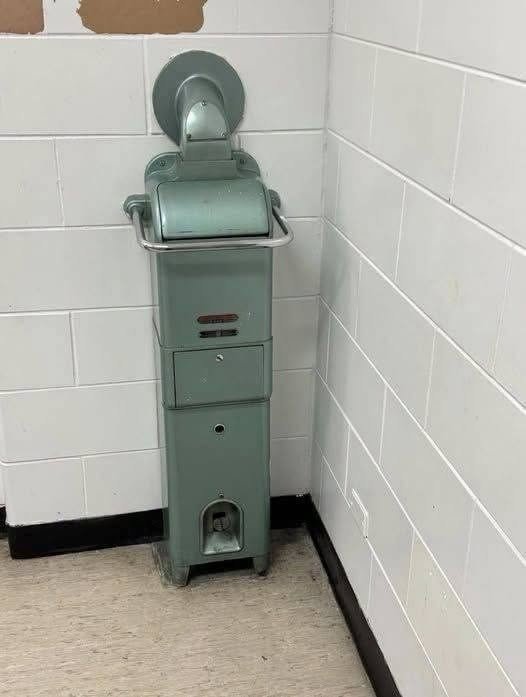
Old bathroom trash incinerators are a forgotten feature found in older buildings like schools, apartments, hospitals, and basements. At first glance, they often look like heavy metal doors built into the wall, but they were once an everyday part of how people handled waste.
Before modern garbage collection systems existed, burning trash on-site was seen as a fast and practical solution. People would drop waste into these metal chambers, where it would be burned and reduced to ash. It helped reduce smell, pests, and the need to store garbage for long periods.
These incinerators became especially common in the late 1800s and early 1900s as cities grew and waste began to pile up. Since organized waste collection was limited, many buildings relied on fire as the simplest way to get rid of rubbish.
Over time, they were installed in many public and private places. However, they also produced smoke, ash, and pollution, especially as plastic and synthetic materials became more common in household waste.
As awareness of air pollution and health risks increased, attitudes toward incineration began to change. What once seemed clean and efficient started to be seen as harmful and outdated. Governments introduced stricter environmental rules, and many small incinerators were shut down.
By the mid-to-late 20th century, cities shifted toward landfills, recycling systems, and centralized waste management instead of burning garbage inside buildings. Most of these old units were sealed off or removed completely.
Today, the remaining incinerators are mostly just historical relics hidden in older structures. They serve as reminders of how people once dealt with everyday problems using the technology and knowledge available at the time.
They reflect a time when “getting rid of waste” meant simply burning it away, long before modern environmental understanding reshaped how we manage garbage.
Website Disclaimer
The information provided on this website is for general informational and educational purposes only. While we strive to ensure that all content is accurate and up to date, we make no guarantees regarding the completeness, reliability, or accuracy of any information published.
The views and opinions expressed in articles belong to their respective authors and do not necessarily reflect the views of this website. Any action you take based on the information found on this website is strictly at your own risk. We will not be liable for any losses, damages, or inconveniences arising from the use of our content.
Some articles may contain opinions, third-party information, or external links. We do not endorse or guarantee the accuracy of content on external websites and are not responsible for their practices or policies.
All content on this website is provided in good faith and is intended for informational purposes only. Readers are encouraged to verify information independently and seek professional advice where appropriate.