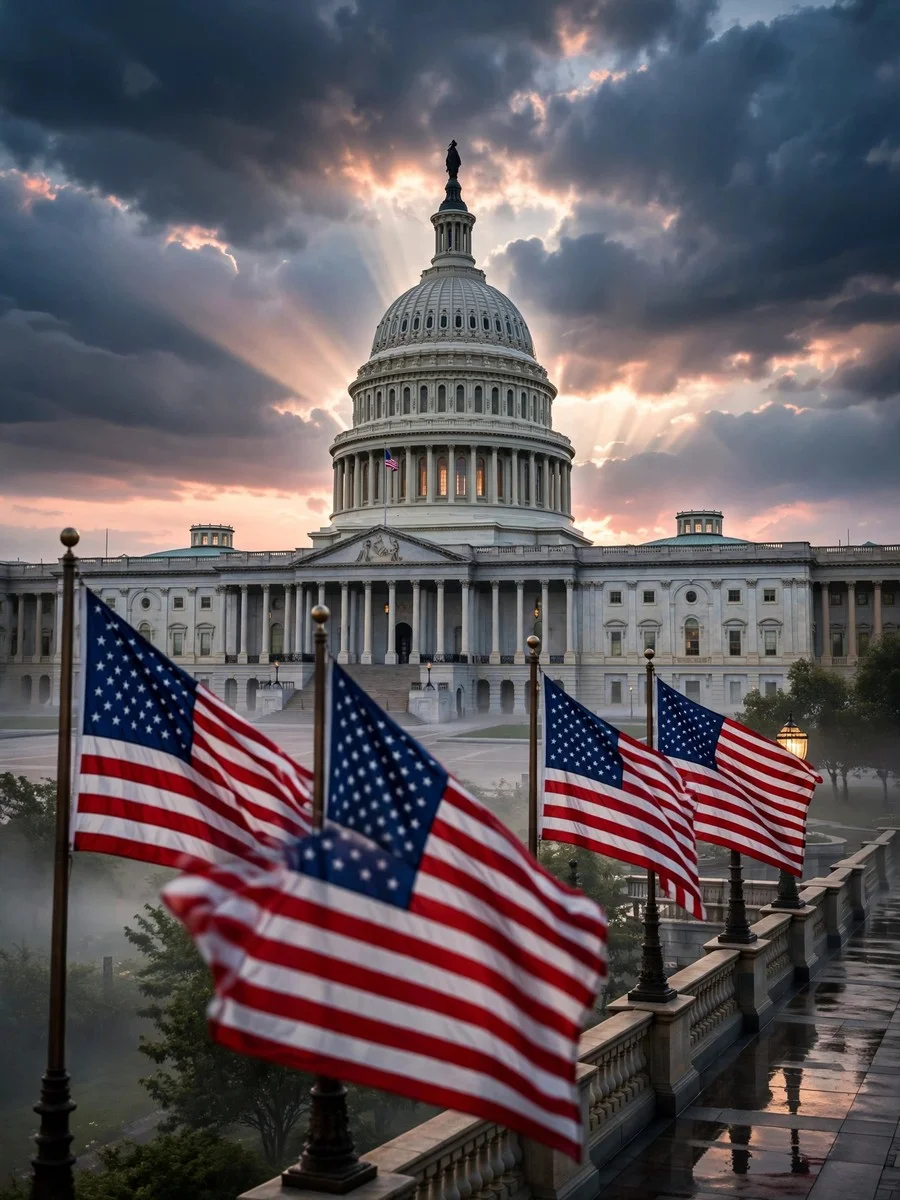
The Democrats have secured the largest majority in the US House of Representatives in more than three decades, after a win in North Carolina pushed their total to at least 258 seats. It is a result not seen since 1992, the year Bill Clinton was first elected president, and it gives the party a commanding position in Congress as it heads into next year.
The milestone 258th seat was clinched on Sunday, when North Carolina Democrat Chuck Hubbard defeated Republican Representative Virginia Foxx, according to the Associated Press. With four races still uncalled in the 435-seat chamber, the Democratic total could climb higher still, while Republicans hold at least 173 seats.
A Sweep Not Seen in a Generation
The scale of the victory is striking. Democrats have gained 44 House seats so far in this month’s midterm elections — four more than the 40 they picked up in President Donald Trump’s first midterm in 2018. It is their best general election result in decades, and the biggest majority held by either party in the House this century.
The party last won 258 seats in 1992, and reached 257 in the election that brought Barack Obama to the White House in 2008. Republican majorities, by comparison, topped out at 247 seats in the Congress that sat from 2015 to 2017. The new margin is still far short of the enormous Democratic majorities of the 1930s, when the party held more than 313 seats, but in modern politics it counts as a landslide.
What the Win Means for Governing
A majority of this size changes what is possible in Washington. With 258 seats, House Democrats can pass legislation even if a sizeable group of their own members dissent — a luxury narrow majorities never enjoy. It also strengthens their hand in negotiations with the Senate and the White House, and gives them far greater control over which bills reach the floor and which investigations move forward.
But a big win brings big expectations. Party leaders campaigned heavily on the cost of living, and voters will now expect action on the affordability agenda that dominated the campaign. Democratic leaders have signalled that lowering everyday costs will be their first priority when the new Congress sits.
The North Carolina Race That Sealed It
Hubbard’s victory over Foxx, a long-serving Republican, was the race that tipped the tally to 258. North Carolina has been one of the most closely watched battlegrounds in the country, and the result underlined how far the political map shifted in this election.
Across the country, the pattern was similar: Democrats flipped seats in suburban districts, held their gains in cities, and made inroads in areas that had voted Republican for years. The result was a House map redrawn in the party’s favour.
What Comes Next
Four races remain uncalled, so the final numbers may still shift slightly. But the shape of the next Congress is now clear: a Democratic House with its largest majority in 34 years, facing a Republican president and a Senate where the balance of power is far tighter.
That sets up a period of sharp negotiation — and sharp conflict — in Washington. Democrats will want to use their majority to deliver on campaign promises and to check the administration. Republicans will look to the Senate and the White House to block them. For voters, the test will be simple: whether a historic majority can turn into historic results.
Website Disclaimer
The information provided on this website is for general informational and educational purposes only. While we strive to ensure that all content is accurate and up to date, we make no guarantees regarding the completeness, reliability, or accuracy of any information published.
The views and opinions expressed in articles belong to their respective authors and do not necessarily reflect the views of this website. Any action you take based on the information found on this website is strictly at your own risk. We will not be liable for any losses, damages, or inconveniences arising from the use of our content.
Some articles may contain opinions, third-party information, or external links. We do not endorse or guarantee the accuracy of content on external websites and are not responsible for their practices or policies.
All content on this website is provided in good faith and is intended for informational purposes only. Readers are encouraged to verify information independently and seek professional advice where appropriate.