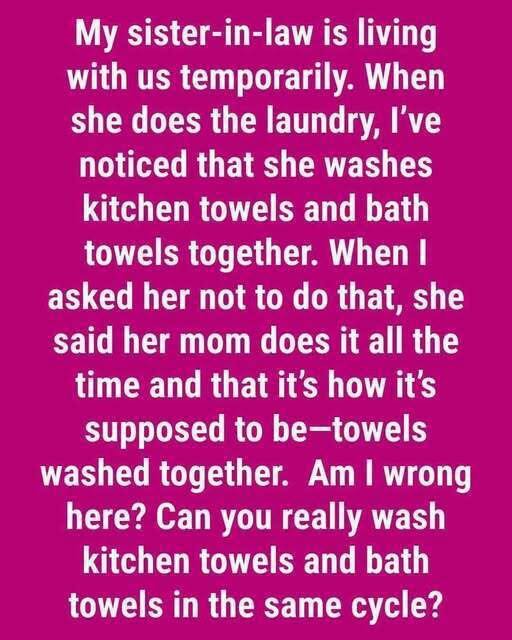
A clean towel isn’t always as clean as it looks. Many people wash kitchen and bath towels together, assuming detergent and hot water remove all dirt and bacteria. In reality, the situation can be more complicated.
Towels serve different purposes, and that matters. Kitchen towels often come into contact with food residue, grease, and bacteria, while bath towels deal mostly with moisture and skin.
In many cases, washing them together is fine—if the kitchen towels are only lightly used, such as drying clean hands or dishes. With warm water, proper detergent, and enough space in the machine, they can be cleaned effectively.
Drying is just as important as washing. Towels that stay damp can develop odors and allow bacteria to multiply, even after a wash cycle.
Problems arise when kitchen towels are heavily soiled. Towels used for handling raw meat, greasy cookware, or major spills carry more contamination and should be treated differently.
These heavily used towels are best washed separately or on a hotter, more intensive cycle. This helps prevent residue from transferring to cleaner items like bath towels.
Bathroom hand towels can usually be washed with bath towels without issue, but kitchen towels should be grouped based on how they are used.
Instead of aiming for perfect separation, focus on a practical routine: isolate heavily soiled towels, wash the rest properly, and replace any that retain odor or feel unclean over time.
Website Disclaimer
The information provided on this website is for general informational and educational purposes only. While we strive to ensure that all content is accurate and up to date, we make no guarantees regarding the completeness, reliability, or accuracy of any information published.
The views and opinions expressed in articles belong to their respective authors and do not necessarily reflect the views of this website. Any action you take based on the information found on this website is strictly at your own risk. We will not be liable for any losses, damages, or inconveniences arising from the use of our content.
Some articles may contain opinions, third-party information, or external links. We do not endorse or guarantee the accuracy of content on external websites and are not responsible for their practices or policies.
All content on this website is provided in good faith and is intended for informational purposes only. Readers are encouraged to verify information independently and seek professional advice where appropriate.