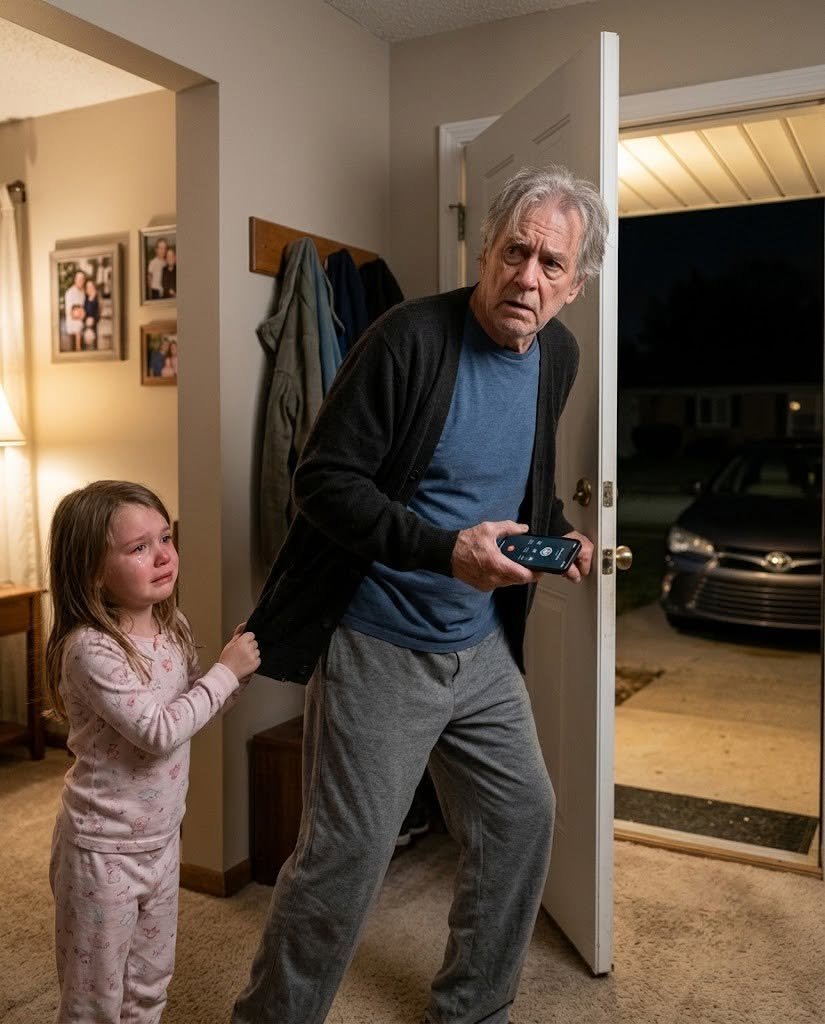
The doctor crossed the hallway toward me and placed a small clear belongings pouch in my hand. Inside were Cassidy’s wedding ring and her cracked phone.
Deputy Brock Timmons stopped with his pen still touching the page. The doctor did not look at him first. He looked at me.
“Your daughter is out of surgery,” he said. “She lost a lot of blood, but she’s stable right now.”
My knees nearly gave out.
Lydia pressed against my side, still holding that gray stuffed elephant by its twisted ear. “And the baby?” I asked.
The doctor took half a second before answering, and I swear I lived an entire year inside that pause.
“The baby was delivered early. Very early. The neonatal team is working with him now.”
Him. A grandson.
Cassidy had wanted the sex to be a surprise.
For one brief second, relief and terror hit me at the same time.
Then the doctor nodded toward the pouch in my hand. “She asked us to give those directly to you before we took her back.”
Brock finally spoke.
“She was conscious enough to say that?”
The doctor’s eyes shifted toward him. “Yes.”
Something in Brock’s posture changed.
Not much.
Just enough. He had walked down that hallway ready to treat the night like a messy domestic argument where everybody had a version and the truth probably lived somewhere in the middle.
Now Cassidy had survived surgery, Lydia had already given an account, physical evidence had been collected, and Cassidy herself had made a clear decision about who she trusted with her belongings.
That made his easy explanation harder.
I looked down through the plastic.
Cassidy’s ring rested beside the phone like two pieces of the same life that no longer fit together.
The screen was spiderwebbed near one corner.
I did not touch it.
I did not try to unlock it.
I just held the pouch against my coat while the doctor explained that Cassidy would be monitored closely and that it could be a while before we were allowed to see her.
Lydia tugged my sleeve.
“Is Mommy okay?”
I crouched until we were eye level.
“She made it through the operation,” I said. “The doctors are helping her, and they’re helping your baby brother too.”
Her face crumpled at the words baby brother.
“Can I see him?”
“Not yet.”
She nodded like she was trying very hard to be older than six.
Then she leaned into me, and I picked her up again.
Brock cleared his throat.
“We still need to be careful about assumptions.”
I looked at him over Lydia’s shoulder.
“What assumption?”
He glanced toward the evidence bag sitting near the wall.
“I’m saying we don’t know exactly how Cassidy ended up on the floor.”
There it was.
The sentence he had come prepared to say.
Maybe not the exact wording, but close enough.
Lydia lifted her head from my shoulder.
“Daddy pushed her.”
Brock’s face tightened.
I felt Lydia’s small body stiffen against mine, so I put one hand behind her head.
“She has already told you what she saw,” I said.
“She’s six.”
“Yes.”
“She was scared.”
“Yes.”
“Kids can misunderstand things.”
I stared at him.
“Adults can too.”
Brock’s jaw shifted.
That was the closest I came to losing my temper.
I wanted to tell him every story I had heard about Trent over the years.
I wanted to remind him about every barbecue where Trent had made some ugly joke and Brock had laughed it off, every time Cassidy had gone quiet when Trent’s name came up, every time I had asked whether she was okay and she had answered too quickly.
But none of that was as useful as what we already had.
A child’s statement.
A 911 call.
Cassidy’s condition when paramedics arrived.
Her torn sweater.
Her cracked phone.
And whatever Cassidy would say when she was strong enough.
So I kept my voice low.
“You can write down what she said,” I told him. “You don’t have to explain it for her.”
Brock started to answer, but another voice came from behind him.
“He’s right about that part.”
A second deputy had come around the corner.
She had been one of the officers speaking with hospital security earlier, and unlike Brock, she did not start by looking at me.
She looked at Lydia.
Then at the pouch in my hand.
Then at Brock.
“We’ll document what was reported and let the statements stand on their own.”
Brock closed his notebook halfway.
“I know how to take a statement.”
“I’m sure you do.”
The deputy’s tone stayed professional.
That somehow made it sharper.
She asked Brock to step with her toward the nurses’ station.
They spoke quietly enough that I could not hear most of it.
I caught only two words.
“Prior relationship.”
Brock looked back toward me once.
Then he walked away with her.
I did not feel victorious.
Nothing about that hallway felt like winning.
My daughter was behind a hospital door recovering from emergency surgery, my grandson had arrived six weeks early, and my granddaughter was wearing pajamas under my coat because I had left the house too fast to think about clothes.
All I wanted was for the next adult who spoke to her to listen before deciding what her fear meant.
A nurse found us a quieter waiting area.
Someone brought Lydia apple juice and crackers.
She ate one cracker, broke another in half, and lined the pieces on the little table beside her elephant.
I bought coffee from a machine down the hall and forgot to drink it.
At 2:19 a.m., my phone rang.
It was a number I did not recognize.
I nearly ignored it.
Then I remembered every call that night seemed capable of changing my life.
“Hello?”
There was breathing on the other end.
Then Trent spoke.
“Where’s Lydia?”
Every muscle in my back tightened.
I stood and walked several steps away from her.
“She’s safe.”
“With you?”
“You don’t need anything else from me.”
He gave a short laugh that had no humor in it.
“You have no idea what happened.”
“I know enough.”
“No, you know what Cassidy tells you. She fell, Dale.”
I said nothing.
He kept talking.
“She was worked up. She came at me. I left because she wouldn’t calm down.”
The more he spoke, the less I needed to.
Then he made the mistake that mattered.
He said, “And before Lydia starts making up some story, you remember she was in her room.”
I looked across the waiting area.
Lydia was sitting three chairs away with her elephant in her lap.
I had never told Trent what Lydia had said.
I had never told him where she had been standing.
I had never even confirmed that she had spoken to police.
“How do you know what Lydia saw?” I asked.
Silence.
Not long.
Maybe two seconds.
But long enough.
“Because she always exaggerates when she gets scared.”
Then the call ended.
I stood there staring at my phone.
My first instinct was to call him back.
My second was better.
I walked to the deputy near the nurses’ station and told her exactly what had just happened.
She asked whether I had recorded the call.
I said no.
She asked me not to delete anything and wrote down the time, number, and the wording I could remember.
Then she asked the simplest question of the night.
“Did he know you were at the hospital?”
“I never told him.”
She wrote that down too.
That did not prove everything.
It did not need to.
It was one more piece that had to be accounted for instead of explained away.
Around three in the morning, Cassidy woke enough to speak with a nurse.
I was not allowed in immediately.
That frustrated me until I understood why.
They wanted Cassidy to answer questions without me, Lydia, Trent, or anybody else shaping what she said.
So I stayed in the hallway.
Useful, I reminded myself.
Be useful.
When I finally entered her room, Cassidy looked smaller than I had ever seen her.
There were lines and monitors around her, and exhaustion seemed to pull at every part of her face.
But her eyes were open.
“Dad.”
I walked to the bed and took her hand carefully.
“Hey, kiddo.”
Her mouth trembled.
“Lydia?”
“Safe.”
“The baby?”
“Getting care. The doctor said they’re watching him closely.”
She shut her eyes for a moment.
A tear slid toward her ear.
Then she opened them again.
“Did Trent come here?”
“No.”
Her fingers tightened around mine.
“Don’t let him take Lydia.”
I leaned closer.
“I won’t make decisions I’m not allowed to make, Cass. But I will stay with her, and I will tell the truth about what happened tonight.”
She nodded.
That answer mattered.
I could not promise outcomes that belonged to doctors, investigators, lawyers, or courts.
I could promise presence.
Cassidy looked toward the clear pouch on the chair beside me.
“My phone.”
“I have it.”
“There are messages.”
I waited.
She swallowed.
“From him.”
That was the first time she said it without making an excuse afterward.
No explanation about stress.
No reminder that Trent had been drinking.
No defense about money problems or bad weeks or how much pressure he had been under.
Just: from him.
She gave me the code and asked me to hand the phone to the deputy instead of opening the messages myself.
That told me more about Cassidy than the messages ever could.
She did not want her father charging into the middle of it.
She wanted a record.
I carried the pouch back into the hallway and found the second deputy.
“Cassidy says there are messages from Trent on here,” I said. “She wants you to handle it.”
The deputy did not grab for the phone.
She asked Cassidy’s permission directly and followed the process from there.
I went back to my chair.
For years, I had thought protecting my daughter meant being ready to fight the man who hurt her.
That night taught me something harder.
Sometimes protecting someone means not taking their choices away just because you are furious on their behalf.
By dawn, another deputy told us Trent had been located and was being interviewed.
I did not ask where.
I did not ask whether he looked scared.
I did not need the picture.
The consequences would come through the facts or they would not come at all.
What mattered to me was that Cassidy had finally been heard in a room where Trent could not interrupt her.
Later that morning, Lydia was allowed to see her mother briefly.
She walked into Cassidy’s room holding the elephant in both hands.
Cassidy’s face changed the second she saw her.
Not dramatically.
Just enough that I had to look away.
Lydia climbed carefully onto the chair beside the bed.
“Mommy, I called Papa.”
“I know.”
“Was that okay?”
Cassidy reached out and touched her hair.
“That was exactly right.”
Lydia stared at her.
“You said call somebody if I was scared.”
“I did.”
“So I did.”
Cassidy started crying.
Not loudly.
She just kept stroking Lydia’s hair while her daughter sat beside her holding that battered elephant.
There are moments when a family changes shape without anybody announcing it.
That was one of ours.
Before that night, Lydia had learned to measure the temperature of a room by the sound of Trent’s footsteps.
After that night, she began learning something else.
She could ask for help.
Cassidy spent the next days recovering while her son remained under close hospital care.
The baby was tiny, angry, stubborn, and stronger than he looked.
When Cassidy was finally able to see him for longer stretches, she sat beside him with one hand against the clear side of his bed and whispered about Lydia, about home, and about the kitchen calendar where his due date was still circled weeks away.
She did not talk about Trent much.
When she did, it was practical.
Who could enter the house.
Where Lydia would stay.
Which belongings she needed.
What calls she would answer.
What calls she would not.
The fear was still there, but it no longer made every decision for her.
Brock never came back to interview Lydia.
Another investigator handled the follow-up.
I later learned that Brock’s familiarity with Trent had been noted after concerns were raised about the way he approached the first conversation.
Nobody gave me a dramatic apology.
I did not expect one.
He simply stopped being the person steering the account of what had happened.
That was enough.
The messages on Cassidy’s phone did not contain one perfect confession.
Real life rarely gives you one.
They showed something less convenient and more believable: arguments about money, demands to know where she was, accusations when she did not answer quickly enough, and several messages from earlier that evening that Cassidy said helped establish how the fight had started.
Combined with Lydia’s account, the emergency call, the condition responders found Cassidy in, and Cassidy’s own statement, the story became harder to shrink into a misunderstanding.
Trent kept insisting the fall had been accidental.
Cassidy stopped arguing with him.
That may have been the biggest change of all.
She no longer believed she had to convince him of what he had done before she was allowed to protect herself from it.
Weeks passed.
Hospital visits became our routine.
I learned which vending machine actually worked, which chair in the waiting room did not wobble, and how Lydia liked her hot chocolate cooled with exactly two ice cubes.
Cassidy got stronger.
Her son did too.
There were difficult days.
There were setbacks that scared us.
There were also small victories nobody outside the family would have understood.
A little more weight.
A feeding that went well.
Cassidy walking farther down the hallway than the day before.
Lydia drawing four people in a picture and leaving Trent out without anyone asking her to.
One afternoon she drew me with arms so long they reached across the entire page.
“What are those?” I asked.
She looked at me like I was slow.
“Your arms.”
“Why are they that long?”
“So you can get us.”
I had to turn toward the window for a minute.
When Cassidy was discharged, she did not go back to the house alone.
Some of her belongings were collected with help, and she and Lydia stayed with me while she figured out what came next.
I cleared out the little room where I used to keep work gear.
Lydia claimed one shelf immediately.
The gray elephant got the middle spot.
Cassidy protested that she did not want to take over my house.
“You’re not taking over anything,” I told her. “You’re sleeping somewhere you can rest.”
That was as close as I came to making a speech.
The rest happened in ordinary ways.
I bought more cereal.
I moved my boots so Lydia would stop tripping over them.
Cassidy started leaving medical appointment cards beneath the purple-heart magnet she had made me years earlier.
The original due date stayed circled on the calendar.
None of us crossed it out.
When that date finally arrived, the three of us were standing in my kitchen before sunrise getting ready for another hospital trip.
Lydia noticed the circle first.
“Papa, that says today.”
“I know.”
“That was when the baby was supposed to come?”
“Yep.”
She thought about that while Cassidy zipped her coat.
Then Lydia took the purple-heart magnet off the refrigerator, moved it down over the circled date, and tucked her brother’s latest appointment card beneath it.
Cassidy watched her do it.
Neither of us said anything.
We did not need to.
The date no longer felt like the night everything had gone wrong.
It had become proof of how far they had already made it.
Months later, Trent’s case was still moving through the system, slower and less neatly than people expect when they hear stories like ours.
Cassidy did not get a movie ending.
She got paperwork, appointments, difficult conversations, boundaries, and mornings when fear showed up before breakfast.
She also got choices back.
She decided who could call her.
She decided where Lydia slept.
She decided when she was ready to talk about that night and when she was not.
She decided that surviving something did not obligate her to spend the rest of her life explaining it.
And Lydia stopped asking whether calling me had been okay.
She knew.
One evening, after her baby brother was finally home and sleeping nearby, Lydia sat at my kitchen table coloring another picture.
The gray elephant was propped against the sugar bowl.
Cassidy was warming a bottle at the counter.
I was fixing a cabinet hinge Lydia had somehow managed to loosen in less than a month.
Normal things.
Beautifully normal things.
Lydia looked up from her crayons.
“Papa?”
“Yeah?”
“If something scary happens again, I can call you, right?”
I tightened the last screw and closed the cabinet door.
“You can always call me.”
She nodded and went back to coloring.
This time, nobody was crying.
And on the refrigerator behind her, beneath those crooked purple hearts, the old circled due date remained exactly where it had always been—only now it marked not the day we expected a child to arrive, but the life this family had fought to make safe enough for him to come home to.
Website Disclaimer
The information provided on this website is for general informational and educational purposes only. While we strive to ensure that all content is accurate and up to date, we make no guarantees regarding the completeness, reliability, or accuracy of any information published.
The views and opinions expressed in articles belong to their respective authors and do not necessarily reflect the views of this website. Any action you take based on the information found on this website is strictly at your own risk. We will not be liable for any losses, damages, or inconveniences arising from the use of our content.
Some articles may contain opinions, third-party information, or external links. We do not endorse or guarantee the accuracy of content on external websites and are not responsible for their practices or policies.
All content on this website is provided in good faith and is intended for informational purposes only. Readers are encouraged to verify information independently and seek professional advice where appropriate.