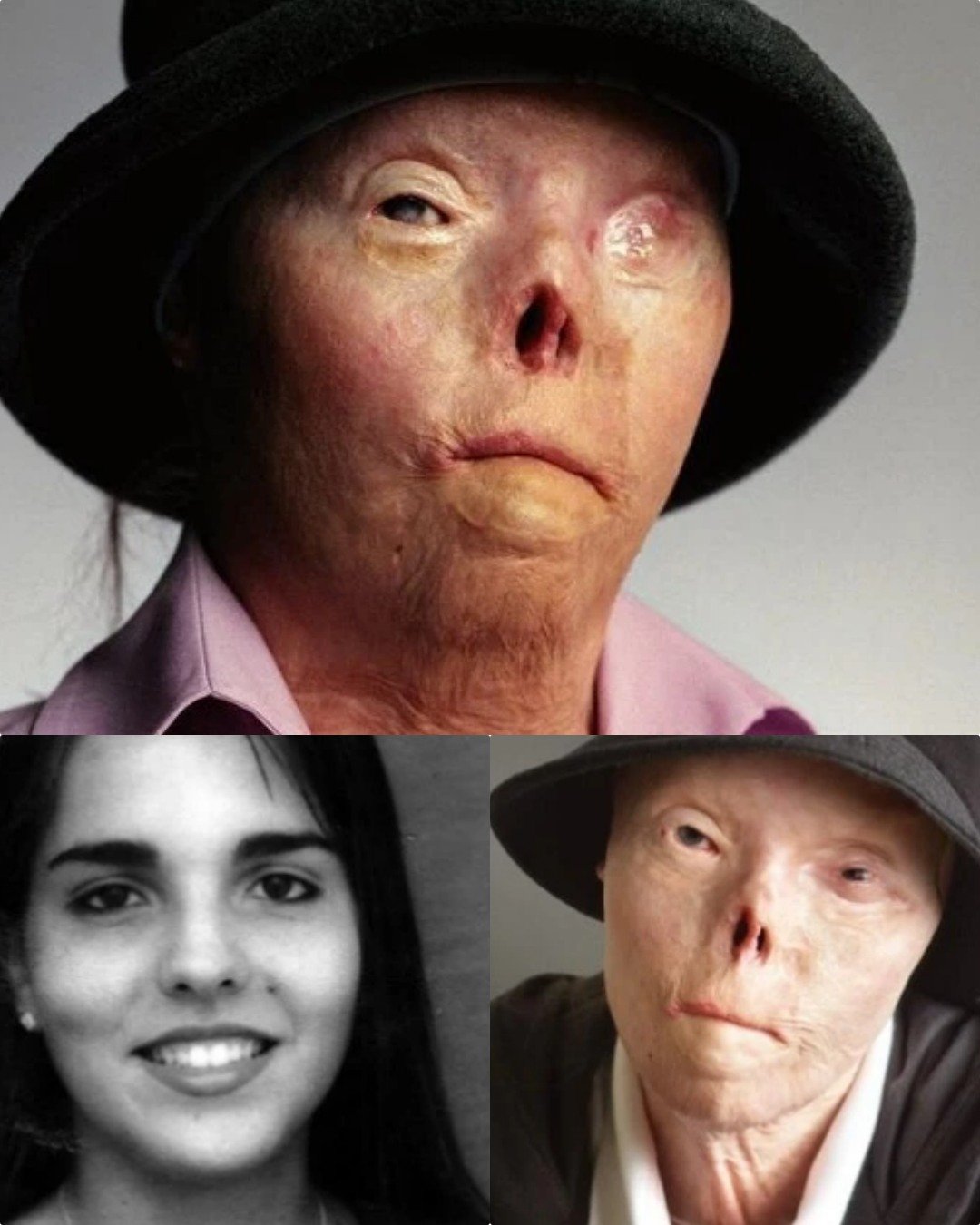
Jacqueline Saburido had a future ahead of her. At 20 years old, she was an international student from Venezuela, studying English near Austin, Texas. She was full of dreams and plans, determined to create a brighter future for herself. In 1999, she had just attended a small gathering with friends, celebrating life and the joy of being young. Like many, she was eager to experience new things, to live the adventure that life promised.
After the party, Jacqueline left, planning to head home. But that ride would change her life forever.
A drunk driver, driving recklessly, crossed the center line and collided head-on with Jacqueline’s car. The impact was immediate, and the destruction was catastrophic. But the worst was yet to come. As the crash occurred, the car burst into flames. Jacqueline was trapped inside. The heat was unbearable, the smoke thick and suffocating. By the time rescuers were able to pull her out of the car, it was too late for much of her body.
The burns were third-degree, covering over 60% of her skin. She lost her ears, her nose, most of her fingers, and nearly all of her sight. The damage was so severe that doctors didn’t expect her to survive the night. The odds were stacked against her, and the pain was unimaginable. But Jacqueline did not give up. She fought with everything she had.
What followed was an unimaginable journey. Jacqueline underwent more than 120 surgeries over the course of the next two decades. Her body, once vibrant, now bore the marks of tragedy, but her spirit refused to break. There were endless days of physical therapy, excruciating pain, and learning to breathe, eat, and even exist in a new body. Every task was a challenge—something most of us take for granted. But Jacqueline, despite the physical and emotional toll, stood tall and faced each day with determination.
Many people would have faded into the background after such trauma. But Jacqueline did the opposite. She became a voice for the voiceless, a face for a cause she never expected to represent. With her courage, she turned her pain into purpose, transforming her personal tragedy into a mission to raise awareness about the dangers of drunk driving.
She stood before classrooms, speaking to young people who were old enough to drive but not old enough to understand the true cost of alcohol behind the wheel. She stood before cameras, sharing her story with national audiences, making the painful decision to put herself out there, not for sympathy but to teach others. Her face, scarred and disfigured, became a symbol of what reckless decisions could do to a life, and her words carried weight. In every speech, every interview, Jacqueline made the point that one moment of poor judgment could change everything.
Her story didn’t just resonate with audiences. It changed lives. People who had never considered the consequences of driving under the influence now thought twice. Some even credited her with saving their lives. Jacqueline’s courage in the face of overwhelming adversity turned her tragedy into a message, and that message saved lives. It wasn’t just about the statistics. It was about her. It was about her life, her survival, and her relentless determination to make sure others didn’t face the same fate.
Though Jacqueline never regained the life she once dreamed of, she didn’t let that define her. Instead, she built meaning out of what was left. She never became the woman she thought she would be, but she became someone more important: a teacher, a guide, a reminder to every person who ever got behind the wheel while under the influence.
Jacqueline’s story was never easy to hear. The images of her before and after the crash are difficult to forget. But it was those images, those raw moments of pain and truth, that drove home the severity of drunk driving. What might seem like a small, inconsequential decision—drinking one more drink, deciding to drive just this once—can have a lifelong impact, one that changes not just the person behind the wheel but everyone around them. A life can be destroyed. A face can be lost. A family can be torn apart.
In April 2019, Jacqueline passed away at the age of 40 after battling cancer. Her body, having endured so much, could not fight any longer. But even in her final days, she continued to inspire. Her legacy was one of resilience, of strength, and of an unshakable commitment to preventing the kind of tragedy that had shaped her life.
Jacqueline’s passing was a loss not just to her family and friends, but to everyone who had heard her story. But the impact she made will never fade. Her voice, her story, and her message live on in the hearts of those who heard her speak. She showed the world that even the darkest moments can lead to light, and that even in the face of unimaginable pain, there is purpose.
Jacqueline’s legacy isn’t one of sadness. It is a legacy of responsibility, of courage, and of love. Every time someone decides not to drive after drinking, every time someone thinks twice about getting behind the wheel, Jacqueline is there. Her spirit is in every decision, every moment of responsibility, and every life saved.
Because of Jacqueline, the world is a little safer. Her fight, her sacrifice, her story—these will live on. And in her memory, we remember that one reckless decision can change everything. But one courageous voice can save so much.
Website Disclaimer
The information provided on this website is for general informational and educational purposes only. While we strive to ensure that all content is accurate and up to date, we make no guarantees regarding the completeness, reliability, or accuracy of any information published.
The views and opinions expressed in articles belong to their respective authors and do not necessarily reflect the views of this website. Any action you take based on the information found on this website is strictly at your own risk. We will not be liable for any losses, damages, or inconveniences arising from the use of our content.
Some articles may contain opinions, third-party information, or external links. We do not endorse or guarantee the accuracy of content on external websites and are not responsible for their practices or policies.
All content on this website is provided in good faith and is intended for informational purposes only. Readers are encouraged to verify information independently and seek professional advice where appropriate.