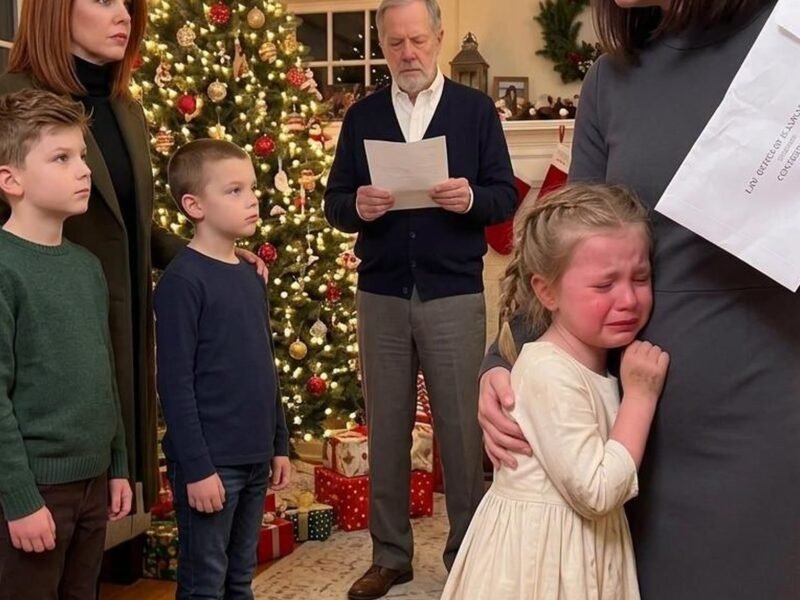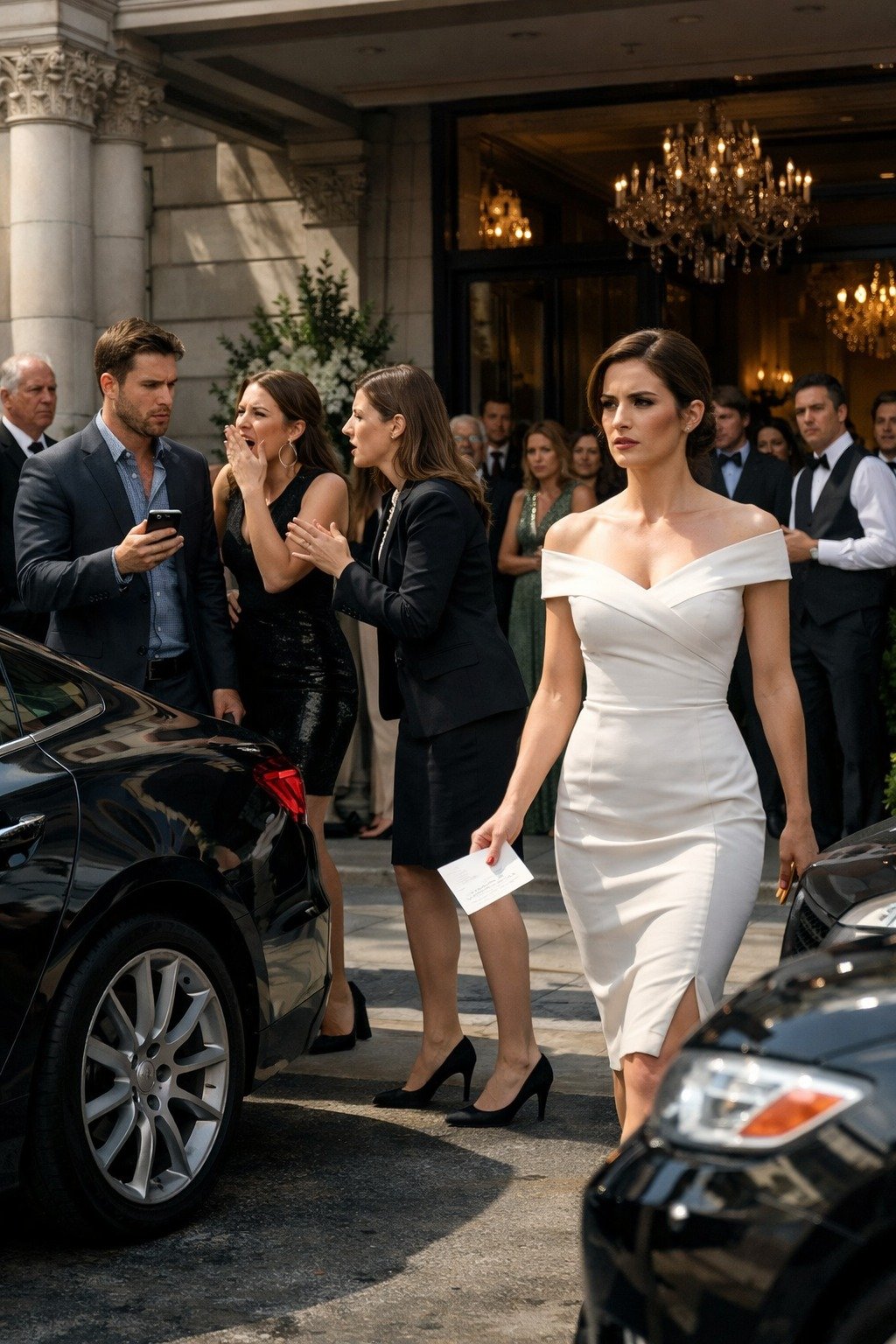
“Actually, DON’T COME TO MY BIRTHDAY,” My Brother Said, Taking Back The Invitation. His Wife Had Convinced Him I’d Embarrass Them. I Walked To My Car. His Event Planner Called Him That Evening: “SAPPHIRE ISLAND’S OWNER, MS. MARTINEZ, NEEDS TO APPROVE ALL EVENTS. SHE’S REVIEWING YOUR REQUEST NOW.”
Part 1
The invitation felt expensive in a way that made people sit up straighter.
Cream cardstock. Thick enough to tap against the table like a tiny gavel. Gold lettering pressed into the surface so cleanly it caught the restaurant’s candlelight like it was trying to flirt with the room.
Marcus Chin 40th Birthday Celebration
Sapphire Island Private Resort
July 15
I’d had it in my hands less than a minute before my brother reached across the table and took it back.
No “can I see that?” No awkward laugh. Just a smooth, practiced motion like he was reclaiming something that had never truly belonged to me.
“It’s not personal,” Marcus said, and the corner of his mouth twitched the way it always did when he was building a lie.
Across from him, Vanessa didn’t look up. She was scrolling, her nails pale pink and perfect, tapping along a digital seating chart. The kind of manicure you don’t get unless you have either a lot of free time or staff. Maybe both.
The restaurant smelled like truffle oil and old money. There were no televisions. No loud conversations. The servers seemed to float instead of walk, refilling water glasses before anyone noticed they were low. The host had greeted Marcus by name.
“Curated,” I repeated, like I was testing a word in my mouth.
Marcus nodded, too quickly. “It’s a milestone birthday. Vanessa’s parents are flying in from Singapore. My managing partners will be there. People from the firm. Clients.”
“And,” I said softly, “people who won’t make you look bad.”
His jaw tightened. He didn’t deny it. He didn’t confirm it either. He just stared at the tablecloth like it was safer than meeting my eyes.
Vanessa finally looked up, her gaze cold in that efficient way some people have, like they’re appraising a room for fire hazards. “It’s a certain kind of event,” she said. “It needs a certain kind of energy.”
Energy. Optics. Curated. These were the words that let people be cruel without feeling like villains.
I set my water glass down slowly. A ring of condensation formed on the linen. “Sapphire Island,” I said, keeping my voice neutral. “That’s… ambitious.”
“It’s exclusive,” Marcus corrected, eager to steer the conversation toward something that made him feel taller. “Vanessa worked on this for months. The owner is picky. They don’t host just anyone.”
“I’m sure,” I said.
Vanessa went back to her phone. “Two hundred guests,” she murmured. “Seven-course dinner. Fireworks. Sunset timing is everything.”
Marcus smiled, like the word fireworks was a medal pinned to his chest. “It’s going to be spectacular.”
I could have laughed. Not because it was funny—because it was familiar.
Marcus always needed his life to look like a brochure. He’d been that way since middle school, when he’d begged our parents for a designer backpack because the cheap one made him “seem like we didn’t care.” The backpack had cost more than my whole back-to-school wardrobe.
He didn’t remember that, of course. He remembered the backpack.
I glanced down at the invitation in Marcus’s hand, now held like contraband. It sat between his fingers, still gleaming, still pretending it had nothing to do with me.
“You know how Mom is,” Marcus added, softer now, like he was offering me a consolation prize. “She’ll tell you it’s about space, or timing, or… whatever. But you get it.”
I did get it. I’d been getting it for thirty-seven years.
Two days earlier, my mother had called with that careful tone she used when she wanted something but didn’t want to say she wanted it.
“Just go along with what Marcus wants,” she’d said. “He’s under pressure. Vanessa has specific ideas. Don’t take it the wrong way.”
And the part she didn’t say out loud: You make things difficult sometimes.
Difficult, in my family, meant quiet. Difficult meant I didn’t perform excitement on command. Difficult meant I didn’t inflate Marcus’s ego with the same oxygen everyone else supplied without thinking.
I’d spent my adult life watching them confuse my calm for defeat.
Marcus had the corner office and the German car. Vanessa had the handbags that came in boxes you kept like trophies. They had the loud, shiny version of success that made sense at holiday tables.
Me? I worked in nonprofit management. That was how my mother introduced it, with a polite smile like she was talking about a hobby.
I drove a six-year-old Camry. I wore the same black dress to family events because it fit, it was well made, and I couldn’t justify buying another one just to prove I was keeping up.
I didn’t talk about my weekends because my weekends weren’t photo-worthy. They were meetings and spreadsheets and site visits and grant reports and the quiet relief of seeing someone get a housing voucher and not have to sleep in their car anymore.
I stood from the table. My chair made a soft scrape against the floor.
Marcus blinked. “Elena—”
“It’s fine,” I said, and I meant it in the way you mean it when you’re done trying. “Enjoy your birthday.”
I walked out past tables where people ate steaks that cost more than my grocery budget, past a sommelier speaking in reverent tones about wine, out into the parking garage that smelled like concrete, exhaust, and distant salt air from the harbor.
My Camry sat between a Tesla and a Range Rover like an apology.
I got in, closed the door, and sat with both hands on the steering wheel. I breathed slowly until the sting behind my eyes faded into something cleaner.
Then I took out my phone.
I opened the property management app.
And I scrolled until I found it.
Sapphire Island Private Resort
Status: Booking Pending
Client: Chin Event, July 15
Owner Review Required
The listing thumbnail was an aerial photo: turquoise water, a curved line of sand, the resort buildings tucked among palm trees like they belonged there. Like they’d always belonged there.
I tapped the booking.
I added a note with the kind of calm my family had never understood. Calm wasn’t surrender. Calm was control.
Owner approval required before contract finalization.
I set the phone down in the cupholder and stared forward at the dim garage lighting.
The invitation had been in my hands for forty seconds.
It had taken my brother forty seconds to decide I didn’t belong in his life’s highlight reel.
I drove home slowly, letting the city blur past my windows. My condo was in a neighborhood my family called “up-and-coming,” which was their way of saying they assumed I’d been priced out of anywhere nicer.
The building was quiet. My unit smelled faintly of clean linen and lemon oil. Gray walls, simple furniture, a view of city lights that looked like scattered diamonds if you let yourself believe in metaphors.
I poured a glass of red wine and took one steady sip.
At 6:47 p.m., my phone rang.
Marcus.
I watched it buzz itself to silence.
At 7:02, it rang again.
At 7:15, Vanessa.
Then my mother.
By the time I hit play on the first voicemail, I had my laptop open and my wine glass half full.
“Lena,” Marcus said, voice tight and unfamiliar. “Call me back. There’s an issue with the island booking. The planner is losing it.”
The second message was sharper. “They’re saying they need owner approval. Do you know anything about that?”
Vanessa left a voicemail that sounded like she’d swallowed a razor. “If you did something to sabotage this, I swear—”
My mother’s voice shook. “Elena, please. Whatever this is, fix it. You know how important this is.”
I set the phone down and opened a blank spreadsheet.
I named it The Ghost Ledger.
Because some debts don’t show up on bank statements.
Some debts live in the way you shrink at family gatherings. In the way you stop offering news because it won’t be received. In the way you learn to clap for someone else’s life until your hands go numb.
Row one: The loan Marcus asked for when his down payment came up short.
Row two: The holidays where my achievements were met with “that’s nice,” then immediately redirected back to him.
Row three: Every Sunday dinner that felt like sitting through a meeting where I wasn’t on the agenda.
The numbers weren’t the point. The point was the pattern.
At 7:29 p.m., my phone rang again.
Marcus, for the fourth time.
This time, I answered.
“Hey,” I said, like we were discussing weather.
“Okay,” he exhaled, relief and panic tangled together. “What is going on? They said the owner has to approve the contract, and then—then the owner name came up and—”
He stopped, like he was stepping toward the edge of something and realizing it dropped off.
“The owner is listed as Martinez,” Marcus said carefully. “Elena… do you own Sapphire Island?”
I leaned back in my chair, looking at the spreadsheet title on my laptop screen.
“Yes,” I said. “I do.”
Silence expanded in the line, thick and stunned.
“But you—” Marcus started. “You said you worked in nonprofits.”
“I do,” I replied. “That’s my work. It’s not my only asset.”
I could hear Vanessa in the background, her voice rising. “What is she saying? Marcus, what is happening?”
Marcus’s voice came out small. “How long?”
“Eight years,” I said. “I bought it when the resort was failing. It took time to rebuild. It’s booked out years in advance now.”
He didn’t know what to do with this information. It didn’t fit the story he’d been telling himself. The story where he was the sun and everyone else orbited.
“Why didn’t you tell us?” he asked, like the omission was my betrayal.
I looked down at the ghost ledger, at the empty cells waiting to be filled with truth.
“You never asked,” I said. “Not once.”
Another silence, this one sharper.
Then I heard Vanessa’s voice, suddenly close to the phone. “Marcus, tell her we’ll pay extra. Whatever she wants. Double it.”
Marcus swallowed. “We can pay more,” he said, quick, as if money could smooth over everything. “Just—just approve it. The invitations went out. People already booked flights.”
I took a slow sip of wine.
“The standard fee is forty-five thousand,” I said evenly. “Your plan—with catering, staffing, entertainment, fireworks—will be significantly more.”
“We can afford it,” Marcus snapped.
“I’m sure you can.” I paused. “But the question isn’t whether you can pay. The question is why you want to rent my property for a party I’m not welcome to attend.”
In the background, Vanessa made a sound—half gasp, half offended laugh—like she couldn’t believe I’d said the quiet part out loud.
Marcus’s breathing went uneven. “Elena, come on. It was just—Vanessa was just trying to—”
“To curate,” I said. “I understand the concept. The owner is selective, right?”
“Don’t do this,” Marcus pleaded, and the desperation in his voice didn’t feel like regret. It felt like fear of embarrassment. Fear of losing the stage.
“I’m not doing anything,” I said. “I’m following procedure. All event requests require owner review.”
“How long?” he demanded.
“Seventy-two hours,” I answered. “Have the planner send the full proposal. Contract details. Insurance. Guest list. Vendors.”
“The party is in nine days,” he said, voice cracking.
“Yes,” I said, letting the word land exactly where it belonged. “That is tight timing.”
Vanessa’s voice erupted behind him. “This is blackmail!”
I smiled faintly, alone in my quiet condo. “Send the documents,” I repeated. “I’ll review them.”
Then I ended the call.
And for the first time in a long time, I felt something shift inside me—like a door I’d been leaning against for years had finally clicked shut.
Part 2
By morning, my phone had become a living thing.
It vibrated across my kitchen counter while I made coffee. It lit up beside my laptop while I answered emails for work. It pulsed against my palm while I stood at the window and watched commuters move through the city like ants with purpose.
Marcus called twelve times before noon.
Vanessa called seven.
My mother left three voicemails in a row that sounded like the stages of grief.
First: confusion dressed up as politeness. “Elena, honey, I’m sure there’s been a misunderstanding. Marcus said something about an owner approval—just… call me back.”
Second: urgency sharpened into accusation. “Your brother has worked so hard for this. Don’t do something you’ll regret.”
Third: the crack in her voice that used to pull me in every time I was a kid. “Please. Please don’t ruin this.”
I didn’t answer any of them.
Not because I didn’t have words. I had plenty.
I didn’t answer because, for once, I didn’t want to be the person who made everything comfortable for everyone else.
Instead, I opened the document my property manager had emailed: the draft event proposal from Marcus’s planner.
The planner, a woman named Darlene, had written the email with frantic professionalism.
Ms. Martinez,
Thank you for your time. We apologize for the delay in obtaining final owner approval. Please find attached the full proposal for Mr. Chin’s July 15th birthday event, including vendor list, insurance request, and preliminary guest roster.
The attachments were thick with ambition.
A seven-course menu with expensive ingredients spelled out like a love language.
A fireworks plan with diagrams, as if the sky itself needed to be controlled.
A live band, a DJ, and something called an “experiential champagne wall,” which sounded like a sentence invented by someone who’d never waited for a paycheck to clear.
I scanned the guest list.
Two hundred names. A sea of unfamiliar people. Partners, associates, clients, friends of Vanessa’s parents, influencers, executives. The kind of list that made you feel important because it proved you had access.
I searched the document for my name.
Nothing.
Not in the guest roster. Not in the seating chart. Not in the “family remarks” section, where Marcus’s father was apparently scheduled to give a toast. My father, who hadn’t called me on my birthday in two years without my mother reminding him.
I closed the file and stared at my screen.
The weird thing was, I wasn’t surprised.
I’d spent years collecting small moments like these—quiet cuts that didn’t bleed in front of other people but left scars anyway. The way my mother’s eyes lit up when Marcus entered a room. The way my father asked him about work with genuine curiosity while asking me, “Still doing that nonprofit thing?”
Still.
As if I was temporarily playing at adulthood and would eventually do something real.
I took my coffee to the table and opened my ghost ledger.
I started filling it in properly.
Not just the money I’d lent Marcus when he’d needed a last-minute patch between his savings and the down payment. Not just the “I’ll pay you back after my bonus” that had disappeared into the air like smoke.
I wrote down the time.
The attention.
The emotional labor.
The way I’d bought my mother a thoughtful gift once—a framed photo from a family trip before things got complicated—and she’d smiled with wet eyes… after she’d cried over Marcus’s lavish spa weekend, calling him “such a good son” in a voice that sounded like worship.
I wrote down the time Vanessa had insisted on a professional family photo and positioned me in the back because my dress “didn’t photograph well.” As if my body was a furniture piece that could be moved to improve the room.
I wrote down the Sunday dinners where my job was treated like a hobby and Marcus’s job was treated like war stories.
By afternoon, the ledger looked like a confession.
And the more I wrote, the less angry I felt.
Anger was hot. Temporary. Anger burned out.
This felt colder. Clearer. Like the moment you realize you’ve been holding your breath for years.
Around 4 p.m., my father called.
That stopped me.
My father didn’t call. He sent emojis. He forwarded articles. He reacted to my existence like it was something happening on television.
I let it ring twice.
Then I answered.
“Elena,” he said, voice rough. “We need to talk.”
“No,” I replied, and my own voice sounded steady in a way that surprised me.
There was a pause, like he hadn’t expected that word from me. “I’m your father.”
“Yes,” I said. “You are.”
“Marcus says—” he started.
“Marcus says a lot of things,” I interrupted.
“He said you’re doing this because you’re hurt,” my father continued, ignoring the way I’d cut in. “And I’m not saying you don’t have the right to feel hurt. But you don’t… you don’t do this kind of thing to family.”
I stared out the window at a bird perched on the ledge, calm and unbothered. “Is that advice you’ve followed your whole life?” I asked quietly. “Not doing things to family?”
His breath caught. “That’s not fair.”
“Fair,” I repeated, letting the word sit between us like an unpaid bill. “Okay.”
“Look,” he said, shifting tactics the way Marcus did, the way men in my family always did when emotions made them uncomfortable. “Tell us what you want. Money? An apology? An invitation? We’ll fix it.”
Fix it.
Like I was a broken appliance that needed a new part.
“I want you to stop calling me when you need something,” I said.
Silence.
Then, softer, my father said, “That’s not what this is.”
I almost laughed. Not because it was funny. Because it was predictable.
“It is,” I said. “You haven’t called me just to ask how I’m doing in… I don’t even know how long. And suddenly, because Marcus’s party is threatened, you’re on the phone.”
“That’s not—”
“Name one thing about my life,” I said. “Right now. Not what I did five years ago. Not what Mom told you. One thing you know because you asked.”
He didn’t answer.
He couldn’t.
The silence went on long enough that I could hear his throat tighten with discomfort.
“I’m busy,” he finally muttered, like that explained it.
“So am I,” I said. “But I made time for you. For years.”
He exhaled, a frustrated sound. “So what now?”
Now.
Like I was supposed to provide a roadmap for how to treat me like a person.
“Now I review the proposal,” I said, calm as a metronome. “And I decide whether I want my property used for an event where I’m considered bad optics.”
“Stop saying that,” he snapped.
“Why?” I asked. “Because it’s ugly to hear out loud? It’s still true.”
My father’s voice went quieter, almost pleading. “Elena, your mother is beside herself.”
I thought about my mother’s voice on those voicemails. The way it always found the soft spot in me. The way it had trained me, for decades, to fold.
“I’m not doing this to punish Marcus,” I said. “I’m not doing this to punish anyone.”
“Then why?” he demanded.
I looked at my ghost ledger again.
“Because I’m done,” I said simply.
When I hung up, my hand shook a little. Not from fear.
From the strange aftershock of saying a truth I’d swallowed for years.
The next day, the messages changed tone.
Marcus texted: Of course you’re invited. There was a mix-up. Vanessa is sending you a new invite.
Then another: Please don’t do this. People are flying in. This is going to be humiliating.
Then, later, a message that made my stomach drop—not because it scared me, but because it was so on brand.
I talked to a lawyer. You can’t refuse us for personal reasons. That’s discrimination.
I read it twice, then set the phone down like it was contaminated.
Discrimination.
As if my refusal to host a private event on my private property was a civil rights violation.
As if my boundaries were illegal when they inconvenienced him.
That night, I met with my own attorney—Marisol, sharp and calm, the kind of woman who wore minimal jewelry and terrified men like Marcus without raising her voice.
She reviewed the contract and nodded. “You can decline,” she said. “It’s a private property booking. Owner approval clause is clear. You’re within your rights.”
“Even this close to the date?” I asked.
“Especially this close,” she replied. “If anything, the risk is higher. Two hundred guests, fireworks, alcohol—if something goes wrong, it’s your liability.”
I stared at the contract clause about insurance coverage. The planner’s proposed policy limits weren’t enough. Not for fireworks. Not for their “sunset boat shuttle experience,” which sounded like a lawsuit waiting to happen.
Marisol’s eyes lifted to mine. “This isn’t just emotional,” she said gently. “It’s also practical.”
I nodded.
But we both knew the practical part wasn’t what had changed my breathing.
On the third night, at exactly seventy-two hours since Marcus had first called, my mother sent a single text.
How much do you want?
I stared at the screen until it dimmed.
Then I opened my email.
And I wrote to the planner.
After careful review, I must decline to host the July 15th event at Sapphire Island. The property is not available for this booking. Please seek alternative venues. Sincerely, Elena Martinez.
I hit send.
I didn’t feel triumphant. I didn’t feel guilty.
I felt something that was almost unfamiliar.
Relief.
Twenty-three minutes later, my doorman called.
“Ms. Martinez,” he said, hesitant, “your brother is downstairs. He’s… upset.”
“Tell him I’m not available,” I said.
“He’s insisting.”
“Then tell him again,” I replied, keeping my voice soft. “And if he refuses to leave, call security.”
There was a pause. Then: “Understood.”
I went to my window and watched the street below. The city moved on, indifferent to family drama. A woman walked a dog. A couple argued quietly on the sidewalk. A man carried a bag of groceries like it was the most important thing he’d do all day.
Marcus eventually left.
But the next morning, there was a knock on my door that wasn’t polite.
It was the kind of knock that announced entitlement.
I opened it to find my entire family in the hallway.
My mother, eyes swollen. My father, jaw clenched. Marcus, pale with anger. Vanessa, immaculate even in crisis, like she’d refuse to lose control of her appearance even if the world was on fire.
“Can we come in?” my mother asked, voice trembling.
I stayed in the doorway. “No.”
Marcus stepped forward. “This is insane.”
Vanessa’s eyes narrowed. “You’re enjoying this.”
I looked at them—really looked.
And I realized something that made my chest go tight.
They weren’t here to see me.
They were here to fix the problem I’d become.
“We need to talk,” my father said.
“I don’t think we do,” I answered.
My mother’s voice broke. “Elena, please. You’ve made your point. We understand you’re successful. We didn’t know—”
“You didn’t want to know,” I corrected, quietly.
Marcus’s face twisted. “That’s not fair.”
Vanessa snapped, “You’re sabotaging his birthday because you’re jealous.”
Jealous.
It was almost impressive how quickly she grabbed for a story that made her superior.
I met her gaze. “You said I would hurt the optics,” I said. “So I’m honoring your concern. My property won’t be used for an event where I’m unwelcome.”
Marcus’s voice went desperate. “We’ll invite you. You can come. Front row. Whatever you want.”
I shook my head once. “I don’t want to come,” I said.
My mother’s lips parted, confused, like she’d never considered that my presence at their table wasn’t the prize she thought it was.
“What do you want?” she whispered.
I thought about the ghost ledger. About all the years I’d spent feeding effort into a machine that never paid out.
“Nothing,” I said. “There’s nothing you can do that makes thirty-seven years disappear.”
My father’s face tightened. “We didn’t know you felt this way.”
“You didn’t ask,” I replied. “And that’s the whole point.”
Marcus opened his mouth again, but I didn’t let him.
“I’m done being the contrast,” I said, voice steady. “I’m done subsidizing the story where you’re the only one who matters.”
My mother started crying, really crying, the kind that used to make me fold instantly.
I didn’t fold.
I stepped back.
And I closed the door.
Part 3
The silence afterward wasn’t immediate.
At first, there were aftershocks.
Marcus sent a string of texts that swung wildly between apology and rage.
I’m sorry.
You’re being cruel.
We can fix this.
You’re doing this to humiliate me.
Mom is sick over this.
What is wrong with you?
Vanessa didn’t text. Vanessa preferred direct confrontation—sharp words, clean edges, a blade instead of a bruise. But she did leave one voicemail, her voice controlled in that terrifying way.
“You’re going to regret making enemies out of family,” she said. “People remember who you are when you don’t get what you want.”
I listened to it once, then deleted it.
My mother’s messages were worse, because they weren’t sharp.
They were soft.
They were crafted to slip under my ribs.
Elena, please, your father is furious.
Please call me. Just call me.
I didn’t raise you to be like this.
Your brother is devastated.
We can talk about this calmly.
I love you.
That last one almost worked. Almost.
But love, I’d learned, wasn’t just a word you deployed in emergencies. Love was attention, curiosity, care. Love was asking questions and listening to answers even when they didn’t flatter you.
Love was not calling only when your golden child’s party was in danger.
On July 15, Marcus held his birthday at a downtown hotel ballroom.
I didn’t attend, obviously. I didn’t stalk social media either, but someone sent me a photo anyway—one of my mother’s friends, meaning well in the way people mean well when they’re accidentally cruel.
Look! Your brother’s big night!
The photo showed Marcus on a stage under harsh lighting, smiling too widely. Behind him, a banner with his name. Around him, floral arrangements that looked like they were trying to mimic the lushness of an island and failing.
The ballroom wasn’t bad. It was expensive in a corporate way. Clean, polished, forgettable.
The kind of venue you could buy if you had the money.
And that, I suspected, was what stung.
Because Marcus’s entire vision had been built on the fantasy of exclusivity.
Not just a party.
A spectacle that proved he was above ordinary life.
An island party did that. A hotel ballroom didn’t.
I closed the photo and went back to my own life.
My workdays were full in the way that made sleep come easily.
At the Taurus Foundation—yes, I named it myself, because I liked stubborn things that kept moving forward—we had a housing initiative launching in two neighborhoods. We were partnering with a small group of employers willing to hire people coming home from incarceration. We were tracking outcomes, refining programs, chasing grants, turning paperwork into doors that opened.
It wasn’t glamorous.
It was real.
And in the quiet spaces between meetings, I kept noticing something strange: my body was calmer.
Not because everything was perfect.
Because I wasn’t bracing for my family anymore.
In August, I flew to Sapphire Island.
I always did, a few times a year, but this trip felt different. Like I was traveling to somewhere that belonged to me in a way I’d stopped allowing myself to feel.
The island greeted me with humid air and the steady hush of waves. The resort staff was efficient and warm. They didn’t fawn. They didn’t patronize. They treated me like an owner, yes, but also like a person.
I walked the property with my general manager, Andre, who’d been with me since the early rebuild days.
“Bookings are strong,” he reported, checking notes on a tablet. “We’re holding steady at three years out for prime dates. We had one large event request for next summer—corporate retreat, very high end. I told them it’s pending your review.”
“Good,” I said. “Any issues?”
“Minor,” he replied. “One guest tried to bring a drone. We shut it down. The new privacy policy is working.”
Privacy.
That word meant something to me now. Not secrecy.
Safety.
That afternoon, I sat on the deck overlooking the water with my laptop open, breeze moving through my hair. The sunset painted everything in copper and rose. The ocean looked endless in the way that made human drama feel tiny.
Andre brought me a folder of proposals and left me alone.
I should have been reviewing numbers.
Instead, I opened the ghost ledger.
The spreadsheet had grown since that first night. More entries. More clarity. Not just what I’d lost, but what I’d been taught to believe about myself.
That being quiet meant being less.
That success only counted if it was loud.
That my value was determined by my usefulness to someone else’s story.
I stared at the final line.
Balance: closed.
I had written it the night I declined Marcus’s event. I hadn’t been sure, then, if it was true. It had felt like a wish.
On the island, with the wind on my skin and the ocean steady as breath, it felt like fact.
My phone buzzed.
A text from an unknown number.
It took me a second to realize it was Marcus, using a different phone.
Lena. It’s me. I just want to talk. Not about the party. About… everything. Please.
I didn’t respond immediately.
I watched the water. I listened to the distant laughter of guests down the beach. I felt the old reflex stir—the instinct to smooth things over, to make the discomfort disappear.
Then I asked myself a question I’d never asked before.
Do I want this?
Not do I owe it.
Not will they be mad.
Not will Mom cry.
Do I want it.
The answer was complicated. Which meant it deserved time.
So I didn’t respond that night.
I let the island be quiet.
The next morning, I met with Andre, reviewed the proposals, approved a renovation plan for a set of villas, and signed off on the foundation’s quarterly report.
I stayed busy in a way that felt purposeful, not defensive.
At lunch, I sat at a small table near the water and ate grilled fish and rice, simple and perfect.
That’s when my phone buzzed again.
This time, it was my mother.
No dramatic paragraphs. Just one line.
I miss you.
That one landed differently. Not because it erased anything. Because it sounded less like manipulation and more like truth.
I stared at it for a long moment.
Then I typed a response I’d practiced in my head a hundred times.
I miss you too. I’m not ready to pretend everything is fine. If you want a relationship with me, it has to be different.
I stared at the words before sending them. My finger hovered.
Then I hit send.
A minute later, she replied.
Okay. Tell me how.
I exhaled.
That was new.
Not “You’re overreacting.”
Not “But Marcus—”
Not “Don’t be difficult.”
Just: tell me.
I didn’t let hope sprint ahead. Hope had embarrassed me before.
But I let myself acknowledge something I hadn’t planned for.
When you stop subsidizing someone else’s story, sometimes they finally notice the cost.
That evening, I took a walk along the beach. The sand was cool under my feet. The sky was bruised purple, stars starting to show.
I thought about Marcus on his hotel ballroom stage, smiling too hard.
I thought about Vanessa’s voice, sharp with certainty.
I thought about my father’s silence when I asked him to name one thing he knew about my life.
And I thought about my mother’s simple text.
Okay. Tell me how.
Back in my suite, I opened my laptop and started a new document.
Not a spreadsheet this time.
A list.
Boundaries.
No more emergency loans.
No more Sunday dinners where my life is ignored.
If you ask me to show up, you show up for me too.
If you want to talk, we talk like adults. No guilt. No threats. No “you’re hurting your mother.”
I wrote until the list felt solid.
Then I saved it and closed the laptop.
The resort was quiet at night, the kind of quiet that wasn’t emptiness, but peace.
And for the first time, I let myself imagine a future that wasn’t built around being overlooked.
Part 4
When I got back to the city, my life didn’t magically transform into a movie montage where everyone learned their lesson and hugged in soft lighting.
It became something better.
It became honest.
My mother called the day after I returned. Her number on my screen made my stomach tighten out of habit, like I was still trained to expect pain.
I answered anyway.
“Elena,” she said, and her voice was careful. Not pleading. Not commanding. Just careful.
“Hi, Mom.”
“I—” she paused, and I could hear her swallow. “I got your message. The boundaries. I want to understand.”
There were a dozen ways I could have responded. Old Elena would have made it easy, would have said, It’s fine, forget it, don’t worry.
New Elena didn’t do that.
“Okay,” I said. “Then we’re going to talk like adults.”
We spoke for an hour.
Not an hour of screaming. Not an hour of perfect resolution.
An hour of me describing, calmly, the shape of my life. My work. The foundation. The island. The properties. The decisions that had built my portfolio—slow and deliberate, not flashy.
There was a moment where she inhaled sharply.
“You own… seventeen properties?” she whispered, like she couldn’t decide whether to be amazed or ashamed.
“More, depending on how you count,” I said, not bragging, not apologizing. “But yes.”
“Why didn’t you tell me?” she asked.
“You didn’t ask,” I replied gently. “And when I tried to share things in the past, you didn’t hold the space for it.”
Silence.
Then my mother said something that sounded like it cost her.
“I thought you were… I thought you were struggling.”
I could have laughed again. I didn’t.
“I wasn’t,” I said. “I just didn’t spend money the way Marcus did.”
“I know,” she murmured. “I see that now.”
There was another pause, heavier.
“Marcus is furious,” she said finally.
“I assumed,” I replied.
“He says you humiliated him.”
“I didn’t go to his party,” I said, voice level. “I didn’t post about him. I didn’t call his firm. I declined an event booking on my private property. He humiliated himself by assuming I didn’t matter.”
My mother’s breath trembled. “He says Vanessa is… very angry.”
“Vanessa can be angry,” I said. “Vanessa doesn’t get to define me.”
That night, I didn’t hear from Marcus.
I heard from my father.
He showed up again, this time alone, in the lobby of my building. The doorman called up like he’d done before, voice cautious.
“Ms. Martinez, your father is here.”
My father didn’t have my address until the last blowup. That fact alone made me feel a flare of irritation.
I considered saying no.
Then I remembered something: boundaries weren’t walls. They were doors with locks. I got to decide who came through and when.
“Send him up,” I said.
When he stepped into my condo, he looked out of place, like he didn’t know how to exist in a space that wasn’t centered on Marcus.
He stood by the window, hands shoved into his pockets. He didn’t comment on the view. He didn’t comment on the furniture. He didn’t make a joke.
That silence told me he knew he was on thin ice.
“I’m not here to fight,” he said.
“Good,” I replied. “Because I’m not fighting anymore.”
He turned toward me, and I saw the age in his face more clearly than I had in years. The lines around his eyes. The gray at his temples. The way his confidence seemed less like strength and more like habit.
“I didn’t know,” he said.
“You didn’t want to know,” I corrected. Not harshly. Just accurately.
He flinched. “Maybe,” he admitted. “Maybe I didn’t.”
That surprised me.
My father wasn’t a man who admitted fault easily. His pride had always been welded into his posture.
“I didn’t understand you,” he continued, voice rough. “You were quiet. You didn’t… perform the way Marcus did. And I assumed…”
“That I wasn’t doing well,” I finished.
He nodded, shame flickering across his face. “Yes.”
I let that sit.
“You asked me what I want,” I said. “I’m going to tell you. I want a family that’s interested in me as a person, not as a supporting character.”
He swallowed. “How do we do that?”
There it was again.
How.
Not a demand that I drop it.
Not a defense of Marcus.
A question.
I exhaled slowly. “Start by learning my life,” I said. “Ask. Listen. Remember. And stop acting like my choices are strange just because they don’t look like Marcus’s.”
He nodded once. Then twice.
“I can do that,” he said.
I didn’t say I believed him. Belief wasn’t a gift anymore. It was something people earned.
He glanced around my condo. “This place… you own it, don’t you.”
“Yes,” I said.
He let out a breath that was half laugh, half grief. “All those years you were sitting at our table and we acted like you were… lesser.”
I didn’t soften it for him. “Yes,” I said again.
His eyes shone. He blinked fast, like the emotion embarrassed him.
“I’m sorry,” he said. “I’m sorry I didn’t see you.”
That landed in my chest with a dull ache. Not because it fixed everything. Because it was true.
A week later, Marcus finally called from his own number.
I didn’t answer.
He left a voicemail.
“Elena,” he said, and he sounded exhausted. “I don’t know what to do with this. I don’t know how you can be so calm while you’re… doing this.”
Doing this.
As if I were committing a crime.
His voice cracked. “I didn’t know. And maybe you’ll say that’s my fault. Maybe it is. But I need to talk to you. I need you to explain why you didn’t tell me.”
There it was again.
Not: I’m sorry I treated you like an embarrassment.
Not: I’m sorry I took the invitation back.
Not: I’m sorry I tried to use your island without inviting you.
Just: explain why you didn’t tell me.
I listened once, then deleted it.
Not out of spite.
Out of clarity.
If Marcus wanted a conversation, it couldn’t start with me defending my silence. It had to start with him owning his.
For the next month, I poured myself into work.
The Taurus Foundation secured a new grant that allowed us to open a second transitional housing building. I attended site visits, met with staff, spoke with program participants. The days were full of names and faces and stories that mattered.
I also invested in something I’d avoided for years: my own social life.
Not networking. Not charity galas where people pretended to care.
Real life.
I joined a book club. I started running again in the mornings. I said yes to dinners with friends I’d been too tired to prioritize.
At one of those dinners, my friend Tessa leaned across the table and said, “You seem lighter.”
“I am,” I admitted.
“Family stuff?” she asked.
I smiled faintly. “Boundary stuff.”
She raised her glass. “To boundaries,” she said, like it was a toast worth making.
It was.
In late September, my mother invited me to her house for coffee.
Just coffee. No Marcus. No Vanessa. No “family meeting.”
When I arrived, she looked nervous, like she’d forgotten how to host someone she couldn’t control.
The kitchen smelled like cinnamon and lemon cleaner. Everything was tidy in that anxious way.
She poured coffee and slid a plate of cookies toward me, then sat across the table, hands clasped.
“I’ve been thinking,” she said. “About what you said. About the Sundays. The holidays. The way we… turned toward Marcus.”
I didn’t interrupt. I didn’t rescue her from discomfort.
She swallowed. “I didn’t realize how often I asked you to make yourself smaller so Marcus could feel big.”
My throat tightened. “Yeah,” I said softly.
“I’m sorry,” she whispered. “And I know sorry isn’t enough.”
I watched her, this woman who’d been my whole world when I was little, who’d also taught me, without meaning to, that love was conditional.
“Sorry is a start,” I said. “But it needs to be followed by something different.”
She nodded, eyes wet. “I want to know your life,” she said. “I want to hear about your work. Not the quick version. The real version.”
So I told her.
I told her about the foundation’s mission, the housing units, the job training, the partnerships. I told her about Sapphire Island—how it had been failing when I bought it, how I’d rebuilt it slowly, how I’d chosen privacy and sustainability over flashy marketing.
My mother listened.
Actually listened.
At one point she whispered, “I’m proud of you,” like she wasn’t sure she was allowed to say it.
The words hit me harder than I expected. Not because I needed her pride to survive.
Because I’d spent so long pretending I didn’t.
When I left her house that day, my phone buzzed.
A text from Marcus.
I heard you went to Mom’s.
I stared at it, then set the phone down.
Five minutes later, another text.
I’m trying. I don’t know how to do this.
That one looked different.
Not perfect. Not apologetic yet.
But human.
I typed a response.
If you want to talk, we can. Not about the island. Not about your party. About why you thought taking my invitation back was normal.
I hit send.
Three dots appeared.
Then vanished.
Then appeared again.
Finally, a message came through.
Okay.
Part 5
Marcus chose a public place for our talk, which was classic Marcus.
Not because he liked the coffee at the café near his office—he didn’t. He barely drank coffee. He liked neutral territory with witnesses. He liked environments where he could manage the narrative if things went sideways.
I arrived five minutes early and sat near the window.
When Marcus walked in, he looked like someone had turned down the saturation on his life. Same tailored suit. Same expensive watch. But his posture had lost its confident snap. His eyes looked tired.
He slid into the chair across from me, then hesitated, as if he didn’t know which version of me he was meeting.
“Hey,” he said.
“Hey,” I replied.
He glanced at the menu board, then back at me. “You look… the same.”
I smiled slightly. “So do you.”
That flicker of familiarity softened his face for half a second.
Then he exhaled. “I’m not going to pretend I’m not angry.”
“I wouldn’t believe you if you did,” I said.
His jaw tightened, but he didn’t argue. “I felt like you pulled the rug out from under me.”
I leaned back slightly. “You tried to throw a party on my property without inviting me.”
He flinched. “That wasn’t—”
“It was,” I said, calm. “It was exactly that.”
Marcus’s hands clenched around his cup of water. “Okay,” he said, voice strained. “Okay. But I didn’t know you owned it.”
“And that would have made it acceptable?” I asked.
His mouth opened, then closed. He stared at the tabletop.
“I didn’t think about it,” he admitted.
There it was.
The truth he’d spent years avoiding.
“You didn’t think about me,” I corrected.
Marcus swallowed. “I thought—” He stopped, then tried again. “I thought you were fine. You always seemed… fine.”
Fine.
That word again. The word people use when they want to stop asking questions.
“I was fine,” I said. “Until you made it clear I was an embarrassment.”
His face reddened. “I didn’t say that.”
“You didn’t have to,” I replied. “You took the invitation back. You said the guest list needed to be curated. Vanessa said the event needed a certain energy. That’s not subtle.”
Marcus looked away, eyes fixed on the street outside. “Vanessa was worried about optics,” he muttered.
I let the silence stretch just long enough to be uncomfortable.
“And you agreed,” I said quietly.
He didn’t answer.
So I kept going.
“You know what’s interesting?” I said. “I’ve been to more formal dinners than you have. I’ve managed donor events where people with private jets asked me where to put their coats. I’ve worked in rooms where the stakes weren’t just money, but lives.”
Marcus’s gaze snapped back to me, startled.
“But you never saw that,” I continued. “Because you never asked. You decided I was small, and you never checked if you were right.”
He looked like he’d been punched—not physically, but in that internal way where reality shifts.
“I didn’t know,” he said again, but his voice sounded less like an excuse this time and more like a confession.
“You didn’t want to,” I said. “Because you needed me to be the contrast.”
Marcus’s lips tightened. “That’s not fair.”
“It is fair,” I replied. “You were the star at every dinner. Every holiday. Every conversation. Everyone fed your success story. And I let it happen because I thought it didn’t matter.”
Marcus’s eyes flickered, pained. “It did matter,” he whispered.
I nodded. “Yeah,” I said. “It did.”
He sat back, breathing unevenly. “I didn’t realize how much space I took,” he said. “I thought… I thought I was just… doing well.”
“You were doing well,” I said. “But you didn’t have to make me do poorly in your head for that to be true.”
Marcus’s gaze dropped to his hands. “Vanessa…” he began, then stopped. He swallowed hard. “Vanessa likes things a certain way.”
“I know,” I replied.
“She said your job makes people uncomfortable,” he said, voice low. “Like… talking about incarceration and housing and—she said it wasn’t ‘party energy.’”
My stomach tightened, but my voice stayed steady. “So you erased me,” I said.
Marcus flinched. “I didn’t think—”
“I know,” I repeated. “You didn’t think.”
He pressed his fingers to his forehead like he was trying to hold his head together. “Okay,” he said. “Tell me what you want from me.”
I took a slow breath.
“I want you to stop seeing me as a problem to manage,” I said. “I want you to stop treating my life like it’s a cautionary tale. And I want you to apologize—not for the island, not for the party, but for the way you’ve dismissed me for years.”
Marcus stared at me, something shifting behind his eyes.
Then, quietly, he said, “I’m sorry.”
The words were small. No theatrics. No big gestures.
Just: I’m sorry.
I waited.
He didn’t stop there.
“I’m sorry I took the invitation back,” he added, voice tight. “I’m sorry I let Vanessa talk about you like you were… inconvenient.”
My throat tightened.
“And,” he said, swallowing, “I’m sorry I didn’t ask about your life. I don’t have an excuse. I liked being the successful one.”
That landed like a stone dropping into water—heavy, honest, making ripples.
I nodded slowly. “Thank you,” I said. “That’s the first real thing you’ve said to me in a long time.”
Marcus’s eyes glistened. He blinked hard, then looked away as if emotion offended him.
“I don’t know what to do now,” he admitted.
“Start with curiosity,” I said. “Ask questions. And don’t ask because you want to win points. Ask because you actually want to know.”
He nodded once. “Okay.”
We sat in silence for a moment.
Then he said, “Vanessa doesn’t want me to do this.”
I looked at him. “Do what?”
“Apologize,” he said. “Admit I was wrong. She thinks it makes us look weak.”
I let out a breath that wasn’t quite a laugh. “Of course she does.”
Marcus’s jaw tightened. “She says you’re punishing us.”
“I’m not punishing you,” I said. “I’m protecting myself.”
He nodded, slow. “She doesn’t understand that.”
“She doesn’t have to,” I replied. “But you do.”
Marcus stared into his water glass, then asked, “Are you going to… forgive me?”
Forgive.
That word came with so much baggage in my family. It meant: go back to normal. Make it easy again. Pretend it didn’t hurt.
“I’m going to rebuild trust,” I said. “That’s different.”
Marcus nodded like he was trying to learn a new language.
“Can I ask you something?” he said, tentative.
“Yes.”
“Why the Camry?” he asked, almost embarrassed.
I smiled. “Because it starts every time,” I said. “And because I like spending money on things that matter to me.”
Marcus’s mouth twitched, the closest he’d come to a real smile all conversation.
He hesitated, then asked, “And the island… you really bought it at thirty?”
“Yes.”
“How?” he asked, and for the first time, the question sounded like genuine curiosity, not skepticism.
I told him the truth.
How I’d started investing early, quietly. How I’d bought my first small duplex and lived in one unit while renting the other. How I’d reinvested. How I’d learned to read markets the way Marcus learned to read contracts.
How I’d taken a chance on Sapphire Island when everyone else saw a failing resort and I saw an undervalued asset with potential.
Marcus listened like he was hearing a story about a stranger.
“I had no idea,” he whispered.
“I know,” I said.
When we stood to leave, Marcus looked at me awkwardly. He didn’t go for a hug. He didn’t reach for my hand. Our family wasn’t good at physical tenderness.
Instead, he said, “Can we… try again?”
I studied him for a long moment.
Then I nodded. “Yes,” I said. “But it’s going to be different.”
Marcus exhaled, relief and fear in equal measure. “Okay,” he said. “Different.”
As I walked out into the city air, I realized something:
The ending I’d imagined—cutting them off forever—wasn’t the only ending available.
But any future with them would have to be built on reality, not denial.
And reality, at least, was something I could work with.
Part 6
Trying again didn’t mean weekly dinners and instant warmth.
It meant awkward phone calls where Marcus asked, “So what does your foundation actually do day to day?” and I answered without shrinking.
It meant my mother texting me photos of her garden and, for once, asking, How was your meeting today? instead of, Did you hear Marcus got another big case?
It meant my father calling twice in one month to ask about the building I’d recently renovated—then admitting, reluctantly, that he’d always assumed I “didn’t have the head for business.”
That admission stung, but it also clarified things. Their blindness hadn’t been random. It had been built out of assumptions they’d never questioned.
Vanessa, however, remained a storm cloud.
She didn’t call me. She didn’t text. She didn’t apologize.
At first, I expected Marcus to press me toward reconciliation. He didn’t.
He seemed… quieter around her, like he’d realized he’d been letting her curate more than parties.
In November, my mother hosted a small early Thanksgiving dinner.
Small, meaning: just immediate family. No cousins, no neighbors, no friends of friends. No audience.
I considered not going.
Then I remembered the boundary list: I would show up if they showed up for me too.
So I went.
I wore the same black dress. Not to prove a point. Because it was mine.
Marcus arrived first, alone. Vanessa was “running late,” which meant she’d decided to make an entrance. Marcus hugged me in a stiff, uncertain way that felt like a new habit forming.
“Thanks for coming,” he said quietly.
“I’m here,” I replied.
My father hovered near the kitchen, pretending to be helpful. My mother kept smoothing her hair, glancing at the clock.
When Vanessa finally arrived, she swept in wearing a deep green dress and a smile that didn’t reach her eyes.
“Elena,” she said, air-kissing my cheek like we were strangers at a fundraiser. “You look… classic.”
It wasn’t a compliment. It was a categorization.
“Vanessa,” I replied.
Dinner was tense in the way it often is when people are pretending not to remember the last explosion.
We talked about safe topics. Weather. The city. My mother’s garden. Marcus’s job, of course—but Marcus, to his credit, didn’t monopolize. He asked me questions. Small ones, at first, but real.
“What’s your biggest project right now?” he asked, passing the rolls.
“We’re expanding transitional housing,” I said. “Two new buildings, more support staff, better job placement partnerships.”
Vanessa’s fork paused. “Transitional housing,” she repeated, like the words were something sticky.
“Yes,” I said calmly.
“And that’s… what you enjoy doing?” she asked, voice careful, like she was studying a strange animal.
“I don’t do it for enjoyment,” I replied. “I do it because it changes lives.”
Vanessa smiled politely. “That sounds… heavy.”
“It can be,” I agreed. “It’s also rewarding.”
She took a sip of wine, then said, “I just worry you carry too much. Some people need to focus on building a life.”
I met her gaze across the table. “I have built a life,” I said. “You just didn’t recognize it.”
The air sharpened.
My mother’s eyes widened. My father stared at his plate.
Marcus’s jaw tightened, but he didn’t jump in to defend Vanessa the way he used to. He looked at her, then at me.
Vanessa’s smile froze. “I didn’t mean—”
“I know what you mean,” I said, still calm. “You mean my work doesn’t count as success to you because it doesn’t look like yours.”
Vanessa’s cheeks flushed. “That’s not true.”
“Then tell me what you know about it,” I said evenly. “Tell me one thing.”
She blinked. “I—”
“Exactly,” I said softly.
Vanessa set her fork down with controlled precision. “This is inappropriate for dinner,” she said.
“No,” I replied. “What’s inappropriate is treating me like I’m embarrassing when you haven’t bothered to understand my life.”
Marcus inhaled sharply. “Vanessa,” he said, voice low.
Vanessa turned toward him. “Don’t start.”
Marcus’s eyes held hers. “No,” he said. “I’m starting.”
My mother’s hands trembled as she reached for her napkin. My father looked like he wanted to disappear.
Marcus’s voice stayed steady. “You don’t get to talk about my sister like she’s less,” he said. “Not anymore.”
Vanessa’s eyes flashed. “She’s trying to humiliate me.”
Marcus shook his head. “No. She’s asking you to see her. The way I should have seen her.”
Silence fell like a curtain.
Vanessa’s throat moved as she swallowed. “So now I’m the villain,” she said, voice sharp.
Marcus didn’t rise to the bait. “No,” he said. “But you’ve been wrong.”
Vanessa stared at him, stunned. The power dynamic in their marriage shifted in real time, and everyone at the table could feel it.
I didn’t gloat. I didn’t smile.
I just sat there, steady.
Vanessa’s gaze flicked to me. For the first time, there was something in it besides cold assessment.
Fear.
Because she realized she couldn’t curate me out of the picture anymore.
Dinner limped forward after that, but something had changed.
Not everything.
Not magically.
But enough.
After dessert, while my mother packed leftovers into containers like she was trying to anchor the evening in normal domestic rituals, my father approached me quietly.
“I was proud of you tonight,” he said, voice low.
I looked at him. “For standing up for myself?” I asked.
He nodded, shame and admiration tangled together. “Yes,” he admitted. “You’ve always had… a spine. I just never… noticed.”
I didn’t let him off the hook with warmth. But I accepted the truth in his words.
“Thank you,” I said.
When I left that night, my phone buzzed.
A message from Marcus.
I meant what I said. I’m sorry I didn’t protect you before.
I stared at it, then typed:
Protecting me isn’t the job. Respecting me is.
He replied almost instantly.
I’m learning.
In December, my foundation’s annual report went public.
A local journalist wrote a feature about our housing program—about the people we served, the numbers, the outcomes, the failures we’d learned from.
The article didn’t mention my family. It didn’t mention Marcus.
It just told the truth about what I’d built.
My mother texted me a screenshot of it with a single line:
I read every word. I’m proud of you.
I stared at that message for a long time.
Not because it healed everything.
But because it was proof that change was possible when people stopped pretending.
And because, deep down, I realized I wasn’t seeking revenge anymore.
I was building a life where I didn’t have to fight to exist.
Part 7
In January, I got an email that made me laugh out loud in my office.
Subject: Sapphire Island Event Inquiry – Chin & Partners
For a second, I thought it was a joke. A prank from Andre. Some staff humor about my brother’s infamous booking attempt.
But it wasn’t.
It was a different Chin.
A corporate group with a similar last name. No relation.
They wanted to book Sapphire Island for a leadership retreat and asked about fireworks.
I forwarded it to Andre with a note: No fireworks. Also please confirm they are not my relatives.
Andre replied within minutes: Confirmed not relatives. Also, no fireworks.
I smiled.
Life had a way of circling back, not to punish, but to test whether you’d actually learned.
That same week, Marcus called me—not in crisis, not in panic.
Just… called.
“Do you have a minute?” he asked.
“I do,” I said.
“I’ve been thinking about something,” he began, hesitating. “That loan.”
My chest tightened slightly. “What about it?”
“The down payment gap,” he said. “The money you wired me. I never paid you back.”
“No,” I said. “You didn’t.”
“I want to,” he said quickly. “I mean—if you’ll let me. I know it’s been years. But I want to make it right.”
I leaned back in my chair, staring at the window, the city gray with winter.
Money wasn’t the point. It never had been.
But accountability was.
“Okay,” I said. “We can talk about it.”
“I can transfer it this week,” he said. “All of it.”
I paused. “Marcus,” I said carefully, “why now?”
He exhaled. “Because I’ve been walking around with this… awareness,” he admitted. “Like I’ve been wearing blinders my whole life. And now I can’t unsee it.”
He swallowed. “You supported me. Financially, emotionally—” He cut himself off, voice rough. “And I treated you like background.”
I didn’t rush to comfort him.
I let him sit in it.
Then I said, “Paying me back doesn’t erase that. But it’s a step.”
“I know,” he replied, quiet. “I just… want the ledger to be honest.”
The ledger.
He didn’t know about my spreadsheet, but the concept had made it into his head anyway.
“Okay,” I said again. “Send it.”
When the transfer came through two days later, I didn’t feel triumphant.
I felt… clean.
Like a loose thread had finally been tied off.
That weekend, I met Marcus for lunch again. This time, he brought no Vanessa, no strategic seating, no neutral witnesses.
Just him.
He looked tired, but also less performative, like he was learning how to exist without constantly staging himself.
“Vanessa is mad,” he admitted over appetizers.
“Of course she is,” I said.
“She says you’re turning me against her,” he continued. “That you’re ‘rewriting the family narrative.’”
I smiled faintly. “The narrative needed rewriting,” I said. “It was inaccurate.”
Marcus laughed once, short and surprised. “You’ve gotten… sharper.”
“I’ve always been sharp,” I replied. “I just used to aim it inward.”
He nodded slowly, as if that sentence hit him in a place he didn’t know existed.
“What’s going to happen with you and Vanessa?” I asked, not to pry, but because he’d opened the door.
Marcus stared at his plate. “I don’t know,” he admitted. “But I know I can’t keep living like everything is about appearances.”
He glanced up, eyes searching mine. “Do you think she can change?”
I considered Vanessa: her control, her certainty, her fear of anything she couldn’t curate.
“I think she can,” I said slowly. “If she wants to. But wanting is the key.”
Marcus nodded, jaw tight.
A month later, Vanessa finally reached out.
Not with warmth.
With a request.
She invited me to coffee.
I almost declined out of principle.
Then I remembered another boundary: I would give people a chance to meet me where I was, as long as I didn’t have to crawl.
So I agreed.
We met at a sleek café that felt designed for people who took photos of their drinks. Vanessa arrived early. Her posture was perfect, her hair glossy, her expression controlled.
“Elena,” she said, standing.
“Vanessa,” I replied, sitting.
She didn’t waste time. “I’m not going to pretend we like each other,” she said.
I blinked, then smiled slightly. “Honesty is refreshing,” I replied.
Her eyes narrowed, then she exhaled. “Marcus has been… different,” she admitted. “Since the party.”
“Good,” I said.
Vanessa’s lips pressed together. “He’s been questioning me,” she said, like it was a foreign disease. “Challenging decisions. Saying things like ‘optics aren’t everything.’”
I sipped my tea. “Optics aren’t everything,” I agreed.
She looked at me sharply. “You think I’m shallow.”
“I think you value control,” I said calmly. “And you mistake control for safety.”
Vanessa’s fingers tightened around her cup. “You don’t know anything about what I’ve dealt with,” she snapped.
“Then tell me,” I said, steady.
She hesitated, surprised.
Most people didn’t invite her to be human. They either catered to her or fought her.
Vanessa stared out the window for a long moment.
“My parents,” she said finally, voice low, “raised me like I was a project. Everything was performance. Everything mattered. If you looked perfect, you were safe.”
There was something raw in the word safe.
I nodded slowly. “That makes sense,” I said.
Vanessa’s gaze snapped back. “No,” she said, almost angry. “It doesn’t make sense. It’s… not an excuse.”
“I didn’t say it was an excuse,” I replied. “I said it makes sense.”
She swallowed. “I didn’t want you at the party,” she admitted, voice tight. “I was afraid you’d say something that would make people uncomfortable.”
“And that’s unacceptable?” I asked.
Vanessa’s eyes flickered. “In my world, yes,” she whispered.
I leaned forward slightly. “In my world,” I said, “if people are uncomfortable with the reality of other people’s lives, that’s their problem, not mine.”
Vanessa stared at me, and for the first time, I saw not coldness, but uncertainty.
“What do you want?” she asked abruptly. “From me.”
I thought about the way she’d treated me like a stain on a picture.
“I want respect,” I said. “I want you to stop treating my life like it’s an inconvenience. And if you can’t manage that, then at least stop trying to erase me.”
Vanessa’s jaw trembled slightly. “I can try,” she said, like the word try tasted unfamiliar.
I nodded. “That’s all I’m asking.”
She looked down at her cup, then whispered, “I’m sorry.”
The apology was thin. Tight. Not the kind you cried over.
But it was there.
I let it land without demanding more. Some people started small.
When we left the café, Vanessa didn’t hug me. She didn’t soften into friendship.
But she held the door open, and her eyes met mine without contempt.
It wasn’t a happy ending.
It was a real one.
And real was what I’d been starving for.
Part 8
Spring arrived in the city like a promise.
Cherry trees along the sidewalks bloomed, turning ordinary streets into something soft and luminous. People ate lunch outside again. Dogs pulled their owners toward patches of sun like it was their job.
My life settled into a rhythm that felt earned.
At the foundation, we opened our new building—twelve units of transitional housing with on-site counseling and job support. On move-in day, I watched a man named Reggie step into his own apartment for the first time in eight years. He stood in the doorway like he couldn’t quite trust the space to belong to him.
“It’s real,” I told him gently.
He blinked hard, then laughed, shaky. “I keep thinking someone’s gonna tell me I don’t deserve it.”
The words hit something deep in me.
“We’re not doing deserve,” I said. “We’re doing forward.”
He nodded, eyes wet, and stepped inside.
That night, when I got home, my phone buzzed with a text from Marcus.
Proud of you. Mom told me about the opening. Can you send me the article?
I stared at it, then smiled.
Progress looked like that. Small, steady attention.
In May, Marcus invited me to dinner—just the three of us.
Me, him, Vanessa.
I almost refused on instinct. Then I reminded myself that I didn’t have to punish anyone. I just had to stay anchored.
We met at a restaurant that wasn’t flashy—warm lighting, good food, no need to impress.
Vanessa arrived in a simple dress, no dramatic jewelry. She looked like someone trying on a quieter version of herself.
Dinner was awkward at first.
Then Marcus started asking me about the foundation’s expansion plans. Vanessa listened, and when I mentioned our job placement partnerships, she surprised me.
“What kind of employers sign on?” she asked.
It wasn’t a trap.
It was a question.
I answered, carefully at first, then more freely. I talked about the program design, the metrics we tracked, the barriers people faced, the wins that mattered.
Vanessa nodded slowly. “That’s… actually impressive,” she said, then added quickly, “I mean, the structure of it. The planning.”
I smiled. “Thank you.”
Marcus watched her like he couldn’t believe she’d just said it out loud.
Later, as dessert arrived, Vanessa cleared her throat.
“I’ve been thinking about Sapphire Island,” she said, eyes on her plate.
I kept my expression neutral. “Okay.”
“I treated it like… a prop,” she admitted, voice tight. “Like it existed for our event. Not like it was yours. Not like it was… something you built.”
I waited. I didn’t rescue her from the discomfort.
Vanessa finally looked up. “I was wrong,” she said. “And I’m sorry.”
This apology was different than the café one. Still controlled, but less thin. Less performative.
I nodded. “Thank you,” I said.
Marcus exhaled like he’d been holding his breath for months.
In June, my mother invited me to Sunday dinner.
My stomach tightened. That old ritual carried too many ghosts.
I texted her back:
I’ll come if we don’t spend the whole night talking about Marcus’s work.
She replied:
Agreed. Tell me what you want to talk about.
So I went.
Dinner was… normal. Not perfect, but normal in a way that didn’t require me to disappear.
My father asked about the island. Specific questions, like he’d actually listened the last time.
My mother asked about my next site visit.
Marcus talked about work briefly, then stopped himself and asked, “How’s your tenant situation in that building you bought?”
I nearly choked on my water.
“You remember that?” I asked.
He shrugged, embarrassed. “I’m trying.”
After dinner, my mother walked me to the door.
“I keep thinking about that night,” she said softly. “When you closed the door.”
I didn’t answer immediately.
She continued, voice quiet. “I was angry. I thought you were being cruel. And then—afterward—I realized I couldn’t name things about you. I couldn’t name your dreams. I couldn’t name what made you happy. I couldn’t name… you.”
My throat tightened.
“I’m sorry,” she whispered. “I missed so much.”
I let the silence hold us. Let her sit with it without rushing to comfort her.
Then I said, “I’m here now,” because that was true. And because I wanted it to be.
That summer, I returned to Sapphire Island for a longer stay.
Andre showed me the completed villa renovations. We walked through sunlit rooms with clean lines and ocean views. The resort hummed with quiet luxury—people relaxing, healing, escaping, paying for a kind of peace I’d created.
On my third day there, Andre handed me a folder.
“Another event inquiry,” he said. “High profile. Big money.”
I opened the proposal.
A celebrity wedding. Massive guest list. Media interest. A fireworks request, of course.
I flipped through the pages and felt the old reflex stir: prove something, make it spectacular, say yes to the shiny thing.
Then I thought about the private nights on the deck, about the ocean hush, about the calm I’d fought for.
I handed the folder back. “Decline,” I said.
Andre blinked. “Just like that?”
“Yes,” I replied. “Just like that.”
“Any reason?” he asked.
I smiled. “Because I don’t want it.”
Andre’s face softened into understanding. “Got it,” he said.
That evening, I sat alone with a glass of wine and watched the sunset.
My phone buzzed.
A group text from my mother, father, and Marcus.
Picture attached: my mother’s garden in full bloom.
Caption: Thinking of you. Hope the island is beautiful.
Marcus added: Send us a sunset photo if you feel like it.
Vanessa, unexpectedly, sent a single message too: Enjoy your peace.
I stared at the screen, then looked out at the ocean turning gold.
I took a photo.
And I sent it.
Part 9
A year after Marcus tried to rent my island without inviting me, I hosted my own event there.
Not a birthday.
Not a spectacle.
A fundraiser.
The kind that didn’t exist to prove anything, but to create something.
We called it Forward.
Two days on Sapphire Island with a limited guest list—donors, partners, advocates, people who understood that money wasn’t just a trophy but a tool.
No fireworks.
No champagne walls.
Just conversations, site tours, program stories, and a quiet dinner under string lights where the ocean did most of the talking.
Andre had warned me it would be a lot of coordination. He was right.
But it was the kind of work that made me feel steady, not squeezed.
The night before the fundraiser, I walked the property alone and checked in with the staff. Everything looked right. The air smelled like salt and blooming jasmine. The water was glassy, reflecting the moon.
I returned to my suite and found a message waiting.
From my mother.
Are you sure it’s okay that we come?
I stared at the text for a long moment.
My family had asked, months earlier, if they could visit the island. Not for an event. Not for status. Just to see it. To see me.
I’d said yes, with conditions.
They would be guests, not critics.
They would be present, not performative.
They would follow my lead.
Now, on the eve of Forward, they were arriving.
I texted back:
Yes. As long as you remember you’re here because I invited you.
My mother replied:
We remember.
The next afternoon, they arrived by boat.
I stood on the dock with Andre and watched my family step onto the island like people entering a world they’d never imagined existed.
My father’s eyes widened at the view. My mother’s hand went to her mouth, emotional.
Marcus looked stunned, not by the luxury, but by the reality that I had built something this large without ever needing his approval.
Vanessa stepped onto the dock last, wearing a wide-brim hat and sunglasses, her posture controlled. But when she looked around, something in her face softened—just slightly.
“It’s beautiful,” my mother whispered.
“It is,” I agreed.
Marcus approached me slowly, like he wasn’t sure I’d let him.
“I can’t believe this is yours,” he said quietly.
“It is,” I replied, and I didn’t apologize for it.
He nodded, eyes shining. “I’m proud of you,” he said, and this time it didn’t sound like a performance.
It sounded like truth.
That night, we ate dinner at a small table near the water. Not the grand dining hall. Not the dramatic setup. Just family, ocean air, and a sky full of stars.
My father asked me about the early days of rebuilding the resort. I told him about the failing books, the staff layoffs I prevented, the decisions that kept the business alive.
My mother asked about Forward. I told her about the program participants coming to speak, about the donors who believed in second chances.
Marcus listened like he was learning the shape of me.
Vanessa stayed quieter, but she didn’t roll her eyes. She didn’t dismiss. She asked one question, then another.
“What made you choose formerly incarcerated people as your focus?” she asked.
I took a breath. “Because people deserve a way back,” I said. “And because our society makes it nearly impossible without help.”
Vanessa nodded slowly. “That’s… bigger than I thought,” she admitted.
“It’s bigger than optics,” I said gently.
A small smile tugged at her mouth. “Yes,” she said. “It is.”
The fundraiser the next day went smoothly.
Reggie spoke. Another program participant spoke. Donors asked real questions. Checks were pledged. Partnerships were formed. Quiet, meaningful work happened.
At sunset, as guests mingled, my mother stood beside me on the deck.
“I used to think success had one shape,” she said softly. “Marcus’s shape.”
I didn’t respond, letting her find her own words.
She continued, eyes on the water. “I was wrong. I missed your whole world because I was staring at someone else’s.”
She looked at me then, eyes wet but steady. “Thank you for letting us back in.”
I took a slow breath, feeling the island wind on my skin.
“I didn’t let you back in because you begged,” I said. “I let you back in because you changed.”
My mother nodded, tears slipping down her cheeks. “We’re still changing,” she whispered.
“Good,” I said.
Later, Marcus found me alone by the dock.
He leaned on the railing beside me, staring out at the dark water.
“I keep thinking about that dinner,” he said quietly. “The night I took the invitation back.”
I didn’t answer right away.
Marcus swallowed. “I thought I was protecting my image,” he admitted. “But really I was protecting a lie. A lie that I needed to be the only successful one.”
He turned his head toward me. “I’m sorry,” he said again. “I don’t know if I’ll ever stop being sorry.”
I looked at him, my brother—the boy who’d needed the designer backpack, the man who’d needed the island party—and I saw something different now.
Not a villain.
A person who’d been addicted to being admired.
“I don’t need you to be endlessly sorry,” I said. “I need you to be different.”
Marcus nodded. “I am,” he said. “I’m trying to be.”
I believed him, not because I was naive, but because I’d watched the shift. The questions. The listening. The discomfort he didn’t run from anymore.
When I went back to my suite that night, I stood at the window and looked out across the resort lights and the endless ocean.
A year ago, my phone had exploded with demands. My family had shown up furious, desperate to force me back into place.
Now, they were here because I had chosen to invite them—and because they had learned to ask instead of assume.
My ghost ledger still existed on my laptop, saved in a folder I rarely opened.
But it no longer felt like a wound.
It felt like a record of a life that had taught me the most important lesson I’d ever learned:
Revenge isn’t loud.
Revenge is the moment you stop paying for someone else’s comfort with your own invisibility.
And peace isn’t silence because you’ve been ignored.
Peace is silence because you’ve finally been seen—and you no longer need to shout to prove you exist.
On Sapphire Island, with the waves steady and the night wide open, I turned off the lights, got into bed, and slept like someone who had nothing left to beg for.
THE END!
Website Disclaimer
The information provided on this website is for general informational and educational purposes only. While we strive to ensure that all content is accurate and up to date, we make no guarantees regarding the completeness, reliability, or accuracy of any information published.
The views and opinions expressed in articles belong to their respective authors and do not necessarily reflect the views of this website. Any action you take based on the information found on this website is strictly at your own risk. We will not be liable for any losses, damages, or inconveniences arising from the use of our content.
Some articles may contain opinions, third-party information, or external links. We do not endorse or guarantee the accuracy of content on external websites and are not responsible for their practices or policies.
All content on this website is provided in good faith and is intended for informational purposes only. Readers are encouraged to verify information independently and seek professional advice where appropriate.