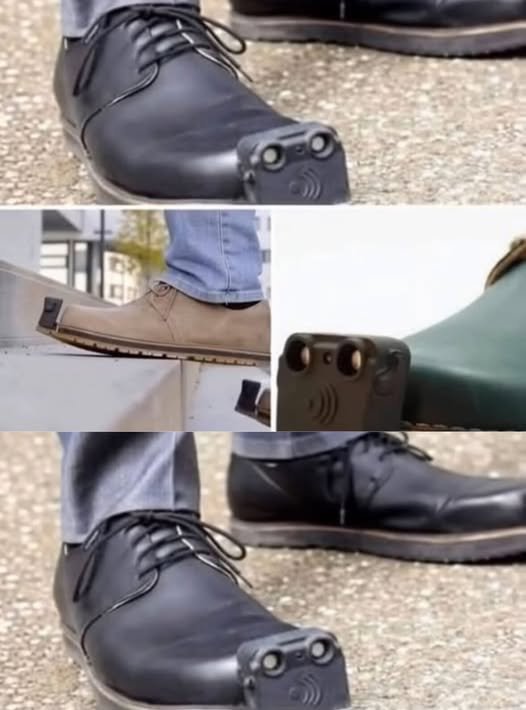
At first glance, they look like ordinary sneakers—modern, clean, nothing unusual. But these shoes carry a powerful purpose that most people don’t recognize right away. They are InnoMake smart shoes, designed to help people who are visually impaired move through the world more safely and independently.
Hidden inside the toe of the shoe is a small ultrasonic sensor. As the wearer walks, the sensor scans the space ahead—detecting obstacles such as walls, steps, curbs, poles, or even moving vehicles from several meters away. When something is detected, the shoes alert the wearer through gentle vibrations or sound signals, allowing them to react in real time.
Many describe the system as a “parking sensor for humans.” It doesn’t replace a white cane or guide dog, but it adds an extra layer of awareness—especially for obstacles at chest or head height that traditional aids may miss.
The idea was developed in Austria by Tec-Innovation in collaboration with Graz University of Technology, and it was co-created by Markus Raffer, who is visually impaired himself. His lived experience shaped the design, ensuring the technology is practical, discreet, and respectful.
The sensor can be built directly into the shoe or attached to existing footwear. It’s waterproof, lightweight, and designed for everyday use. Newer versions are exploring AI and camera-based mapping to provide even more detailed environmental awareness.
So if you ever notice someone wearing these shoes, it doesn’t mean danger is nearby—it means someone is using smart technology to navigate the world with confidence.
They’re more than shoes.
They’re a quiet symbol of independence, inclusion, and how thoughtful innovation can change lives—one step at a time.
Website Disclaimer
The information provided on this website is for general informational and educational purposes only. While we strive to ensure that all content is accurate and up to date, we make no guarantees regarding the completeness, reliability, or accuracy of any information published.
The views and opinions expressed in articles belong to their respective authors and do not necessarily reflect the views of this website. Any action you take based on the information found on this website is strictly at your own risk. We will not be liable for any losses, damages, or inconveniences arising from the use of our content.
Some articles may contain opinions, third-party information, or external links. We do not endorse or guarantee the accuracy of content on external websites and are not responsible for their practices or policies.
All content on this website is provided in good faith and is intended for informational purposes only. Readers are encouraged to verify information independently and seek professional advice where appropriate.