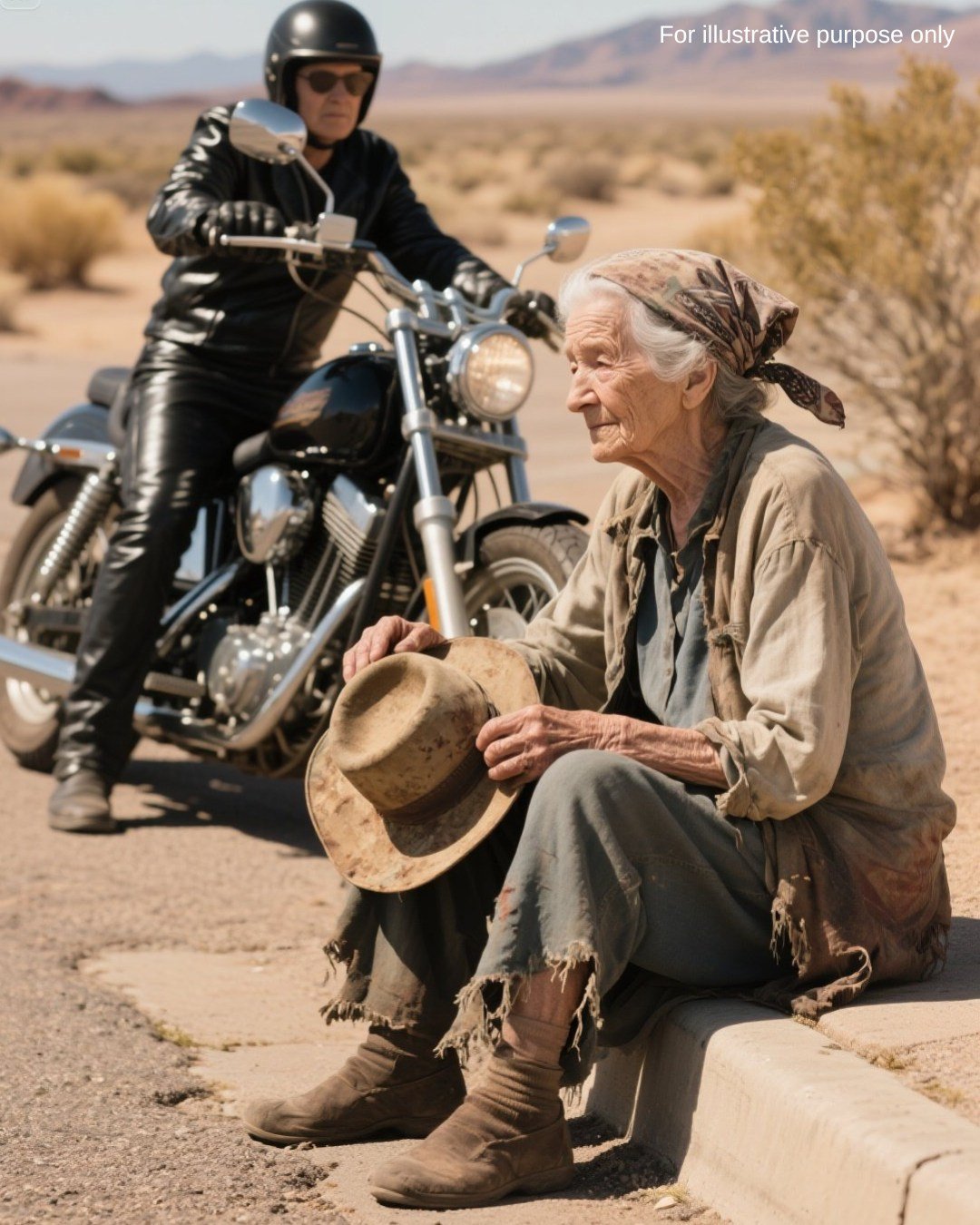
I was 89 years old, sitting on a curb in the Arizona heat like a piece of luggage nobody wanted.
My daughter Linda had just driven off in her pristine white SUV, leaving me stranded sixty miles from home because I’d “embarrassed” her at the restaurant.
My crime? Taking too long to walk to our table with my walker. Moving too slowly while she scrolled on her phone and tapped her foot.
Asking the waitress to repeat the menu because my hearing wasn’t what it used to be.
“I can’t deal with this anymore, Mother,” she snapped as we walked to the parking lot. “You’re becoming a burden.”
Those words struck harder than any pain I’d endured in nine decades.
She’d helped me into the passenger seat, then suddenly pulled over at a desert gas station.
“I need to think,” she said, stepping out. “Stay here.”
But she didn’t come back. I watched through the dusty window as she pumped gas, bought a coffee, and got back into the driver’s seat.
Our eyes met for just a moment. Then she started the engine and drove away, leaving me sitting there like yesterday’s newspaper.
That’s when the motorcycle appeared.
The rumble of the engine made me lift my head from my tears. A massive Harley-Davidson, chrome gleaming despite the dust, with a rider clad in full leather.
I’d been taught my whole life to fear people like this. “Motorcycle gangs,” my late husband used to say. “Nothing but trouble.”
The rider killed the engine and removed his helmet, revealing a man in his seventies with silver hair and kind blue eyes.
He saw me crying on the curb, and his expression softened.
“Ma’am, are you alright?” His voice was gentle, careful.
I couldn’t answer. How do you explain that your own daughter abandoned you like a stray dog?
He glanced around the empty parking lot, then back at me. “Where’s your ride?”
“Gone,” I whispered, tears spilling again.
Without another word, he walked into the gas station and returned with a bottle of water and a small bag of ice.
He handed me the water and pressed the ice gently to my forehead, where the sun had been beating down.
“What’s your name, ma’am?”
“Dorothy. Dorothy Hayes.”
“I’m Frank. Frank Morrison.” He knelt beside me, leather creaking. “Dorothy, who left you here?”
The shame burned my throat. “My daughter.”
Frank’s jaw tightened, but his voice remained gentle. “On purpose?”
I nodded, fresh tears falling. “Said I was too much trouble. Too slow. Too… burdensome.”

For a moment, Frank just stared at the highway where Linda’s car had vanished. When he looked back, there was steel in his blue eyes.
“Where do you live?”
“Phoenix. Retirement community called Desert Gardens.”
“That’s sixty miles from here.”
“I know.”
Frank stood and pulled out his phone. “I’m calling the police.”
“No!” I grabbed his arm with surprising strength. “Please don’t. She’s still my daughter. I don’t want her arrested.”
Frank studied me for a long moment. “Ma’am, with respect, she committed a crime. You can’t just abandon an elderly person in the desert.”
“Please,” I begged. “I just want to go home.”
Frank sighed and put his phone away. He looked at his motorcycle, then at me with my walker, clearly weighing the challenge.
“Dorothy, I can’t leave you here. But I’m not sure how to get you home safely on my bike.”
“I rode on a motorcycle once,” I said quietly.
His eyebrows rose. “When?”
“1976. My son Billy had just come back from Vietnam. He bought a Honda with his military savings and wanted to take his old mother for a ride.”
I smiled through my tears. “My husband was furious. Said it was dangerous and undignified.”
“Did you go?”
“Oh yes. Billy had been through hell. If he wanted to share something that brought him joy, I wasn’t going to say no.”
Frank’s expression softened. “What happened to Billy?”
“Motorcycle accident. Three months later.” My voice broke.
“Drunk driver at an intersection. That’s when I promised myself I’d never judge someone by their bike. Billy was the kindest, bravest person I knew, and he died doing what he loved.”
Frank was silent for a long moment. “I’m sorry for your loss.”
“It was a long time ago.”
“Grief doesn’t watch the calendar, ma’am.”
Something about the way he said it told me he understood loss too.

He walked back to his bike and opened a saddlebag, pulling out a spare helmet and a leather jacket.
“Dorothy, this might be unconventional, but if you trust me, I can get you home.”
I looked at the helmet in his hands. “What would Billy think?”
“I think Billy would want someone to take care of his mother when her own family won’t.”
Twenty minutes later, I held onto Frank Morrison for dear life as we rumbled down Highway 10.
The spare jacket swallowed me, the helmet was too big—but I’d never felt safer. Frank drove carefully, never over fifty, checking on me at every red light.
“You okay back there, Dorothy?”
“Better than I’ve been in years,” I shouted over the engine—and meant it.
We stopped twice for rest. Frank bought me lunch at a diner, insisting on paying despite my protests. He told me about his three daughters who called every Sunday and visited monthly.
“Family’s supposed to take care of each other,” he said, stirring sugar into his coffee. “What your daughter did… that’s not family. That’s selfishness.”
“She’s under stress. Her husband lost his job, and—”
“Dorothy.” Frank’s voice was firm but kind. “There’s no excuse for what she did. None.”
When we finally arrived at Desert Gardens, the late afternoon sun painted the mountains gold. Frank helped me off the bike, walked me to the front office, carrying my purse and steadying me.
The desk clerk’s eyes widened at the sight of a leather-clad biker escorting an elderly resident, but Frank smiled politely.
“Ma’am, I’d like to make sure Mrs. Hayes gets safely to her apartment.”
“Of course,” she stammered.
Frank insisted on walking me all the way to my door. He waited while I fumbled with my keys, then checked my lights and made sure I had food in the fridge.
“Dorothy,” he said as he prepared to leave, “I want you to have my phone number. If anyone ever abandons you—family or otherwise—you call me. Day or night.”
I took the card, hands trembling. “Why? Why help a stranger?”
Frank looked at the desert sunset.
“My mother died in a nursing home fifteen years ago. Alone. My sisters and I were too busy. We told ourselves she was fine, that the staff cared.”
His voice thickened. “She died on a Tuesday. The nurse said she’d been asking for us for days. We were too late for everything except the funeral.”
Tears filled my eyes. “Frank…”
“I can’t fix what I did to my mother. But I can make sure no other mother is left behind while I can help.”
After Frank left, I called Linda. She answered on the fourth ring, voice sharp.
“Mother, where are you? I went back for you and you were gone.”
“I’m home.”
“How did you get home?”
“A stranger helped me. A biker.”
Silence. Then: “A biker? Mother, those people are dangerous. You could have been killed.”
“The only person who hurt me today was you, Linda.”
More silence.
“I’m coming over,” she finally said. “We need to talk about assisted living. Today proved you can’t—”
I hung up.
The next morning, Frank called. The morning after that, he called again. By the end of the week, we were having coffee every Tuesday at the diner where we’d stopped.
I learned Frank was a retired electrician, a Vietnam veteran, and a lifelong motorcyclist who’d never abandoned anyone in need.
“It’s the biker code,” he explained. “You don’t leave people behind.”
Linda did come over that night, bringing brochures about assisted living. She barely listened as I told her about Frank’s kindness.
“Mother, you can’t trust these people. They probably saw an easy mark.”
“He bought me lunch. Paid for my gas. He wouldn’t even let me tip him.”
“It’s a long con. They’re probably casing the neighborhood.”
I realized Linda would never understand. She judged Frank by his leather, like everyone else.
But I had learned something that day: sometimes, the people society tells you to fear are the ones who’ll save your life.
Frank never asked for money. Never asked for anything except company on Tuesday mornings.
He brought pictures of his grandchildren, listened to my stories about Billy, fixed my faucet, and replaced smoke detector batteries.
When I fell three months later and Linda was “too busy,” Frank was at the hospital within the hour. He stayed until the doctors cleared me, drove me home, and stocked my fridge.
“This is what family does,” he said. “This is what love looks like.”
A year later, Linda finally met Frank. I’d invited both to my 90th birthday at the community center.
Linda arrived with my grandkids, who barely knew me. Frank arrived with a chocolate cake he’d made himself and a photo album of our Tuesday rides.
Linda cornered me in the kitchen. “Mother, this has gone on long enough. This friendship… it’s inappropriate. People are talking.”
“Let them talk.”
“He’s taking advantage of you. Can’t you see that?”
I looked through the doorway. Frank was showing my 12-year-old grandson his motorcycle in the parking lot.
The boy was fascinated, asking about engines and chrome. Frank was patient, kind, treating the child like he mattered.
Website Disclaimer
The information provided on this website is for general informational and educational purposes only. While we strive to ensure that all content is accurate and up to date, we make no guarantees regarding the completeness, reliability, or accuracy of any information published.
The views and opinions expressed in articles belong to their respective authors and do not necessarily reflect the views of this website. Any action you take based on the information found on this website is strictly at your own risk. We will not be liable for any losses, damages, or inconveniences arising from the use of our content.
Some articles may contain opinions, third-party information, or external links. We do not endorse or guarantee the accuracy of content on external websites and are not responsible for their practices or policies.
All content on this website is provided in good faith and is intended for informational purposes only. Readers are encouraged to verify information independently and seek professional advice where appropriate.