One year after the deadliest fire in Hong Kong in decades, residents returned to the scene of the tragedy to remember the 168 people who lost their lives. But unlike the quiet grief of the families, the official response was silence: the government held no memorial ceremony of its own.
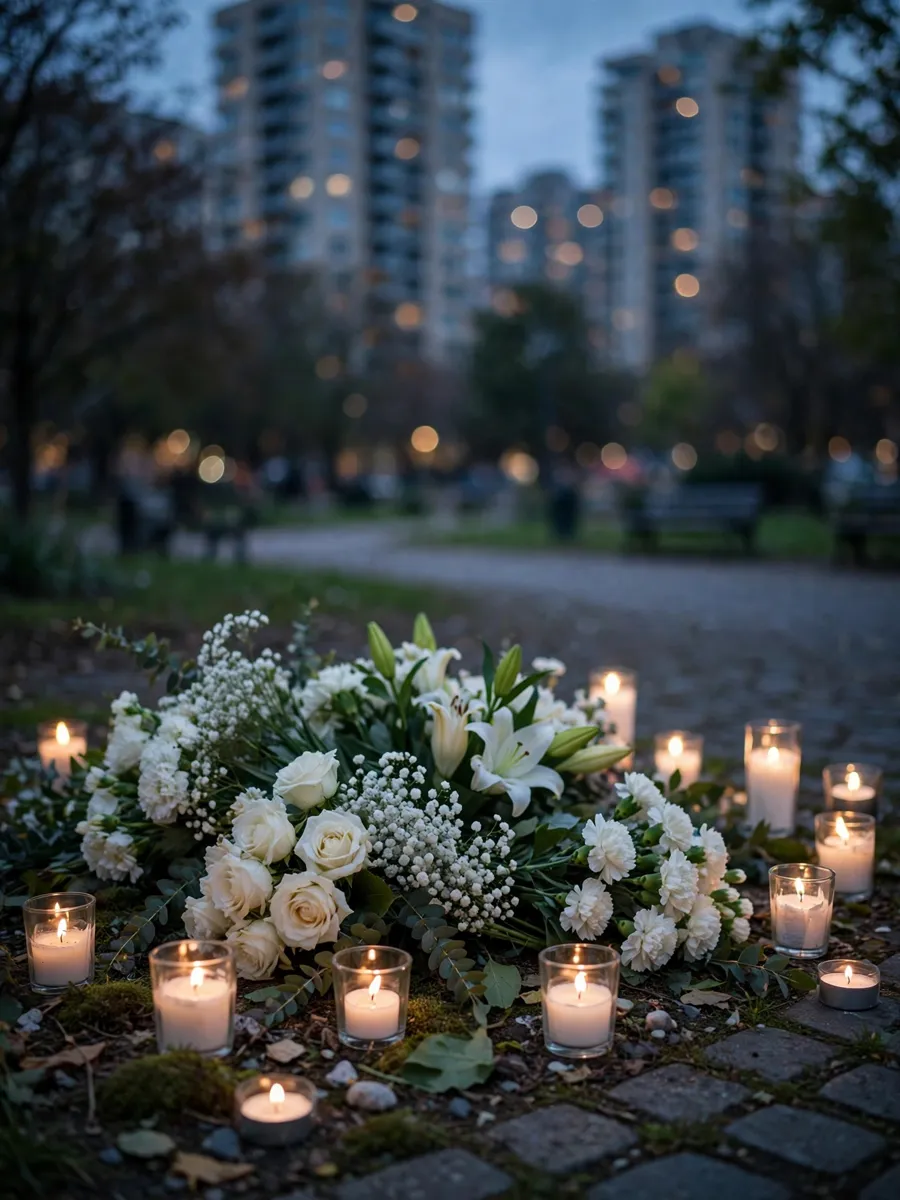
On Thursday, 26 November 2026, hundreds of people gathered at a small park near the charred towers of Wang Fuk Court in Tai Po, in the north of Hong Kong. They laid bouquets of flowers, left notes, toys, bottles of water and even pet food, and stood in silence beneath the blackened buildings where their loved ones had lived. Some wept and hugged each other as dusk fell over the estate.
The fire that tore through the housing complex on the afternoon of 26 November 2025 was the world’s deadliest residential building blaze since 1980, and Hong Kong’s worst disaster in more than seven decades. It gutted seven of the estate’s eight 31-storey towers, which were home to around 4,600 people, and raged for two days. In total, 168 people were killed and 79 others were injured. Around 70 percent of those who died were aged 65 or older.
A City Still Grieving
A year on, many survivors are still living in temporary housing, still sorting through belongings pulled from their burned homes, and still waiting to learn where they will be resettled. The towers themselves remain empty behind fences, their scorched facades still visible, guarded by police patrols.
For the families, the anniversary brought the pain back in full force. One man whose father and aunt died in the fire folded 168 paper cranes and hung them around the area with his wife and son, one for every life lost. Another resident, Yip Ka Kui, who lost his wife Pak Sui Lin in the blaze, said he still sends her voice messages and photographs on WhatsApp a year after her death. He only managed to return to the couple’s charred flat six months ago.
Hundreds also attended an emotional memorial service at the Catholic Cathedral of the Immaculate Conception on the eve of the anniversary, where the names of all 168 victims were read aloud by four people who had lost loved ones. Catholic and Buddhist places of worship held further services on the anniversary day itself.
No Official Ceremony
Despite the scale of the loss, the Hong Kong government organised no official commemoration. Chief Secretary Eric Chan said this week that the government would not hold any memorial events, although it would not stop residents from taking part in lawful commemorative activities.
Officials appeared wary of the anniversary taking on a political tone. In the days before it, Hong Kong’s second most senior official warned residents to choose carefully what events they joined and not to be exploited by others to take part in disruptive acts. China’s Hong Kong and Macao Affairs Office also urged vigilance against attempts to use the disaster to stir up chaos.
Human Rights Watch said on 25 November that the authorities had been suppressing peaceful mourning and criticism around the anniversary. According to the group, police made inquiries with Catholic churches planning memorial masses, a book launch by a migrant-worker survivors’ group was cancelled at the last minute, and an online news platform removed videos featuring interviews with survivors. Officials said police routinely ask organisers about upcoming events and that decisions rest with the organisers.
Questions Over Accountability
The anniversary also renewed questions about how the fire was allowed to happen. Investigators concluded that the blaze most likely began from a smouldering source, probably a cigarette, before spreading to scaffolding and dust netting wrapped around the towers while renovation work was under way. It spread across seven towers within about 90 minutes.
An independent report published in October partly blamed four government departments for the disaster, citing inferior materials, weak official oversight and deception in building maintenance. Hong Kong leader John Lee announced the resignation of Housing Secretary Winnie Ho, the first official to step down over the fire.
The government has ruled out rebuilding the estate on its original site, citing the length of time the process would take. For the families who gathered on Thursday, the more pressing question was simpler: who will be held responsible, and when will they be able to go home.
As the day wore on, officials from the Civil Aid Service began moving some of the hundreds of bouquets into transparent plastic boxes, saying they needed to create space. Some mourners objected. The government later said the offerings would be preserved and gradually moved to religious premises, and that every tribute would be respected.
One year after the fire, the flowers, the prayers and the names read aloud in church were left to the people themselves. The city remembered — but it did so without its government.
Website Disclaimer
The information provided on this website is for general informational and educational purposes only. While we strive to ensure that all content is accurate and up to date, we make no guarantees regarding the completeness, reliability, or accuracy of any information published.
The views and opinions expressed in articles belong to their respective authors and do not necessarily reflect the views of this website. Any action you take based on the information found on this website is strictly at your own risk. We will not be liable for any losses, damages, or inconveniences arising from the use of our content.
Some articles may contain opinions, third-party information, or external links. We do not endorse or guarantee the accuracy of content on external websites and are not responsible for their practices or policies.
All content on this website is provided in good faith and is intended for informational purposes only. Readers are encouraged to verify information independently and seek professional advice where appropriate.