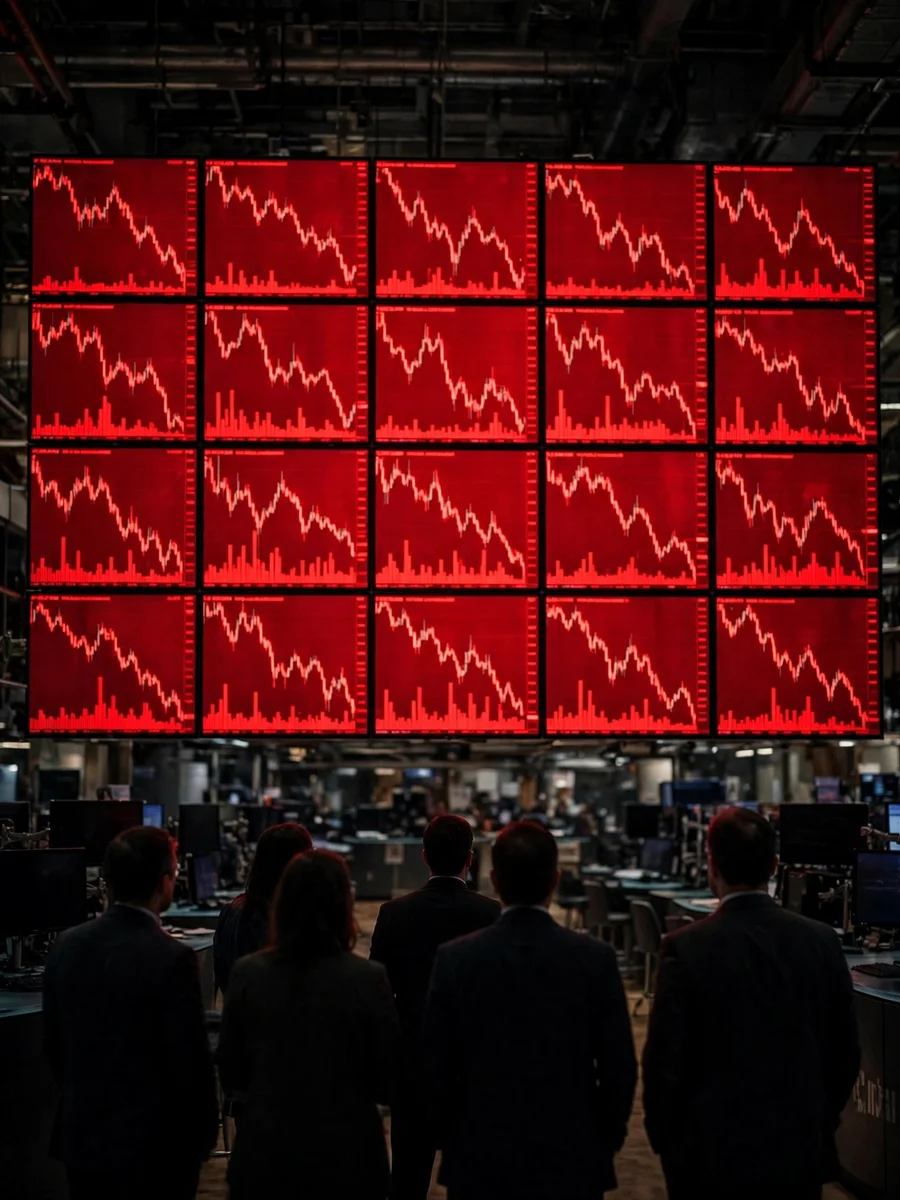
Bitcoin is clinging to the $60,000 level after a bruising few days in which the world’s largest cryptocurrency gave back a sharp rally and investors pulled record money out of US spot bitcoin funds.
The digital currency slipped below $60,000 on Tuesday, November 24, touching around $59,400 overnight before edging back toward the mark ahead of the US market open — a sudden reversal after it had surged as high as $64,500 on Monday.
Bitcoin is down roughly 7 percent from Monday’s high, and less than $5,000 above last week’s two-year low near $55,100.

Record Money Flowing Out of Bitcoin ETFs
The bigger story is the money leaving the market. US spot bitcoin ETFs shed about $569.7 million on Monday alone, the fifth straight day of net outflows.
BlackRock’s iShares Bitcoin Trust, the largest fund, accounted for $509.3 million of that day’s withdrawals. Fidelity’s FBTC was the only fund to take in money, adding $13.3 million.
November’s total withdrawals have now reached about $4.71 billion, already topping the previous monthly record of around $4.5 billion set in June 2026 — and the month is not yet over. It is the worst month for outflows since the spot bitcoin ETFs launched in January 2024.
Earlier in the month, the funds lost $1.79 billion in the week of November 16 to 20 alone, their third-largest weekly outflow since trading began, and total ETF assets have fallen to about $81 billion, down from nearly $98 billion a week earlier.

What Sparked the Slide
Monday’s rally had been driven by stocks: the Nasdaq Composite climbed 6.5 percent in its best performance since April 2025, and Nvidia surged 31 percent after Jensen Huang was reinstated as chief executive. Bitcoin rode that wave higher — but when the excitement cooled, the gains vanished within hours.
The whipsaw punished traders on both sides: around $844 million of crypto futures positions were liquidated over 24 hours, up 217 percent from the day before. Bitcoin accounted for about $357 million of those forced closures, with ether making up roughly $176 million.
Bitcoin now trades about 52 percent below its all-time high near $126,000, reached in October 2025, and sentiment readings sit close to extreme fear.
Holding the Line at $60,000
For now, $60,000 is the line in the sand. Analysts say the $58,000 to $60,000 band is the first real test of demand, with last week’s low around $55,100 sitting below it as the next support. On the upside, buyers would need to push the price back above $65,000 — roughly the average cost of recent buyers — before a recovery could be taken seriously.
Some watchers see the selling as a liquidity event rather than a verdict on bitcoin’s future, arguing that the funds that made bitcoin easier for institutions to buy also made it easier for them to sell quickly when sentiment turns.
Others are more cautious, pointing out that the outflows show demand has not just cooled but reversed, and that the market may need time to find its footing.

What Comes Next
Traders are now watching whether bitcoin can hold around $60,000 through the rest of the week. Key US data — October inflation and the second estimate of third-quarter GDP — is due on Wednesday, November 25, and could set the tone for risk assets of all kinds.
For long-term holders, the past few days are a reminder of how quickly crypto markets can turn. For short-term traders, the question is simpler: does $60,000 hold, or is another leg lower coming?
Website Disclaimer
The information provided on this website is for general informational and educational purposes only. While we strive to ensure that all content is accurate and up to date, we make no guarantees regarding the completeness, reliability, or accuracy of any information published.
The views and opinions expressed in articles belong to their respective authors and do not necessarily reflect the views of this website. Any action you take based on the information found on this website is strictly at your own risk. We will not be liable for any losses, damages, or inconveniences arising from the use of our content.
Some articles may contain opinions, third-party information, or external links. We do not endorse or guarantee the accuracy of content on external websites and are not responsible for their practices or policies.
All content on this website is provided in good faith and is intended for informational purposes only. Readers are encouraged to verify information independently and seek professional advice where appropriate.