North Korea has expelled Switzerland’s top diplomat in Pyongyang and ordered the closure of its newly reopened diplomatic office, in a sharp escalation of a sanctions dispute, just as Kim Jong Un used a visit to the country’s nuclear facilities to call for the wider deployment of tactical nuclear weapons.
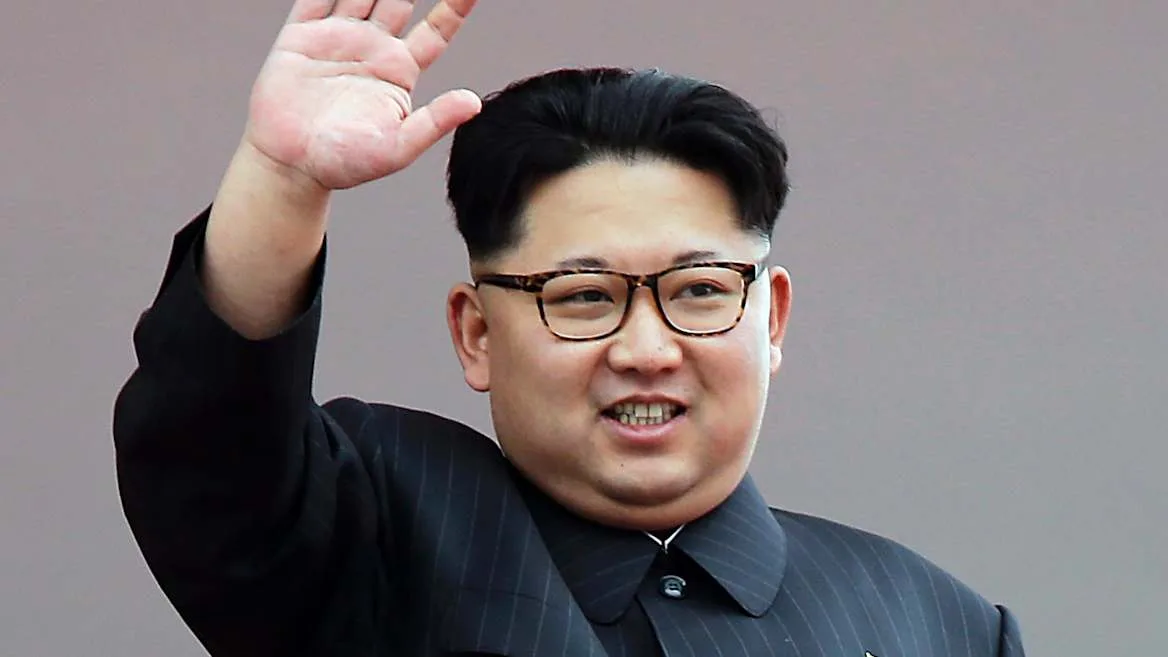
According to North Korea’s state news agency KCNA, the foreign ministry summoned Sylvain Astier, head of the Swiss diplomatic office, on Wednesday 25 November 2026, handed him a memorandum demanding the office close, and declared him persona non grata, giving him 48 hours to leave the country. The office had only reopened weeks earlier, on 19 October, when Swiss Foreign Minister Ignazio Cassis visited Pyongyang to oversee its return.
A Children’s Camp at the Heart of the Row
The dispute centres on the Songdowon International Children’s Camp in the eastern city of Wonsan. Switzerland recently added the camp to its sanctions list, saying the facility is used for the “forced assimilation, including indoctrination, and militarized education of Ukrainian minors” transferred from Russian-occupied areas of Ukraine.
Pyongyang reacted with fury. Kim Yo Jong, the powerful sister of leader Kim Jong Un, called the sanctions an “open hostile act” and a “serious infringement” of North Korean sovereignty. She argued that the Swiss mission had “spontaneously lost justification for its existence” because it had arrived under the pretence of improving relations, and accused Switzerland of showing a lack of respect for North Korean sovereignty.
North Korea maintains that the camp supports what it calls “legitimate” cooperation with Russia. Switzerland, for its part, has insisted that its sanctions policy is independent of its diplomatic relations. The Swiss Federal Department of Foreign Affairs said the reopening of the office was “independent of our sanctions policy, whether with regard to UN sanctions related to North Korea’s nuclear program or EU sanctions adopted by Switzerland in the context of Russia’s war against Ukraine.”
Swiss authorities said neither their embassy in Beijing nor the office in Pyongyang had received official notification of the expulsion before the reports appeared in state media. Switzerland said it would continue to maintain contact with North Korea through its embassy in Bern.
A Diplomatic Opening Closed in Weeks
The speed of the collapse is striking. The Swiss office had been closed for years, and its reopening in late October was seen as a rare diplomatic opening, a small channel of contact with one of the world’s most isolated regimes. Barely a month later, that channel has been shut, and the diplomat who ran it has been ordered out of the country.
The episode is also a reminder of how deeply the war in Ukraine now shapes diplomacy far beyond Europe. North Korea has provided thousands of troops and weapons shipments to support Russia’s invasion, and in return it reportedly receives aid and military technology. The camp at the centre of this row is accused of hosting Ukrainian children taken from occupied territory, linking a sanctions decision in Bern directly to the war’s darkest allegations.
Only days before the expulsion, Kim Jong Un received credentials from ten newly appointed foreign ambassadors in Pyongyang, including envoys from Russia, India, Indonesia and Vietnam, in a rare ceremony that suggested the regime was trying to present itself as diplomatically engaged. The Swiss expulsion has undercut that image within a week.
Kim’s Nuclear Message
As the diplomatic row unfolded, Kim Jong Un was delivering a message of his own. State media reported on Thursday 26 November that the North Korean leader had inspected the country’s nuclear material production sites and its Nuclear Weapons Institute, reviewing this year’s nuclear material and weapons production and checking on a newly built plant that is being expanded.
During the visit, Kim called for the wider deployment of tactical nuclear weapons across multiple domains, and said the country should prioritise expanding its capacity to produce nuclear material. The visit appeared designed to review the year’s production and to signal that the nuclear programme, far from slowing down, is being accelerated.
The timing is unlikely to be a coincidence. A leader who has just expelled a Western diplomat over sanctions is also reminding the world that his country’s nuclear arsenal is growing, and that he intends to spread those weapons more widely through his armed forces. Analysts estimate North Korea has built around 60 nuclear weapons, and the International Atomic Energy Agency has reported that the country is expanding its uranium enrichment facility at Yongbyon, with satellite imagery showing a new extension under construction.
A Region on Edge
The twin developments, the expulsion and the nuclear inspection, come at a moment of deep unease across East Asia. North Korea has tested a new torpedo system in the East Sea ahead of its planned deployment to the navy early next year, and its military cooperation with Russia continues to deepen despite warnings from the West.
For Switzerland, the loss of its Pyongyang office removes one of the few Western footholds in the country. For North Korea’s neighbours, Kim’s call for wider tactical nuclear deployment is the more worrying signal: a regime that is increasingly comfortable defying the outside world, and increasingly open about its determination to expand the arsenal at the heart of its power. The diplomatic door that opened in October has slammed shut, and what lies behind it is a leader doubling down on the weapons that make him untouchable.
Website Disclaimer
The information provided on this website is for general informational and educational purposes only. While we strive to ensure that all content is accurate and up to date, we make no guarantees regarding the completeness, reliability, or accuracy of any information published.
The views and opinions expressed in articles belong to their respective authors and do not necessarily reflect the views of this website. Any action you take based on the information found on this website is strictly at your own risk. We will not be liable for any losses, damages, or inconveniences arising from the use of our content.
Some articles may contain opinions, third-party information, or external links. We do not endorse or guarantee the accuracy of content on external websites and are not responsible for their practices or policies.
All content on this website is provided in good faith and is intended for informational purposes only. Readers are encouraged to verify information independently and seek professional advice where appropriate.