Uber has begun testing driverless taxis without a safety driver on public roads in the San Francisco Bay Area, marking a major step towards a commercial robotaxi service that could launch early next year.
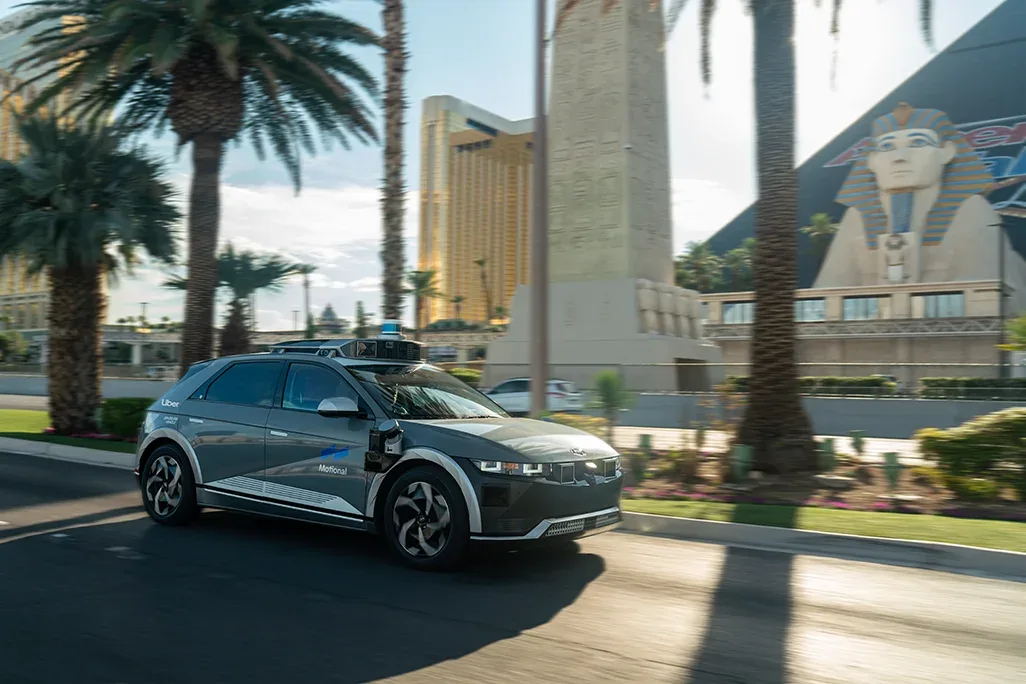
The testing, announced on Tuesday 24 November by Uber, Lucid Group and autonomous driving developer Nuro, uses Lucid Gravity SUVs fitted with Nuro’s self-driving technology. For nearly a year, Nuro has been testing the vehicles in San Francisco and Houston with safety drivers behind the wheel. Now the human operator has been removed entirely in the Bay Area, with testing starting in Palo Alto, Mountain View, Los Altos and Sunnyvale before expanding to more cities next year.
A Milestone Years in the Making
Removing the safety driver is the moment the whole programme has been building towards. Nuro received its driverless testing permit from the California Department of Motor Vehicles in May 2026, making it one of just six companies allowed to test on public roads in California with nobody behind the wheel. The California Public Utilities Commission also issued Nuro a drivered pilot permit earlier this year, allowing passenger rides with a safety operator on board.
Samarth Kejriwal, Uber’s global head of autonomous mobility, called the step an important milestone in the partnership with Nuro and Lucid. “As we prepare for our first driverless passenger rides in the coming months, we’ll be working closely together to refine our operations, infrastructure, and the in-cabin experience to ensure a safer, more comfortable ride,” he said.
What the Robotaxi Looks Like
The vehicle at the centre of the programme is the Lucid Gravity, a luxury electric SUV unveiled in January 2026 and fitted with high-resolution cameras, solid-state lidar sensors and radars that help the self-driving system perceive the world around it. The cars also carry a roof-mounted sensor halo, and Nuro provides the autonomy visualisation that riders will see on screens inside the cabin.
Lucid has delivered more than 100 vehicles for the fleet so far. Uber, which will own and operate the fleet with its partners, has focused on the in-cabin experience, including how riders interact with the vehicle, personalisation and support. The vehicles will be available to riders exclusively through the Uber network, and the company has committed to buying at least 35,000 Lucid vehicles equipped with Nuro’s software, with plans to expand across dozens of global markets over the coming years.
The Road to Paying Passengers
Driverless testing is not the same as a public launch, and the companies have been careful to set expectations. Employee rides in driverless vehicles will begin soon as the programme moves into its next phase, ahead of the expected public launch in the first quarter of 2027. The commercial launch was originally targeted for the end of 2026 but has slipped to early 2027, according to Nuro’s chief operating officer Andrew Chapin.
Uber chief executive Dara Khosrowshahi said this month that he expects about 700 robotaxis on the platform by the end of the year. The service will initially launch in the San Francisco Bay Area, followed by Houston later in 2027, where testing continues with safety operators behind the wheel. Nuro is supplementing its on-road testing with closed-course testing and simulation to validate the self-driving system before opening the robotaxis to the public.
Investors Cheer the News
Wall Street welcomed the announcement. Uber shares closed up 2.55 percent at 66.35 dollars on Wednesday 25 November, a day after the driverless testing began. The gain came in a volatile session for technology stocks, and it underlined how much investors believe autonomous vehicles matter to Uber’s future.
The company is now going head to head with rivals such as Waymo and Zoox, which have already been running driverless services in American cities. Waymo, in particular, has built a large lead, operating paid robotaxi rides in several cities while Uber’s service is still in testing. Uber’s argument is that its enormous rider network gives it an advantage: it claims its network delivers about 30 percent more daily trips than robotaxi companies achieve through their own apps. Whether that advantage survives contact with paying passengers in the Bay Area will become clear when the first driverless rides open to the public in the coming months.
Website Disclaimer
The information provided on this website is for general informational and educational purposes only. While we strive to ensure that all content is accurate and up to date, we make no guarantees regarding the completeness, reliability, or accuracy of any information published.
The views and opinions expressed in articles belong to their respective authors and do not necessarily reflect the views of this website. Any action you take based on the information found on this website is strictly at your own risk. We will not be liable for any losses, damages, or inconveniences arising from the use of our content.
Some articles may contain opinions, third-party information, or external links. We do not endorse or guarantee the accuracy of content on external websites and are not responsible for their practices or policies.
All content on this website is provided in good faith and is intended for informational purposes only. Readers are encouraged to verify information independently and seek professional advice where appropriate.