Yemen’s Houthis have sharply widened their attacks on Saudi Arabia, claiming strikes on the kingdom’s largest oil refinery at Ras Tanura, on Riyadh’s financial district and on Red Sea ports, in the most serious escalation of the conflict in months.
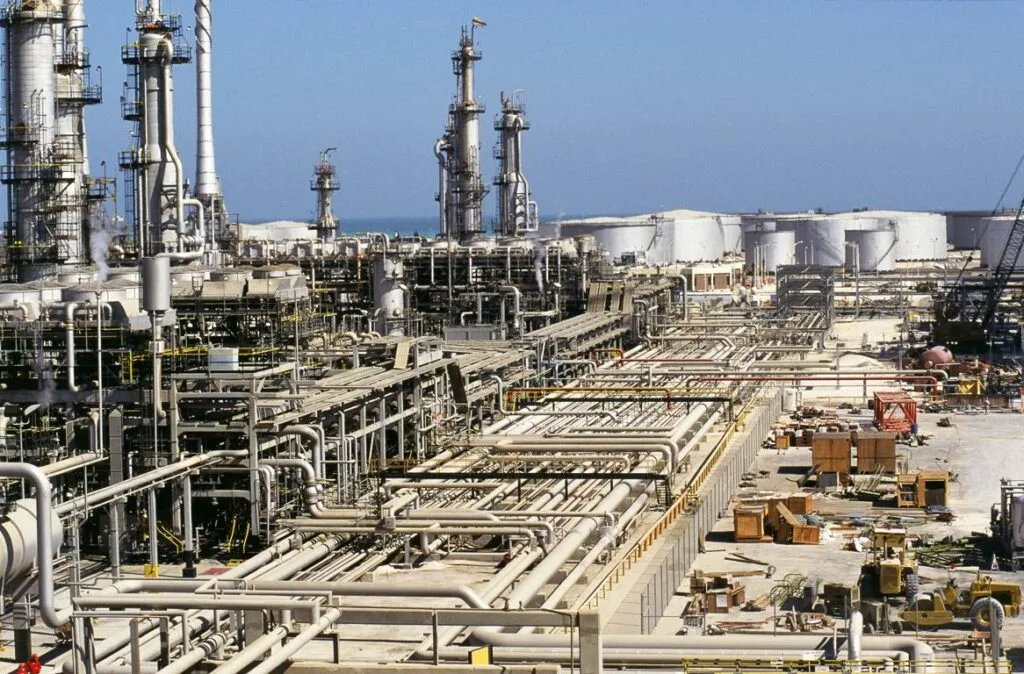
Houthi military spokesman Yahya Saree said on Wednesday 25 November that his forces had attacked the Ras Tanura refinery, the kingdom’s biggest, and the King Abdullah Financial District in Riyadh. Hours later he announced further operations against the ports of Jeddah and Jazan on the Red Sea coast, saying both had caused damage at the targeted sites. The claims sent oil prices sharply higher, with Brent crude climbing above 93 dollars a barrel.
Conflicting Accounts at Ras Tanura
The two sides have given very different accounts of what happened at Ras Tanura, which sits alongside one of the world’s largest crude export terminals and processes 550,000 barrels of oil a day, about 16 percent of Saudi Arabia’s refining capacity. Saree described the strike on the refinery as accurate and direct, saying it had caused fires to break out at the facility. Satellite imagery reviewed by Reuters from NASA and Planet Labs showed thick black smoke over the installation, and a source with knowledge of the matter confirmed that an attack on the refinery had taken place.
The Saudi-led coalition, however, said its air defences had intercepted and destroyed four drones over Ras Tanura on Wednesday morning, with fragments falling and no injuries in an initial assessment. It did not say the refinery had been struck. The Saudi government and the state oil company Aramco did not immediately respond to requests for comment, leaving the full extent of any damage unclear.
Riyadh’s Tallest Tower Hit Again
The refinery claim followed a drone strike on Tuesday 24 November that hit a skyscraper in Riyadh’s financial district, injuring at least 11 people, two Saudi citizens and nine foreign residents. Witnesses identified the building as the Public Investment Fund Tower, the tallest building in the Saudi capital and the headquarters of the kingdom’s sovereign wealth fund. It was the second strike on the tower in less than a week, after an earlier attack on 19 November that damaged the building but caused no injuries.
Saree said the group had attacked the financial district in three phases. Late on Wednesday, residents of Riyadh heard an explosion after an alert warned of a hostile aerial threat, and the coalition said it had intercepted and destroyed ballistic missiles fired towards the capital.
Ports Under Fire
The attacks on the ports came after the coalition warned civilians to leave Hodeidah, Yemen’s main Red Sea port, and said it had struck operational capabilities there. Within hours, Saree tied the strikes on Jeddah and Jazan to that raid, warning that the port of Jeddah and all other Saudi ports along the Red Sea coast would become targets and telling people near them to evacuate immediately.
The coalition confirmed that a Houthi projectile had struck the port of Jizan, causing minor damage and no civilian casualties, and said the type of weapon was still being determined. It also reported drones destroyed near Jeddah. The Houthis, who control much of western Yemen including the capital Sanaa, have been firing at Saudi airports, oil infrastructure and office buildings since Yemen’s frozen civil war reignited in July in a spillover from the US-Iran war.
Oil Markets React
The escalation rattled energy markets. Brent crude finished 3.5 percent higher on Wednesday while US West Texas Intermediate climbed 2 percent, as traders worried about unexpected supply disruptions in the Middle East. The gains extended into Thursday’s Asian trading, with Brent holding near 95 dollars a barrel.
The Houthis have claimed repeated strikes on Saudi energy infrastructure this autumn. They claimed a ballistic missile attack on Ras Tanura on 27 October, and three days later claimed strikes on the Ras Tanura and Rabigh refineries and Aramco’s Abqaiq facility. An attack on 9 November set fire to the East-West pipeline, which carries crude to the port of Yanbu.
Diplomatic Fallout
The attacks drew swift condemnation abroad. US Secretary of State Marco Rubio condemned what the State Department called the Iran-backed Houthi terrorist attacks on Saudi civilian and energy infrastructure, and Saudi Defence Minister Khalid bin Salman said he had discussed the attacks with Bahrain and the Netherlands. The Houthis’ campaign has already disrupted some of Aramco’s operations and caused the cancellation of most international flights to Riyadh, and the latest escalation raises the prospect of a wider regional confrontation that neither side appears ready to step back from.
Website Disclaimer
The information provided on this website is for general informational and educational purposes only. While we strive to ensure that all content is accurate and up to date, we make no guarantees regarding the completeness, reliability, or accuracy of any information published.
The views and opinions expressed in articles belong to their respective authors and do not necessarily reflect the views of this website. Any action you take based on the information found on this website is strictly at your own risk. We will not be liable for any losses, damages, or inconveniences arising from the use of our content.
Some articles may contain opinions, third-party information, or external links. We do not endorse or guarantee the accuracy of content on external websites and are not responsible for their practices or policies.
All content on this website is provided in good faith and is intended for informational purposes only. Readers are encouraged to verify information independently and seek professional advice where appropriate.